






By Global Culture & Media Desk
Published: October 2023
Main Facts: The Shift in Indian Media and the Rise of Digital Autonomy
For decades, the portrayal of transgender people within Indian mass media followed a rigid, predictable script. Trans individuals were systematically relegated to total erasure or flattened into caricatures. Mainstream Bollywood cinema and television largely confined trans characters to narrow, dehumanizing archetypes: comic relief, malevolent antagonists, or tragic figures defined entirely by their suffering. These representations left virtually no room for narratives rooted in authentic, lived human experiences.
While recent years have witnessed a gradual widening of visibility and more layered characterizations across digital and theatrical platforms, representation remains deeply uneven. Progress is visible, yet pressing questions persist regarding authenticity, emotional complexity, and, crucially, who holds the institutional authority to tell these stories.
In parallel, the rise of the digital creator economy has quietly rewritten the rules of cultural visibility. For queer and transgender individuals across India, platforms such as YouTube and Instagram emerged as the foundational stages where self-representation first felt possible. Long before traditional media institutions were willing to listen or invest, digital spaces enabled creators to bypass traditional gatekeepers, shifting narrative control from corporate boardrooms to individual creators.
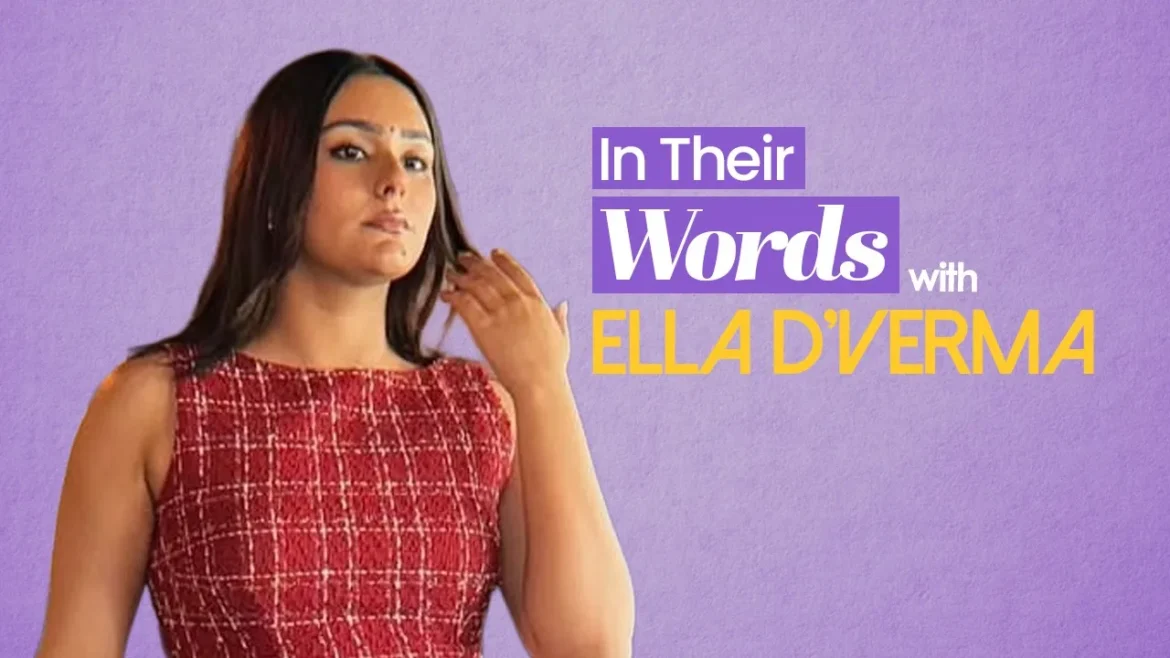
Standing at the epicenter of this cultural transformation is Ella D’Verma. A prominent model, actor, and digital creator, D’Verma initially built her online presence by speaking candidly about her gender affirmation journey. She offered her audience the radical honesty and visibility she herself was denied while growing up. Over time, her portfolio has expanded beyond the boundaries of gender identity into fashion, beauty, relationships, culture, and social commentary. Today, she represents a vanguard of creators actively reshaping not only how transgender people are seen, but who dictates the terms of that representation.
Chronology: From Erasure to the Digital Frontier
To understand the weight of contemporary trans representation in India, it is essential to trace the historical evolution of media landscapes and the milestones that paved the way for modern digital creators:
- Pre-2010s (The Era of Erasure and Caricature): Mainstream Indian media overwhelmingly depicted transgender individuals through regressive tropes. Regional and national cinema used trans bodies primarily for shock value, ridicule, or tragic melodrama, with cisgender actors frequently cast in trans roles.
- 2014 (The Legal Milestone): The Supreme Court of India officially recognized transgender people as a "third gender" in the landmark NALSA v. Union of India judgment. This legal validation catalyzed a slow awakening in public discourse, though media representation lagged behind legal recognition.
- Mid-2010s (The Social Media Boom): Affordable 4G data and widespread smartphone adoption democratized content creation. Platforms like YouTube and Instagram allowed marginalized voices to directly address audiences without needing studio approval or network commissioning.
- Late 2010s to Present (The Rise of Digital Creators): Creators like Ella D’Verma gained traction by documenting their personal transitions, lifestyle choices, and aesthetic preferences. This grassroots visibility forced traditional brands, fashion houses, and media platforms to begin taking notice of queer and trans influencers.
- The Current Phase (The Fight for Complexity): As visibility becomes more common, the conversation has shifted from being seen to being understood in full complexity. Creators are actively pushing back against tokenism and demanding roles, partnerships, and stories that transcend identity politics.
Supporting Data: The Economics of Representation and Brand Partnerships
The transition from traditional media marginalization to digital prominence is underscored by significant shifts in the creator economy. According to digital marketing and media insights reports across South Asia:
- The Shift in Ad Spend: Brands targeting Gen Z and Millennial demographics have increasingly allocated marketing budgets toward digital creators rather than traditional print or broadcast advertising. Investments in influencer marketing in India have surged exponentially over the past five years.
- The Tokenism Trap: Market research indicates that while over 65% of lifestyle and fashion brands engage in diversity marketing during culturally significant windows (such as Pride Month), fewer than 15% maintain long-term, structural partnerships with queer and trans creators throughout the remainder of the calendar year.
- Audience Engagement: Data from social media analytics firms reveals that content featuring authentic, vulnerable storytelling by minority creators generates significantly higher engagement rates—measured in saves, shares, and long-form comments—than highly sanitized, brand-managed campaigns. This suggests that modern audiences actively crave depth over superficial representation.
In Their Words: An Exclusive Conversation with Ella D’Verma
In a candid interview for the series In Their Words, Ella D’Verma reflects on growing up without reference points, navigating an industry that often prioritizes identity over artistic craft, the evolving definition of family, and why visibility must be paired with structural equity.
On Growing Up Without Representation and Early Self-Awareness
Q. You’ve spoken before about always knowing who you were, even before you had the language for it. Looking back, do you think growing up without representation forced you to become more self-aware than most people your age? And how do you think queer/trans representation in the media is shaping younger queer people today?
Ella D’Verma: When you grow up without representation, confusion doesn’t linger for long because you have no template to project it onto. You’re constantly observing, decoding, and piecing yourself together without a reference point. That inevitably builds a kind of early self-awareness—sometimes even an intense hyper-awareness—because you’re trying desperately to name something the world hasn’t yet named for you.
Today, representation offers younger queer people something I never had: context. It gives them reassurance that what they feel is real, shared, and valid. But representation also has to go further than basic visibility. It needs to hold nuance, contradiction, and the full spectrum of human experience—not just simplified, digestible versions designed to make cis-heteronormative audiences comfortable.
On Gender, Social Power, and Shifting Assumptions
Q. What assumptions do people make about you today that are completely different from before your transition? What has that taught you about gender and social power?
Ella D’Verma: Before my transition, people projected ideas of strength, authority, and emotional range onto me based on how they read my gender. Afterward, those assumptions shifted dramatically—toward softness, vulnerability, and at times, even diminished capability.
What it really revealed to me is that gender functions like a social currency. It influences how seriously you’re taken, how safe you feel in public and private spaces, and how much physical and conversational space you’re allowed to occupy. Experiencing both sides of that equation has been deeply revealing about the mechanics of power in our society.
On Biological vs. Chosen Family
Q. What’s something about your family’s journey that people outside the queer community often misunderstand? How have chosen family and biological family evolved for you over time?
Ella D’Verma: People often imagine family as a straight line—conflict followed by resolution, rejection followed by acceptance. But real family journeys are far more layered. Love, confusion, learning, and unlearning often coexist in the exact same moments.
For me, chosen family didn’t replace my biological family; rather, it expanded my idea of what family can be. Over time, both have evolved. My biological family has grown in ways I value deeply, while my chosen family has remained a steady, unshakeable anchor through it all.
On Professional Pigeonholing and Artistic Craft
Q. Being visible as a queer creator can bring opportunities, but also lead to professional pigeonholing. Have you experienced that tension? How did it affect your work?
Ella D’Verma: Yes, absolutely. Visibility can come with boundaries you never asked for. You’re seen—but often through a very specific, narrow lens. There have been times when my identity was centered far more than my actual craft, and that can feel deeply limiting.
Over time, I’ve learned to actively reshape that narrative. I choose projects that allow me to demonstrate range and depth well beyond my identity. At the same time, I’ve learned to value my unique perspective—it just can’t be the only thing people see when they look at my work.
On Commercial Collaborations and Authentic Partnerships
Q. When brands first approached you, did it feel like they were more interested in your identity than your work? Has that changed?
Ella D’Verma: In the early days, yes—my identity often felt like the headline, while my work as a creator was treated as secondary. I understood the marketing context, but it still felt reductive. It bothered me because I’ve always seen myself primarily as a creative professional.
The difference now is intention. I’m far more selective, choosing collaborations with brands that see the full picture—not just who I am, but what I bring to the table creatively and intellectually.
On the Creator Economy and Marketable Authenticity
Q. Do you think the creator economy rewards authenticity, or does it reward identities that can be neatly packaged for brands?
Ella D’Verma: It does both, but not evenly. Authenticity is celebrated, but usually within boundaries that feel safe and structured for corporate partners. There’s a clear market preference for identities that can be easily understood and neatly packaged for mass consumption.
Real authenticity, however, is often messy, complex, and inconvenient—and not every platform or brand is prepared for that. So, creators are constantly negotiating between personal honesty and commercial marketability.
Q. What separates a brand that simply works with queer creators from one that genuinely invests in queer storytelling?
Ella D’Verma: It comes down to intent and continuity. Working with queer creators can sometimes be about performative visibility, timing, or opportunistic alignment with cultural moments. But genuine investment means going further—beyond token gestures or seasonal Pride campaigns. It involves creative trust, long-term financial commitment, and storytelling that isn’t limited to calendar dates. It’s the fundamental difference between participation and partnership.
On Moving Beyond Invisibility to Complexity
Q. Have we moved from queer invisibility to visibility—but not yet to complexity?
Ella D’Verma: We’ve certainly moved toward visibility, but complexity is still catching up. Queer identities are still often defined primarily through the narrow lens of identity itself.
True progress would mean queer people existing fully in narratives where their queerness is not the central, defining subject—where they are simply protagonists, professionals, lovers, villains, and everything in between.
On Beauty Standards and "Acceptable" Trans Femininity
Q. Has your understanding of femininity and beauty standards changed over time? Do you feel pressure to perform “acceptable” trans femininity?
Ella D’Verma: My understanding of beauty has changed entirely. I’ve seen how femininity is valued differently depending on who expresses it, and how narrow the boundaries of “acceptable” femininity can be—especially for trans women.
Yes, that pressure exists. There’s often an unspoken expectation to fit into a version of femininity that feels more palatable and comfortable for external audiences. But I’ve learned that authenticity ultimately carries far more depth. For me now, beauty is about internal alignment—not external approval.
On Queer Joy Versus Queer Pain
Q. Why do audiences and media seem more comfortable with queer pain than queer joy or success?
Ella D’Verma: Queer pain fits a familiar, comforting narrative structure: struggle, survival, and resilience. It’s something audiences can consume with a safe emotional distance.
Queer joy and success disrupt that comfort. They demand presence, equality, and full recognition. That can be difficult for audiences still adjusting to seeing queer lives beyond suffering. But shifting that narrative is essential. We deserve celebration just as much as we deserve empathy.
Implications: The Roadmap for the Next Decade
As the cultural landscape continues to evolve, the insights shared by creators like Ella D’Verma point toward critical implications for media executives, brand strategists, and society at large.
The trajectory of trans inclusion over the coming decade will depend on moving past surface-level representation. When asked what real progress looks like ten years from now, D’Verma’s vision is clear:
"It would mean trans inclusion no longer being treated as a special category or conversation. Instead, it would be embedded naturally into systems, industries, and storytelling. Trans people would be present across roles, hierarchies, and narratives without exceptionality attached to it."
Ultimately, true progress requires structural change rather than conditional acceptance—a future where safety, dignity, and professional opportunity do not depend on context. In that envisioned world, the milestones currently celebrated as "progress" will no longer be exceptions, but simply the standard.