Introduction: The Fall of a Data Broker Empire
For over a decade, the consumer data broker Radaris.com enjoyed a reputation for digital untouchability. Operating within the murky underworld of the online people-search industry, the platform routinely ignored individual requests to remove sensitive personal information, treating privacy opt-outs with administrative stonewalling.
That invulnerability recently collapsed in a landmark legal battle. In a decisive judicial ruling, a New Jersey court ordered that radaris.com—along with more than a dozen associated sister domains—be seized and transferred to the plaintiffs. The enforcement action serves as a monumental milestone in the enforcement of Daniel’s Law, a strict New Jersey privacy statute designed to protect law enforcement officials, judges, and government personnel from targeted harassment and digital exposure.
Rather than functioning as a standard commercial website, radaris.com now redirects visitors to an official notice of the court-ordered domain transfer. The seizure exposes the complex corporate architecture, international shell companies, and calculated legal evasion tactics that power modern commercial surveillance networks.
Chronology of an Investigation and Legal Showdown
The Genesis of the Litigation
The legal reckoning began in February 2024, when Atlas Data Privacy Corp—a firm dedicated to holding data brokers accountable under Daniel’s Law—filed a lawsuit against Radaris. The statute carries severe penalties, including fines of $1,000 per violation, for commercial entities that publish restricted personal information belonging to state law enforcement officers and judicial officials after receiving a removal request.
The Investigative Deep Dive
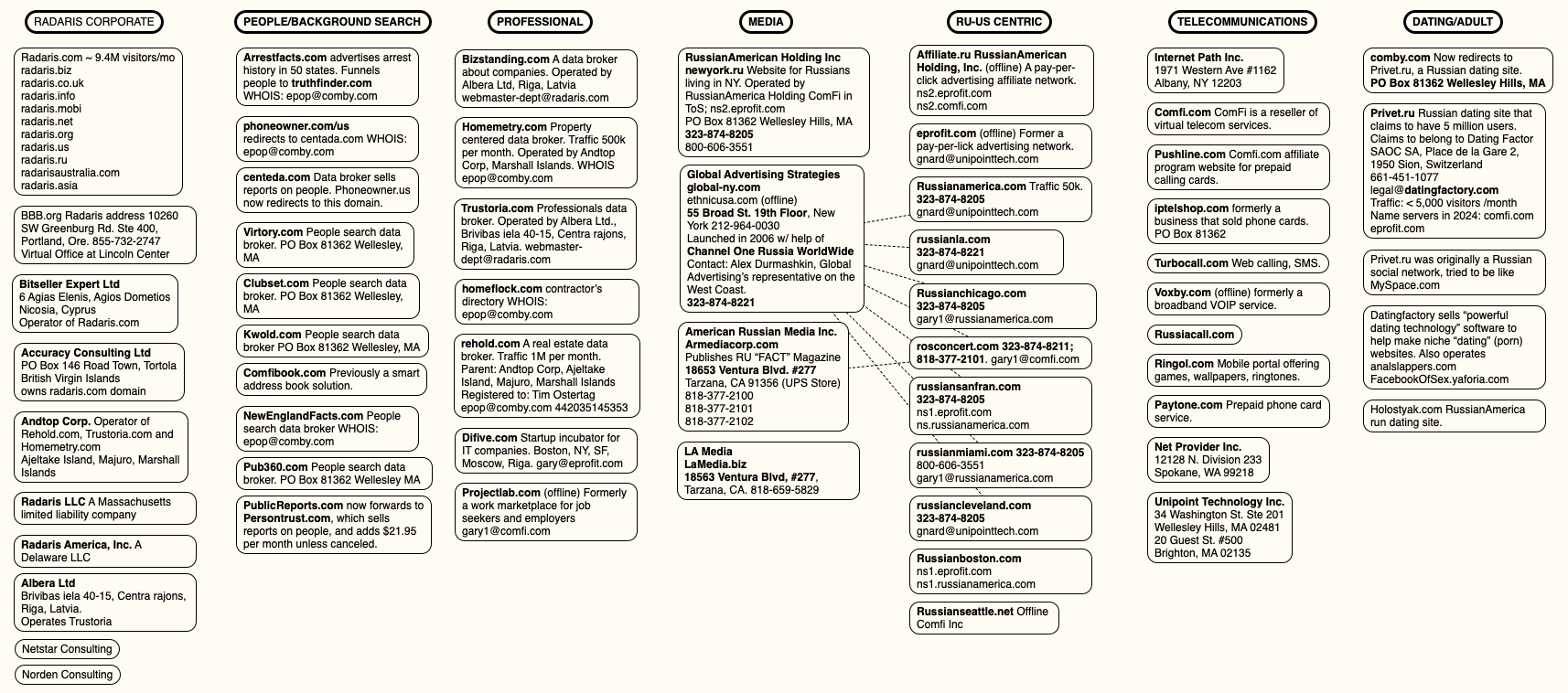
Scarcely a month after the lawsuit was initiated, security journalist Brian Krebs published an exhaustive investigation into the masterminds behind Radaris: Igor and Dmitry (also known as Dan) Lubarsky. The Russian-born brothers, residing in Massachusetts, controlled an intricate web of people-search engines, affiliate programs, and Russian-language dating portals.
The publication triggered immediate pushback. Attorneys representing the Lubarsky brothers threatened a defamation lawsuit, claiming the reporting was entirely inaccurate and asserting that the true owners of the platform were Ukrainian nationals living in Ukraine.
Unmasking the Fictitious CEO
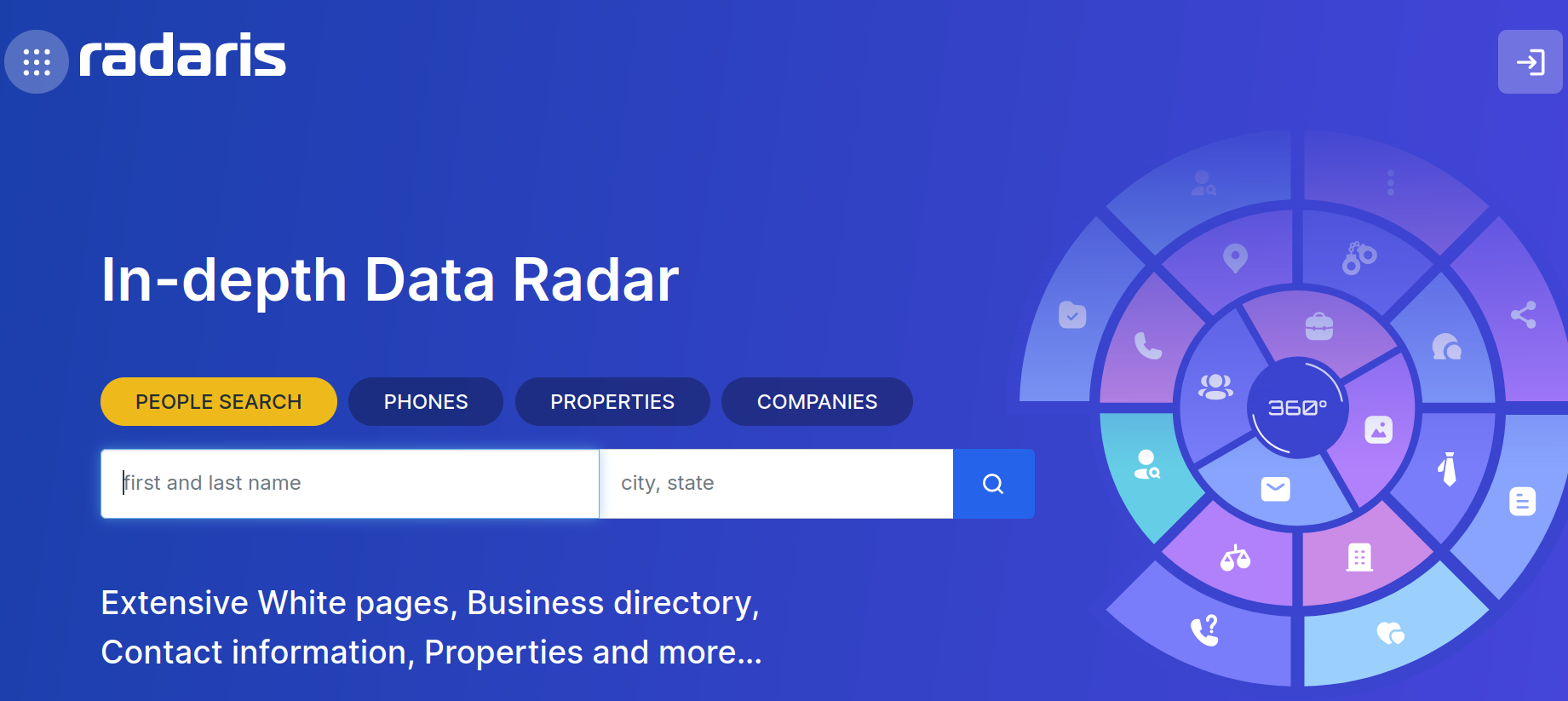
Undeterred, investigative reporting doubled down on the corporate structure of Radaris, revealing that the operators utilized a fictitious chief executive officer named "Gary Norden." Val Gurvits, an attorney with the Boston Law Group representing Radaris, eventually conceded in court filings that his clients had fabricated the CEO persona. Furthermore, historical records indicated that Radaris had previously deployed press releases featuring quotes from the fake executive to court prospective investors.
The Shell Game Escalates
Faced with impending default judgments, Radaris legal counsel routinely deployed stall tactics, appearing at the final hour to contest jurisdiction and claim that the plaintiffs had failed to serve the actual foreign entities operating the network.
In June 2025, Atlas significantly expanded its legal campaign by re-filing the lawsuit and sweeping in a much broader array of corporate entities tied to the Radaris ecosystem. Matt Adkisson, president and CEO of Atlas, characterized the defense strategy as an ongoing "island-hopping" phase.
According to Adkisson, the corporate terms of service shifted constantly, routing administrative control through offshore tax havens such as the Marshall Islands, the British Virgin Islands, and the Seychelles. When defendants updated their paperwork to assign management to a newly minted Marshall Islands entity, an independent Atlas investigator discovered that the designated corporation did not even legally exist.
Supporting Data: Uncovering the Surveillance Cartel
Internal communications obtained through the litigation process have shed unprecedented light on the inner workings of the Radaris network. Atlas revealed that discovery efforts produced more than 10,000 emails and corporate documents corroborating independent journalistic findings regarding the true owners and administrative infrastructure of the enterprise.
Consolidated Operations Behind a Single Facade
The documentation establishes that a multitude of nominal legal fronts—including Radaris America, Inc., Bitseller Expert Limited, Digital Orbit Corp, Core Solutions Group Inc., Lucky Solutions Inc., Virtura Corp, Veripages Inc., Nuform Solutions Inc., Growth Data Advisors Inc., and Property Experts, Inc.—are managed by the exact same core group of individuals. These entities share unified banking arrangements, payment card processors, virtual office addresses, and administrative mail domains such as difive.com, centerex.com, scienteco.com, eprofit.com, realmo.com, and pub360.com.
Financial Footprint and Industry Partnerships
Financial records retrieved via discovery highlighted the immense profitability of the people-search apparatus:
- Radaris.com: Estimated revenues reaching approximately $42,000 per month.
- Veripages.com: Generating roughly $45,000 monthly through strategic partnerships with the Lifetime Value Company, an advertising and marketing conglomerate overseeing brands like PeopleLooker, PeopleSmart, NumberGuru, and vehicle history provider Bumper.
- The Onerep Connection: Evidence indicated that the Radaris family generated up to $25,000 monthly through partnerships with Onerep, a privacy-cleansing company whose Belarusian founder had previously established numerous people-search engines—effectively monetizing both the exposure of personal data and the subsequent removal services.
To date, the New Jersey court has transferred 14 distinct domain names from the Radaris network to the control of Atlas Data Privacy Corp.

Official Responses and Legal Defense Arguments
The legal representation for the data broker network has strongly contested the validity of the proceedings.
When questioned regarding the default judgment, Val Gurvits declined to comment, noting that the defense portfolio had been reassigned to attorney Victor Worms. In response to public inquiries, Worms maintained that the New Jersey court’s transfer of radaris.com was legally flawed because the domain name itself does not constitute a recognized legal entity.
"We have made a motion to vacate that default judgment on the grounds that it is void since a non-entity has no legal capacity to sue or be sued," Worms stated. "We also intend to pursue all appropriate appeals because we believe the transfer of Radaris.com amounts to a forfeiture in violation of various constitutional principles."
Conversely, plaintiff attorneys emphasize that the defense strategy relied on prolonged obstruction to deter accountability. Raj Parikh, a partner at PEM Law in New Jersey who manages Daniel’s Law litigation for Atlas, noted that the industry had historically relied on attrition.
"In the past, they won by attrition. Plaintiffs’ attorneys tired of the procedural games and just gave up," Parikh explained. "That strategy worked for a decade, and it probably would have worked in this case too… But we were acutely aware of the threat this website posed to law enforcement officers and other public officials in New Jersey, and decided early on to commit whatever time and resources were necessary to remove that threat."
Broader Implications: Privacy, Legislation, and the Future of Data Brokers
The Constitutional Battle Over Daniel’s Law
While the seizure of radaris.com marks a major victory for privacy advocates, the broader legal war is far from over. The Radaris network and roughly 150 other consumer data broker firms currently facing litigation from Atlas are mounting a fierce constitutional challenge against Daniel’s Law.
Industry defense teams have succeeded in transferring at least 70 of these lawsuits to federal courts, arguing that the New Jersey statute is overly broad and infringes upon First Amendment protections regarding the dissemination of public information. The U.S. Court of Appeals for the Third Circuit is reviewing these challenges, with industry watchers anticipating an eventual escalation to the U.S. Supreme Court.
State-level legislative momentum continues to build, with at least 14 other states enacting statutes modeled after Daniel’s Law. However, legal hurdles persist; in August 2025, a federal district court ruled West Virginia’s iteration of Daniel’s Law facially unconstitutional under the First Amendment.
The Systematic Loophole of "Public Records"
Justin Sherman, a privacy expert and author of the forthcoming book The Middlemen, points out that state-level privacy measures are ultimately constrained by systemic federal inaction.
"These days at the federal level, add in the intense amount of lobbying against these laws from social media companies, big tech, cryptocurrency firms, and now AI proponents in the mix who claim that limiting their data scraping is somehow going to collapse the whole U.S. economy under Chinese rule," Sherman noted.
Sherman emphasizes that people-search platforms will continue to harvest and monetize personal histories unless Congress implements robust federal privacy legislation. Most state privacy statutes maintain sweeping exemptions for documents classified as public or government records, including:
- Voting registries
- Property filings and marriage certificates
- Motor vehicle records
- Criminal histories and court filings
- Death records and professional licenses
- Bankruptcy proceedings
The Broader Surveillance Ecosystem
The absence of comprehensive federal data protection standards extends far beyond people-search websites. While numerous states have enacted age-verification mandates for online adult content—requiring users to submit drivers’ licenses—no federal statute regulates how third-party vendors handle, retain, or secure that data. This regulatory void was starkly illustrated by a major security incident at IDScan.net, which exposed the drivers’ license records of over 153 million Americans after sensitive files were transformed into a point-and-click identity theft resource on the dark web.
"The average person can look at Daniel’s Law and have a perfectly normal reaction, which is that everyone should be covered, not just police and judges," Sherman concluded. "But we don’t need more wake-up calls. We’ve had eight million wake-up calls already on the need for better privacy laws. The lack of comprehensive federal privacy law is not for a lack of knowledge, and anyone claiming otherwise is either not reading the news or kidding themselves."