










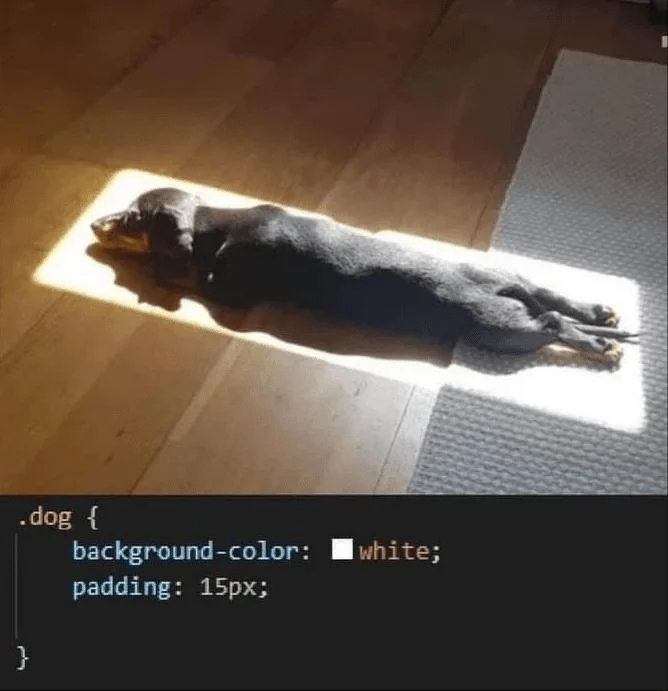
Welcome to the latest edition of DEV, your monthly deep dive into the evolving WordPress ecosystem. Before you step away from your monitor to seek out your own "rectangle of sunlight," let’s unpack the critical updates, community milestones, and philosophical debates that defined the past month in the world of open-source web development.
WordCamp US: The Phoenix Gathering
More than 1,100 attendees—armed with SPF 50 and plenty of hydration—descended upon Phoenix, Arizona, this month for the annual WordCamp US. Despite the staggering 111°F (44°C) desert heat, the event was a resounding success, underscoring the resilience and passion of the WordPress community.
A Formal Recognition
The impact of the event was so significant that local government took notice. Michael Hammett, Chief Innovation Officer for the City of Phoenix, officially proclaimed August 19th as "Phoenix WordPress Day." This recognition serves as a testament to the economic and social footprint of the WordPress community, which continues to drive digital innovation globally.
Community Milestones
Beyond the keynote sessions and technical workshops, the highlight for many was a collective effort to build a massive WordPress logo out of Lego bricks. While it served as a lighthearted team-building exercise, it acted as a poignant metaphor for the project itself: a structure built from thousands of individual, interlocking pieces contributed by a global, decentralized community.
WordPress 7.1 "Mary Lou": A Jazz-Inspired Evolution
The WordPress development team has officially released WordPress 7.1, codenamed "Mary Lou" in honor of the legendary jazz pianist and composer Mary Lou Williams. Much like Williams’ complex compositions, this update offers depth and sophistication that warrants a closer look from developers and site administrators alike.
Key Technical Improvements
While the update avoids radical, breaking architectural shifts, it represents a significant refinement of the user experience. 7.1 focuses on modularity and design-system integration, effectively reducing the reliance on custom CSS or third-party plugin bloat to achieve high-end layouts.
The update streamlines the block editor’s performance, improves asset loading times, and introduces refined responsive controls that allow creators to manipulate site architecture with greater precision. For those managing complex enterprise sites, these iterative improvements aggregate into a more stable and "opinionated" design workflow that minimizes the need for "mild profanity" during development.
Security and Maintenance
Alongside the 7.1 release, the core team also pushed out WordPress 7.0.4. This minor release addresses a critical security vulnerability; therefore, administrators are urged to perform their site updates immediately to ensure the integrity of their installations.
The AI Frontier: Defensive Data Design
The rapid integration of AI into the WordPress ecosystem has moved from "experimental" to "essential." With the release of the AI 1.3.0 plugin on August 18th, the platform’s native AI capabilities have expanded to include sophisticated content translation, slug generation, and automated taxonomy suggestions.

However, with increased capability comes increased risk. The conversation within the WordPress core community has shifted toward "Defensive Data Design"—a philosophy aimed at preventing "HAL 9000" scenarios where automated systems make irreversible or incorrect changes to site data.
The Human-in-the-Loop Imperative
Matt Mullenweg and other core contributors have initiated a dialogue on the Make WordPress Core blog regarding how to ensure AI defaults remain safe and reversible. Proposals include:
- Default "Undo" Safeguards: Implementing systems that require manual verification for bulk AI-generated content changes.
- Transparency Protocols: Ensuring that all AI-assisted actions are logged and identifiable within the admin dashboard.
- Human-Centric Support: WordPress has already begun rolling out support assistants that intelligently detect when an issue exceeds AI capabilities, seamlessly escalating the user to a human support agent.
This debate is not merely about software; it is about the ethics of automation. As we integrate these tools, the community must determine where AI efficiency ends and human oversight begins. Expect this to remain the defining topic of conversation for the next several years.
Industry Insights: The Shifting Freelance Landscape
The digital economy is showing signs of tectonic shifts. Adrian Sticea, a notable voice in the WordPress freelance community, recently highlighted a startling trend: the decline of Upwork as a viable source for WordPress-related work. For many, the "gig economy" era of WordPress development is evolving into a more specialized, value-based model.
Strategic Adjustments for Developers
- Content Rescues: Rather than churning out new blog posts, SEO experts are recommending the "rescue" of high-authority, older content. Salvaging URL equity from previously ranking pages is currently providing a higher ROI than new content production.
- Real-Time Collaboration: Industry experts like Jared Rethman are advocating for real-time technology, pushing WordPress to adopt features that mirror the collaborative nature of platforms like Google Docs.
- The "Own Your Web" Movement: There is a renewed push for digital sovereignty. Jonathan Bossenger has emerged as a vocal proponent of building sites that users actually own, resisting the "walled garden" approach of social media platforms and proprietary site builders.
Mind-Boggling Statistics and Trends
To put the current landscape into perspective, consider these figures from the past month:
- Bot Traffic: Recent audits have revealed that a significant portion of "impressions" on many high-traffic sites are driven by automated bots rather than organic human visitors.
- The Mobile Divide: Despite the ubiquity of mobile browsing, many "polished" desktop sites remain poorly optimized for mobile. Developers are increasingly utilizing conditional block-hiding to curate specific user experiences based on device type.
Coffee Break: The Lighter Side of Development
In the spirit of balancing "nerdery and nonsense," we’ve rounded up some distractions for your next break:
- Space Oddities: Did you know that as of this month, there are 10 humans currently in space? It is a stark reminder of our scale in the universe.
- Typing Gyms: If you want to increase your coding velocity, check out ReadnType, a speed-reading and typing gym that allows you to challenge your peers.
- Digital Nostalgia: A popular debate has ignited online regarding "Frutiger Aero"—the aesthetic of the early 2000s web. Was it the "Vaporwave" of our generation? The sheer number of nostalgic threads suggests that the early, glossy internet still holds a special place in our hearts.
- Fitness Goals: Finally, for those feeling sluggish, look to Mollie the Hamster. She has been equipped with a custom speed/distance tracker that puts most human fitness enthusiasts to shame. If a hamster can hit those metrics, you have no excuse.
Final Thoughts: The Road Ahead
As we look toward the remainder of the year, the WordPress project is clearly focusing on stability, AI integration, and user-centered design. Whether you are a developer, a site owner, or a casual contributor, the landscape is shifting from "how to build" to "how to build responsibly."
If you enjoyed this mix of industry analysis and community quirks, share this edition with your favorite WordPress enthusiast. Stay curious, keep your plugins updated, and don’t forget to take a break in the sunshine every now and then.



