In the modern digital landscape, establishing an online presence—whether for a personal blog, a burgeoning e-commerce empire, or a corporate portal—begins with one fundamental necessity: a website. Yet, the creation of a site is merely the first step. To make your digital assets accessible to the world, you require web hosting. Often misunderstood and frequently overlooked by beginners, web hosting serves as the bedrock of your online visibility. Choosing the right host is not merely a technical decision; it is a strategic business move that influences your site’s security, performance, and long-term search engine optimization (SEO) success.
The Anatomy of Web Hosting: What You Need to Know
At its core, web hosting is the service that anchors your website to the internet. Think of your website as a physical store: the domain name is your street address, and the web hosting is the physical building where your inventory is housed.
The "building" in this scenario is a server—a powerful, specialized computer that stays connected to the internet 24/7. When a user types your URL into their browser, the server retrieves your website’s files, images, and scripts, delivering them to the user’s screen. Web hosting companies provide this infrastructure, renting out space on their servers to ensure that your site remains available, responsive, and secure.
The Hidden Impact on SEO
While the hosting provider you choose does not have a direct, "magical" impact on your Google rankings, the quality of your hosting profoundly influences the metrics that search engines prioritize. Factors such as site uptime, server response speed, and robust security protocols are critical. If your site frequently goes offline due to poor hosting, or if it loads at a glacial pace, search engines will penalize your visibility. Conversely, reliable hosting builds trust, reduces bounce rates, and signals to search engines that your site is a high-quality destination for users.
Evolution of the Hosting Landscape: A Chronological Perspective
The history of web hosting has transitioned from simple, manual server management to highly automated, AI-driven solutions.
- The Early Days (1990s): Hosting was primarily reserved for tech-savvy individuals who managed their own physical servers or rented space in primitive data centers.
- The Rise of Shared Hosting (2000s): As the internet went mainstream, companies began offering "shared" packages, allowing multiple websites to live on one server. This democratized the web, making it affordable for bloggers and small businesses.
- The Era of Managed Solutions (2010s): The emergence of Content Management Systems (CMS) like WordPress led to the rise of specialized hosting. Hosts began offering "managed" plans that included automated updates, security patches, and specialized technical support.
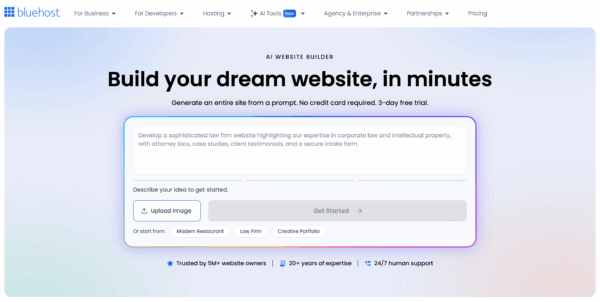
- The AI and Cloud Era (2020s–Present): Today, we are seeing the integration of AI-assisted website builders. Platforms like Bluehost have recently launched AI tools that allow users to generate entire site structures through simple natural language prompts, bridging the gap between design and development.
The Core Divide: Fully-Hosted vs. Self-Hosted
When planning your online venture, your first major crossroad is choosing between a fully-hosted and a self-hosted platform.
Fully-Hosted Platforms
Platforms like Shopify or WordPress.com are "all-in-one" ecosystems. The company manages the server, security, backups, and software updates. You essentially rent the platform. This is ideal for those who prioritize ease of use and want to avoid technical maintenance. The downside, however, is a loss of flexibility. You are often restricted to the themes and plugins the provider allows.
Self-Hosted Platforms
Self-hosted solutions (such as WordPress.org) offer total ownership. You choose your own hosting provider, your own theme, and your own architecture. This requires more technical oversight—you are responsible for security updates and performance optimization—but you gain complete control over your codebase and data. For businesses that require high customization and long-term scalability, self-hosting is the professional standard.

Strategic Selection: Criteria for Choosing a Provider
With thousands of providers globally, how does one discern a reliable partner from a subpar one? The decision should be data-driven.
1. The Proximity Factor (Server Location)
Latency is the enemy of the modern user. If your target audience resides in London, but your server is located in Tokyo, the physical distance data must travel will inevitably slow down your site. Always prioritize providers that offer data centers in or near your primary demographic.
2. Storage and Scalability
Your storage needs are dictated by your content strategy. A text-heavy blog requires minimal resources, whereas an e-commerce platform with high-resolution product photography and video content demands significant bandwidth and disk space. When selecting a plan, look for "scalability"—the ability to upgrade your resources seamlessly as your traffic grows.
3. The "Hidden" Value-Added Services
Basic hosting is a commodity; value-added services are the differentiator. Look for providers that offer:
- Automated Backups: Essential for disaster recovery.
- SSL Certificates: Crucial for security and HTTPS compliance.
- Email Hosting: To ensure your professional email matches your domain.
- Integrated Website Builders: Especially useful for beginners who lack coding experience.
Technical Architectures: Shared, VPS, and Dedicated Hosting
Understanding the technical framework of your hosting plan is vital for performance tuning.
Shared Hosting
As the entry-level choice, shared hosting places your site on a server alongside hundreds of others. It is the most cost-effective solution, but you are subject to "noisy neighbor" effects—where another site’s traffic spike might impact your site’s speed.
VPS Hosting (Virtual Private Server)
VPS acts as a middle ground. While your site still sits on a physical server with others, the server is partitioned into "virtual" segments. You are guaranteed a specific amount of RAM and CPU power that no other site can touch. It offers the stability of a dedicated server at a fraction of the cost.
Dedicated Hosting
The enterprise choice. You rent an entire physical server. This provides maximum security, performance, and configuration control. It is generally overkill for a personal blog but often necessary for large-scale e-commerce stores or high-traffic media outlets.
The Future: AI-Assisted Development
The industry is currently undergoing a massive shift with the introduction of AI-driven hosting environments. Companies like Bluehost are leading the charge, integrating AI tools that allow users to build websites via real-time chat. By describing a vision, the AI generates the site, including hosting and domain setup. While these tools are revolutionary for small businesses looking to launch quickly, users must remain cautious: highly complex, bespoke websites (such as intricate membership portals or custom applications) may still require manual development to ensure security and functionality.
Implications for Your Business
Choosing a host is not a "set it and forget it" task. It has lasting implications for:
- Business Continuity: If your site goes down, your revenue stops. Reliable hosting is an insurance policy.
- Customer Trust: A site that takes longer than three seconds to load often results in abandoned shopping carts and a tarnished brand image.
- Operational Agility: Can your host support your future needs? If you plan to pivot from a blog to a global shop, ensure your host can grow with you.
Conclusion
The selection of a web host is a foundational decision that echoes throughout the entire lifespan of your website. From the physical location of the data center to the technical architecture of your server, every choice affects how your audience experiences your brand.
Before committing, perform your due diligence. Assess your current traffic, your technical expertise, and your long-term growth projections. For those just starting, prioritize ease-of-use and support; for those managing mature businesses, prioritize performance and control. Remember: your website is your digital storefront. Investing in a robust, high-performance host is not an expense—it is a critical investment in your online future.
Frequently Asked Questions (FAQ)
Is it possible to switch hosts if I outgrow my current provider?
Yes, migration is common. However, it requires careful planning to ensure no data is lost and downtime is minimized. Many premium hosts offer free "white-glove" migration services where their engineers handle the move for you. Always verify this service before committing.
How much bandwidth do I actually need?
Bandwidth is often oversold by hosts. If you are starting out, most standard plans will suffice. As your traffic increases, monitor your analytics. Most reputable hosts will notify you if you are nearing your limits and offer a seamless path to upgrade.
What is the best way to choose between providers?
Beyond reading marketing copy, look for independent reviews and technical benchmarks. Specifically, check the quality of their customer support—can you reach a human via live chat or phone when a crisis hits? A host with excellent support is worth more than a host with slightly cheaper hardware.