







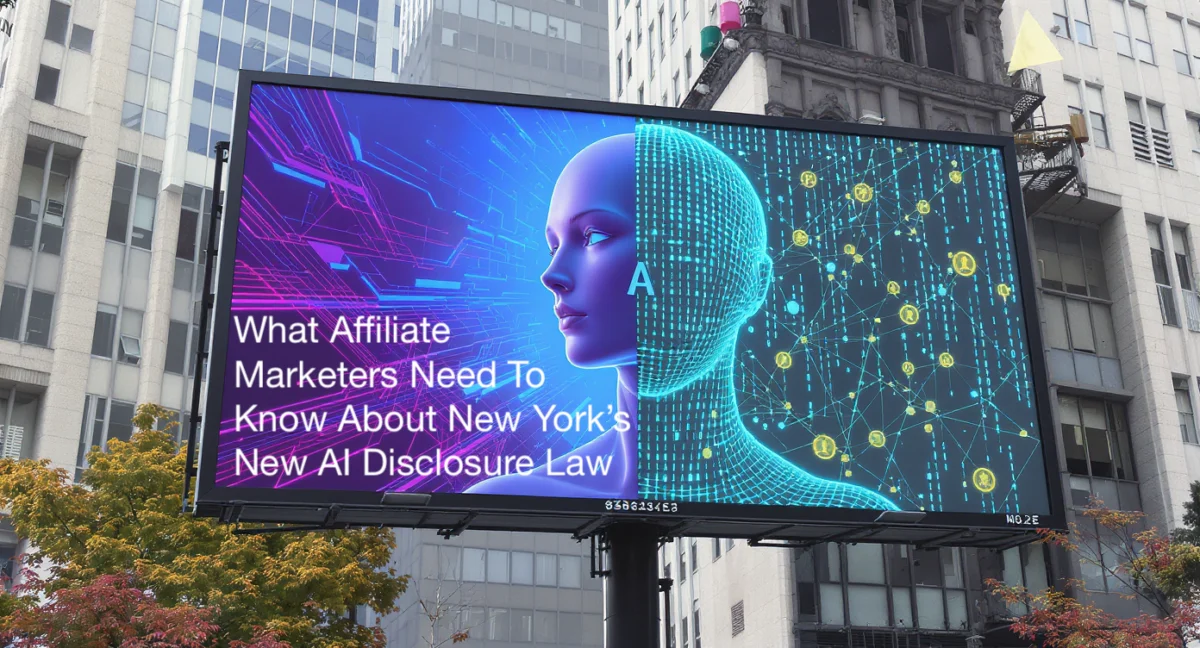
The rapid integration of generative artificial intelligence (AI) into the advertising ecosystem has ushered in a new era of creative efficiency. From hyper-personalized campaigns to the seamless generation of human-like avatars, the technology offers unprecedented scalability. However, this digital gold rush has also sparked significant regulatory concern regarding consumer trust and the blurring lines between reality and simulation.
In a pioneering move, New York State has enacted S.8420-A/A.8887-B, a first-of-its-kind statute that mandates transparency when “synthetic performers” are utilized in commercial advertisements. This legislation marks a critical turning point for digital marketers, agencies, and brands, signaling that the era of "anything goes" with AI-generated creative is drawing to a close.
The Main Facts: Defining the “Synthetic Performer”
Signed into law by Governor Kathy Hochul on December 11, 2025, the legislation is designed to ensure that consumers are not misled by digital constructs that mimic real human behavior. At the heart of the law is the term "synthetic performer."
Under the statute, a synthetic performer is defined as a digitally created asset—produced, reproduced, or modified via generative AI or software algorithms—that is intended to create the impression that the asset is engaging in a visual or audiovisual performance of a human being. Crucially, these assets are not recognizable as any specific, identifiable natural person.
The law requires that any entity—including firms, corporations, associations, or their respective agents—engaged in commercial advertising within New York must provide a "conspicuous disclosure" if a synthetic performer is present. This requirement applies whenever the advertiser has actual knowledge that a synthetic performer is being utilized.
The Standard of “Conspicuousness”
The law does not mandate specific, boilerplate phrasing for the disclosure. Instead, it relies on the principle of clarity. The disclosure must be prominent, unavoidable, and noticeable. It cannot be buried in the "fine print" or hidden in a manner that requires a consumer to hunt for the information. Failure to meet this standard of conspicuousness can leave an advertiser vulnerable to legal scrutiny.
Chronology: The Road to Regulation
The passage of S.8420-A did not occur in a vacuum. It is the culmination of a broader, ongoing conversation regarding AI ethics, deepfakes, and consumer protection.
- Early 2024: Mounting concerns regarding the proliferation of AI-generated content in political and commercial spheres gain traction in the New York State Legislature.
- Late 2024: Drafts of the bill circulate, garnering support from consumer advocacy groups and legal experts concerned about the potential for deception in digital advertising.
- December 11, 2025: Governor Kathy Hochul signs S.8420-A/A.8887-B into law, codifying transparency requirements for AI-generated assets.
- December 2025 – May 2026: A critical "grace period" for businesses to audit their existing creative assets, update influencer contracts, and implement internal compliance protocols before the law takes full effect.
- June 2026: The compliance mandate becomes enforceable. From this date forward, non-compliant advertisements distributed in New York risk substantial statutory penalties.
Supporting Data and Financial Risks
The financial ramifications of failing to comply with this new law are significant. Unlike some regulatory frameworks that rely solely on warning letters, New York’s law introduces a tiered system of civil penalties designed to deter non-compliance:
- First Violation: A civil penalty of $1,000.
- Subsequent Violations: A civil penalty of $5,000 per violation.
While these figures may seem manageable for a single campaign, the cumulative risk is staggering. In the world of high-volume affiliate marketing and programmatic advertising, a single oversight—such as a failure to disclose on a series of social media posts or a programmatic display campaign—could lead to thousands of individual violations. When aggregated, these penalties can quickly reach six or seven figures, not to mention the irreparable damage to brand reputation and the potential for class-action litigation.
Furthermore, the law must be viewed alongside New York’s expanded posthumous right of publicity legislation (S.8391/A.8882). This companion legislation requires prior consent from a deceased person’s heirs for the use of their name, voice, or likeness via "digital replicas." Violations here are even more punitive, with statutory damages of $2,000 or the total profits derived from the unauthorized use, whichever is greater, alongside the potential for punitive damages.
Official Responses and Federal Context
The regulatory landscape is further complicated by the interaction between state and federal policies. Recently, the White House issued an executive order aimed at enhancing U.S. AI innovation while simultaneously expressing a desire to preempt state laws that conflict with federal policy.
Legal experts, such as Richard B. Newman of Hinch Newman LLP, point out that while the federal government is focused on maintaining a competitive edge in AI, states are increasingly filling the void regarding consumer protection. This creates a "patchwork" regulatory environment that is notoriously difficult for national and global brands to navigate. Advertisers must now balance compliance with New York’s strict disclosure requirements against potential federal mandates that may emerge in the coming years.
The View from the Legal Front
Attorneys specializing in FTC defense and internet law are advising clients to treat this legislation as a "stress test" for their internal compliance processes. The core advice includes:
- Contractual Liability: Shifting potential liability through robust indemnification clauses in influencer and agency contracts.
- Internal Auditing: Implementing a "human-in-the-loop" review process to flag all AI-generated human likenesses before they enter the New York market.
- Creative Integration: Designing creative assets from the ground up with the "conspicuous disclosure" requirement in mind, ensuring it is baked into the visual or audio experience.
Implications for the Industry: Challenges and Exemptions
Are There Exclusions?
The law is nuanced and provides specific exemptions to avoid stifling creative expression:
- Expressive Works: The law does not apply to motion pictures, television shows, documentaries, video games, or streaming content, provided the use of the synthetic performer is consistent with the nature of the work.
- Language Translation: AI used solely for dubbing or translating content into different languages is exempted.
- Media Platforms: There is a potential, narrow exemption for media outlets and platforms that merely host or distribute the content, provided they do not have the same level of creative control or knowledge as the advertiser.
The Shift in Strategy
For the average digital marketer, the message is clear: Transparency is the new currency of trust. Advertisers who view this law as a hurdle to be circumvented are missing the point. The modern consumer is increasingly savvy regarding AI’s capabilities. By proactively disclosing the use of synthetic performers, brands can actually build a layer of "radical transparency" that distinguishes them from competitors who may be hiding their use of AI.
The era of AI in advertising is not ending; it is simply maturing. As other states monitor the efficacy of New York’s approach, it is highly probable that we will see a wave of similar legislation across the country. Marketers who invest in compliance now will be the ones who avoid the legal and financial pitfalls of tomorrow.
Conclusion: Preparing for the Future
As we look toward the June 2026 enforcement date, businesses must act with diligence. The complexity of AI-generated content—spanning everything from influencer marketing and programmatic ads to branded content—requires a comprehensive legal review.
Digital marketers, brands, and advertising agencies should consult with counsel experienced in FTC and state regulatory defense to assess their current exposures. From reviewing first- and third-party marketing campaigns to auditing creative pipelines, the time to prepare is now. New York has set the bar; it is incumbent upon the industry to ensure that the evolution of AI-driven advertising does not come at the expense of the consumer’s right to know exactly who, or what, is speaking to them.
Disclaimer: This article is intended for informational purposes only and does not constitute legal advice. Advertising laws are subject to change, and specific compliance requirements may vary based on individual circumstances. Readers are encouraged to consult with qualified legal counsel regarding their specific marketing practices and regulatory obligations.