










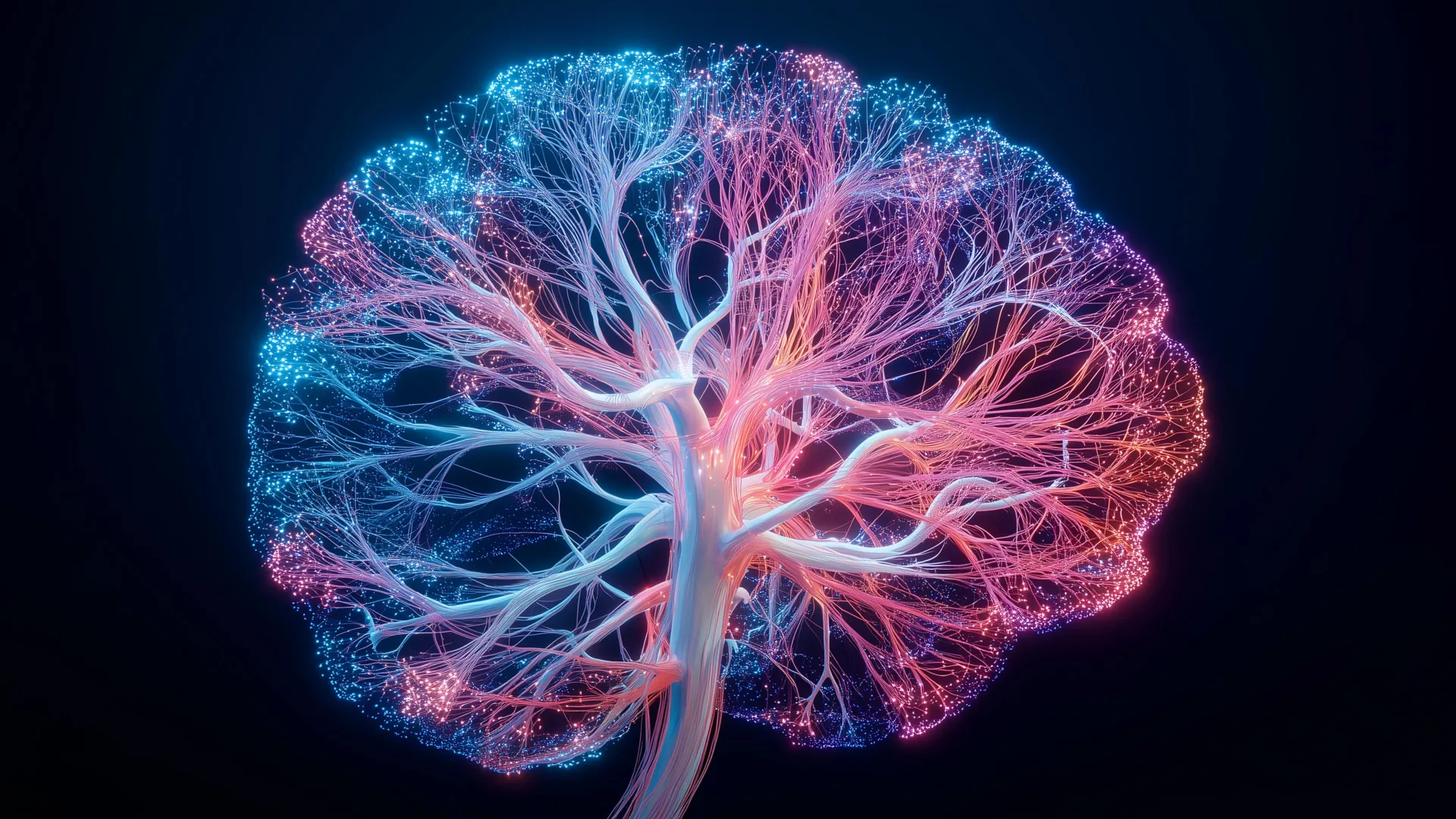
URBANA, ILLINOIS — In a development that bridges the gap between neurobiology and computer science, researchers at the University of Illinois Urbana-Champaign have published findings that dismantle long-held dogmas regarding how the mammalian brain processes information and makes decisions. The study, spearheaded by Professor Yurii Vlasov of The Grainger College of Engineering, demonstrates that neural decision-making occurs much earlier in the sensory hierarchy than traditional neuroscience models dictate.
Published in the Proceedings of the National Academy of Sciences (PNAS), this research does more than refine our understanding of human and animal cognition; it provides a vital biological blueprint. By observing how biological neural networks bypass rigid, unidirectional pathways in favor of dynamic, energy-efficient feedback loops, the UIUC team has opened a conceptual pathway toward solving one of modern technology’s most pressing crises: the staggering energy consumption and structural limitations of contemporary artificial intelligence.
Main Facts
At the core of the UIUC study is a challenge to the classical hierarchical model of brain function. For decades, neuroscientists and computer engineers alike operated under the assumption that sensory information moves in a strictly upward, linear trajectory. In this traditional view, raw data captured by sensory organs—such as the eyes, ears, or skin—travels sequentially through low-level processing regions before finally arriving at the frontal cortex, where high-level analysis and decision-making occur.
This reductionist model heavily influenced the architecture of modern artificial intelligence. Convolutional neural networks (CNNs) and deep learning models were explicitly built on this feed-forward paradigm. However, the UIUC research reveals that this model is fundamentally incomplete.
Monitoring neural activity in mice navigating a virtual reality corridor, Vlasov and his colleagues discovered decision-related neural signatures in the primary somatosensory cortex (S1). As one of the brain’s earliest sensory processing stations, S1 was previously thought to be incapable of autonomous, high-level choices. Yet, the data showed that S1 actively participates in decision-making, heavily modulated by top-down regulatory signals arriving via intricate neural feedback loops.
- Key Takeaway 1: Decision-making is not exclusively localized to the frontal cortex; it is a distributed, systemic process involving early sensory regions.
- Key Takeaway 2: Information flow in the biological brain is bidirectional, relying heavily on feedback loops rather than a one-way street of data processing.
- Key Takeaway 3: Natural intelligence accomplishes these feats at a fraction of the energy budget consumed by silicon-based artificial neural networks.
Chronology
To understand the magnitude of the UIUC breakthrough, it is helpful to trace the historical timeline of how humanity has conceptualized both the brain and computational logic, leading up to the publication in PNAS.
Mid-20th Century: The Birth of Feed-Forward Models
The journey began in the mid-1900s with the advent of cybernetics and early artificial neural networks. Inspired by early neuroanatomical sketches—such as those by Santiago Ramón y Cajal, which mapped seemingly directional paths of neurons—early computer scientists devised perceptrons and feed-forward networks. The underlying hypothesis was simple: input enters, layers process sequentially, and output is generated.
2008: The Grand Challenge of Reverse Engineering
As computing power grew, so did the complexity of AI. However, computer scientists repeatedly hit a wall regarding energy efficiency and contextual adaptability. Recognizing this, the U.S. National Academy of Engineering (NAE) formally designated "Reverse-Engineering the Brain" as one of the 14 Grand Challenges for Engineering in the 21st Century. The NAE noted that if engineers could decode the brain’s computational principles, they could replicate its staggering efficiency—running on roughly 20 watts of power, equivalent to a dim incandescent lightbulb.
The 2020s: The Efficiency Crisis in Deep Learning
By the 2020s, Large Language Models (LLMs) and massive deep learning architectures dominated the technological landscape. While capable of impressive feats, these systems began to demand astronomical amounts of electrical power, requiring entire data centers backed by dedicated power plants. The fundamental architectural limitation became glaringly obvious: modern AI was scaling brute force, while the biological brain scaled through structural sophistication.
Present Day: The UIUC Breakthrough
Recognizing that current AI models were built on an outdated neuroscientific premise, Professor Yurii Vlasov and his team at The Grainger College of Engineering initiated a deep investigation into the dynamic, systems-level architecture of biological intelligence. By combining advanced neural recording techniques with virtual reality environments for test subjects, the UIUC team captured empirical evidence of early-stage cortical decision-making, culminating in their landmark PNAS paper.
Supporting Data & Methodology
To uncover how the brain coordinates decisions at the earliest stages of sensory processing, the UIUC research team deployed a meticulous experimental design involving behavioral tracking and real-time neural recording.
The researchers tracked the neurological activity of mice traversing a custom-designed virtual reality (VR) corridor. As the subjects interacted with the virtual environment and made perceptual choices based on sensory cues, high-resolution electrode arrays recorded the firing patterns of individual neurons and local field potentials across multiple brain regions.
- Target Region: The primary somatosensory cortex (S1), traditionally cataloged as a low-level processing center dedicated strictly to mapping tactile and sensory inputs.
- Observed Phenomenon: The presence of choice-probability signals within S1 before the motor action or final behavioral decision was executed.
- The Mechanism: Cross-correlational analysis revealed that S1 does not operate in a vacuum. It is continuously modulated by higher-order cortical areas via descending feedback loops. This proves that sensory regions are dynamically reconfigured in real-time based on cognitive context, memory, and immediate environmental demands.
This data directly challenges the static, feed-forward assumptions hardcoded into standard artificial neural networks, suggesting that efficient machine learning models must incorporate dynamic, recurrent feedback mechanisms that mirror biological architectures.
Official Responses and Expert Insights
The implications of the UIUC study extend far beyond theoretical neuroscience, capturing the attention of computer architects, cognitive scientists, and AI developers worldwide. Speaking on the motivations behind the research, lead investigator Professor Yurii Vlasov emphasized the wisdom embedded in biological evolution.
"We want to learn from a billion years of evolution," Vlasov stated, addressing the core philosophy of the research group. "How is that biological intelligence organized architecturally? Can we learn from the architectural side of the brain and emulate that to make AI more effective, less power hungry, and more intelligent than it currently is? In the level of decision-making, that’s where current AI is lacking."
Vlasov points out that while today’s artificial intelligence can analyze vast datasets, play complex games, and generate human-like text, it does so through brute-force computation. It lacks the nuanced, adaptive, and hyper-efficient contextual reasoning that characterizes natural intelligence.
Commenting on the enigmatic nature of neural communication, Vlasov noted:
"The neural code of the brain is still mostly an unknown language. But this systems-level understanding can be viewed as a potential impact on how more efficient artificial neural networks can be built—how the next generation of AI can be thought through. Maybe with these analogies that we learn from real brains, we can improve AI further."
While the research team is careful to note that their findings do not constitute an immediate, plug-and-play blueprint for building superior AI chips today, they provide the essential foundational insights required for future hardware and software co-design.
Implications for the Future of Artificial Intelligence and Neuroscience
The publication of the UIUC study marks a potential turning point in how multidisciplinary teams approach the creation of artificial general intelligence (AGI) and neuromorphic computing. The implications span several critical domains:
1. Neuromorphic Hardware Development
Current computer chips—even specialized GPUs and tensor processing units (TPUs)—rely on von Neumann architectures where processing and memory are physically separated, leading to massive energy bottlenecks. By understanding how biological brains utilize distributed processing and bidirectional feedback loops within low-level sensory areas, engineers can design neuromorphic silicon chips that process information locally and dynamically, drastically cutting power requirements.
2. Overcoming the Energy Crisis in AI Data Centers
The exponential growth of generative AI has created an unprecedented environmental and infrastructural strain. Data centers consume gigawatts of power. If next-generation AI architectures can be redesigned to emulate the brain’s ultra-low-power feedback systems, the carbon footprint of training and deploying complex machine learning models could be reduced by orders of magnitude.
3. Redefining Machine Learning Algorithms
Standard deep learning networks rely heavily on backpropagation through strictly layered feed-forward structures. Introducing architectural motifs inspired by biological feedback loops—where early layers can be dynamically modulated by downstream decisions—could lead to more robust, adaptable, and context-aware AI models that are less prone to catastrophic forgetting and adversarial manipulation.
Next Steps for the UIUC Team
Having established that early sensory regions participate directly in decision-making via feedback loops, Vlasov and his colleagues are already charting their next course of research. The team plans to investigate the precise temporal dynamics of these neural signals. By analyzing the speed and synchronization with which feedback loops are engaged, the researchers hope to decode the dynamic organizational principles of biological processing.
"By looking at the fast temporal dynamics of neural activity, maybe we can understand better how these feedback loops are engaged in making decisions," Vlasov concluded. "Maybe that’s the approach that potentially uncovers these currently unknown mechanisms—how these feedback loops are organized dynamically and how they form and shape different levels of processing. Maybe that can be implemented in new architectures for AI."
As science continues to peel back the layers of the universe’s most complex organ, the boundary between neuroscience and computer engineering grows increasingly thin, pointing toward a future where machines do not just compute—they truly think like living systems.



