






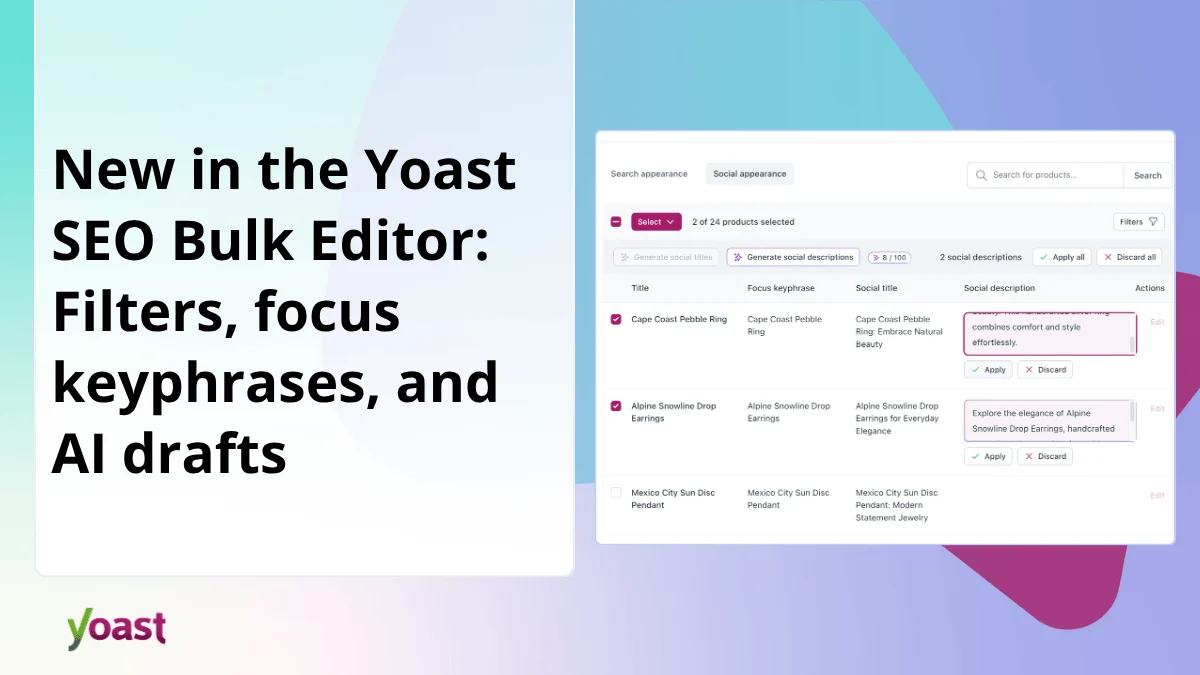
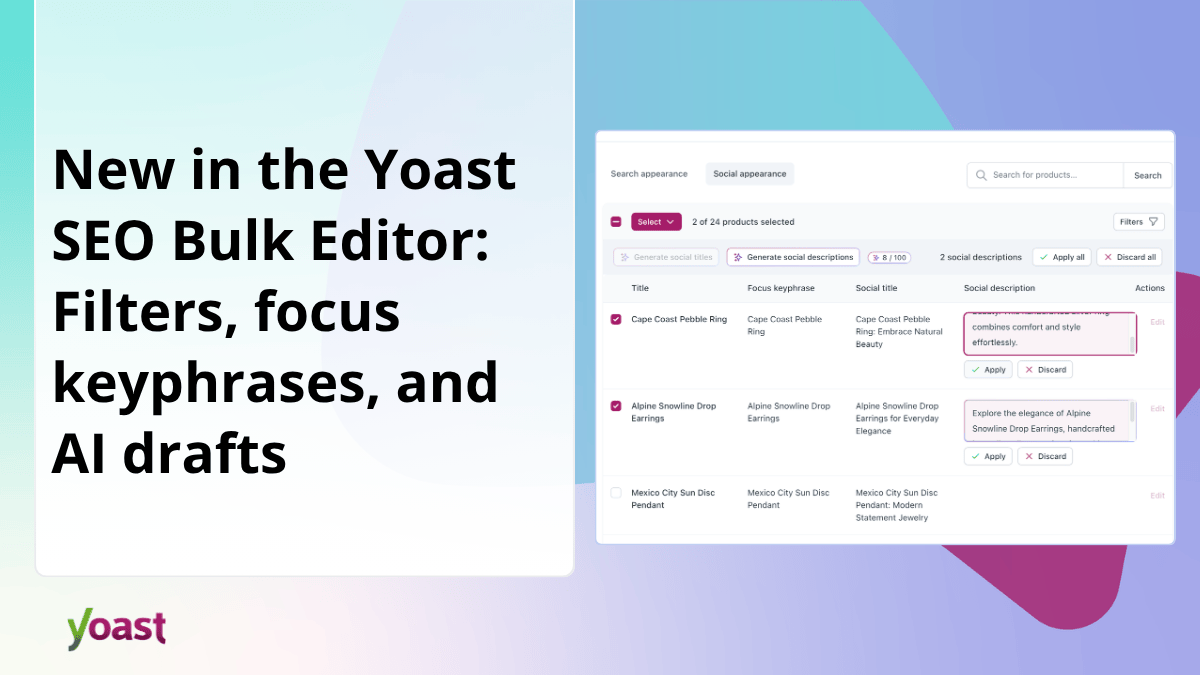
In the high-stakes world of digital marketing, where content volume often outpaces management capacity, Yoast has unveiled a significant transformation of its flagship Bulk Editor tool. Designed to move beyond simple spreadsheet-like modifications, the latest iteration integrates advanced filtering, granular content-type views, and, most notably, generative AI capabilities. This update marks a pivotal shift for WordPress administrators, e-commerce store owners, and SEO agencies, promising to turn the once-tedious chore of metadata maintenance into a streamlined, high-efficiency workflow.
The Evolution of Content Management: Core Facts
The Yoast SEO Bulk Editor has long served as a staple for site managers looking to avoid the "page-by-page" grind of updating SEO titles and meta descriptions. However, the release announced this week moves the needle significantly by treating site optimization as a surgical, data-driven operation.
The new update introduces three primary pillars of improvement:
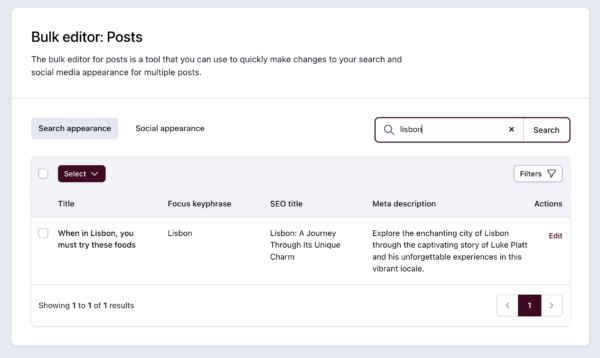
- Dedicated Content Views: Rather than a monolithic list, users can now isolate specific content types—such as pages, posts, or custom post types—ensuring that the workflow is tailored to the specific needs of that content category.
- Precision Filtering: Users can now navigate by status (drafts, published, pending) or by specific metadata gaps, allowing for the immediate identification of "low-hanging fruit" in site health.
- AI Integration: For users of Yoast SEO Premium and AI-integrated plans, the tool now suggests optimized titles and descriptions, transforming the editor from a manual input field into a collaborative AI interface.
A Chronology of the Update: From Manual to Intelligent
The development path of the Yoast Bulk Editor reflects the broader evolution of the WordPress ecosystem. Historically, SEO was a manual, artisanal process. As websites grew from 50-page blogs to 5,000-page enterprise portals, the need for bulk management became undeniable.
- Phase 1: Basic Bulk Editing. Introduced to allow quick, side-by-side edits of titles and meta descriptions. This solved the "click-save-reload" bottleneck but lacked context or insight.
- Phase 2: Data Visibility. The integration of focus keyphrases into the grid allowed users to see what they were targeting, but users still faced the burden of writing every meta tag from scratch.
- Phase 3: The AI Shift. With this current release, the development team has shifted the focus from "inputting data" to "managing strategy." By integrating AI, Yoast has effectively automated the drafting phase, allowing humans to step into the role of editor-in-chief rather than data entry clerk.
Supporting Data: Why Efficiency Matters
The necessity for these features is underscored by the current state of digital commerce and content marketing. Data from recent industry benchmarks suggests that websites with optimized, unique meta descriptions experience a significantly higher Click-Through Rate (CTR) in Search Engine Results Pages (SERPs).
However, the "maintenance debt"—the backlog of pages with missing or auto-generated, duplicate metadata—is a common issue. According to internal metrics provided by Yoast, administrators managing over 500 pages often experience a 40% reduction in time spent on SEO maintenance when using filtered bulk views. When paired with AI, the time required to bring a "neglected" site up to modern SEO standards is estimated to be reduced by upwards of 70%, allowing SEO managers to pivot their focus from metadata hygiene to high-level content strategy and keyword research.
Official Perspective: The Human-in-the-Loop Philosophy
The design philosophy behind this release is rooted in a "Human-in-the-Loop" approach. Yoast’s Product Marketing Manager, Beth Parker, emphasizes that while the tool utilizes sophisticated AI to draft content, the final decision remains firmly in the hands of the site owner.
"We recognize that for many, the sheer volume of content is the biggest barrier to SEO success," says Parker. "Our goal wasn’t just to make the tool faster, but to make it smarter. By introducing AI-drafted metadata, we’re doing the heavy lifting, but we’ve built in strict guardrails. Nothing is saved or pushed to your live site without your explicit approval. You review the AI’s suggestions, apply them to the rows that work, and discard what doesn’t. It’s about empowerment, not automation at the expense of quality."
Implications for E-Commerce: The Catalog Challenge
For e-commerce store owners, the implications of this update are particularly profound. Managing thousands of products, each with unique categories and variations, makes manual metadata writing nearly impossible.
The update specifically targets this sector by:
- Catalog-Specific Filtering: Merchants can now isolate product categories, making it easy to address metadata gaps across entire seasonal lines or departments simultaneously.
- Scalable SEO for Large Inventories: With the integration of Yoast WooCommerce SEO and Yoast SEO AI+, stores can generate descriptive, search-engine-friendly metadata for thousands of products in a single session. This is critical for retailers who rely on organic search traffic to move seasonal inventory; having a well-optimized, unique meta description for a product is often the difference between a sale and a bounce.
- Risk Mitigation: The "batch apply or discard" controls act as a safety net, ensuring that even when processing thousands of items, the user maintains complete control over the site’s branding and voice.
Future-Proofing Your SEO Strategy
As search engines continue to evolve—incorporating more AI into their own algorithms—the quality and relevance of meta tags remain a fundamental signal for ranking. The updated Bulk Editor is more than just a convenience feature; it is a strategic tool for maintaining a competitive edge.
How to Leverage the New Workflow
For those looking to optimize their workflow, the recommended approach is as follows:
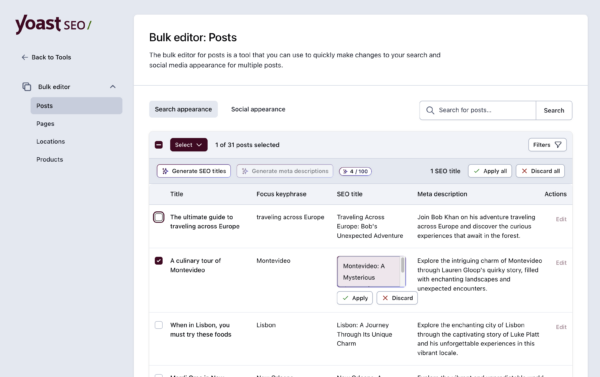
- Step 1: Perform a Gap Analysis. Use the new status filters to find every page lacking a meta description or a target keyphrase.
- Step 2: Utilize the AI Drafts. Select the identified pages and generate AI suggestions.
- Step 3: Quality Control. Review the suggestions for brand consistency. The AI is designed to be a starting point, not a final output.
- Step 4: Batch Approval. Once satisfied, apply the changes in bulk, effectively updating hundreds of pages in minutes.
Conclusion: A New Standard for WordPress SEO
The release of this enhanced Bulk Editor signifies that Yoast is looking beyond simple plugin functionality to address the reality of modern, large-scale content management. By combining the efficiency of bulk operations with the intelligence of AI, Yoast has provided a bridge between the arduous task of site maintenance and the creative work of content strategy.
As we move deeper into an era where efficiency is defined by the tools at our disposal, the ability to manage site health at scale will separate the leaders in the digital space from the laggards. Whether you are managing a boutique e-commerce shop or a sprawling digital publication, the new tools are designed to ensure that your SEO is not just "good enough," but consistently high-quality, relevant, and optimized for the search engines of tomorrow.
With this update, Yoast reaffirms its commitment to its user base: to provide sophisticated, professional-grade tools that simplify the complex, ensuring that every site owner has the power to compete at the highest level.