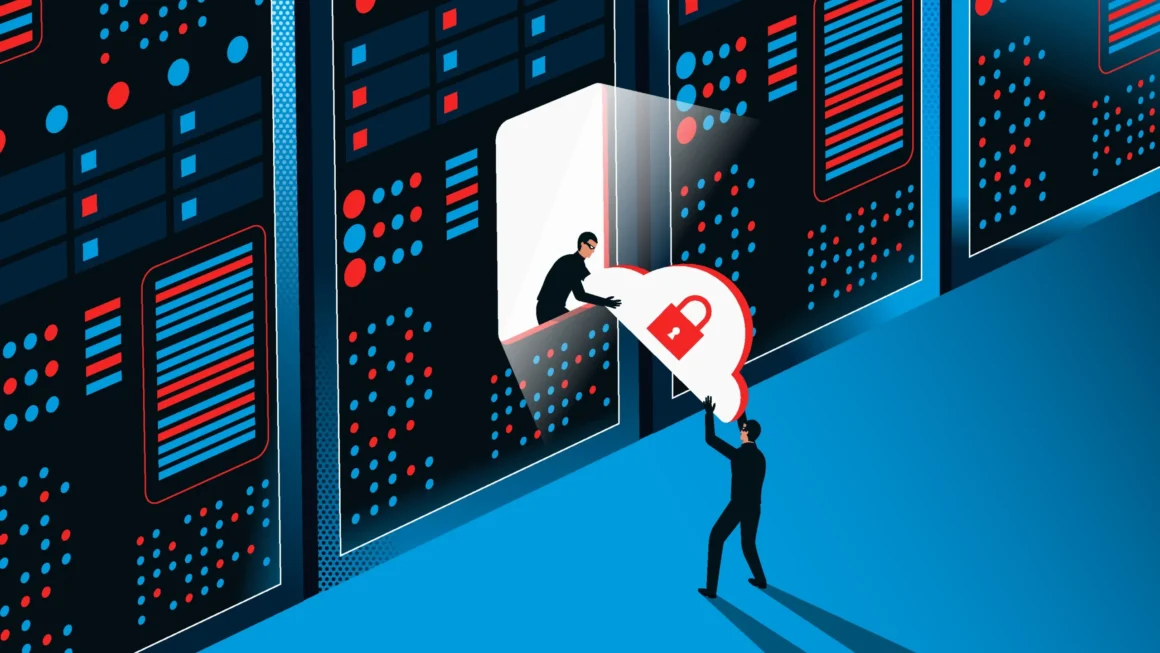








In a stark reminder of the persistent threats facing modern computing ecosystems, Apple has issued emergency security updates for its macOS, iPhone, and iPad platforms to address two critical zero-day vulnerabilities. These flaws, which are currently being leveraged by threat actors in the wild, grant attackers the ability to execute arbitrary code with kernel-level privileges—effectively providing them with total control over a compromised device.
Apple’s swift deployment of patches for iOS 15.6.1 and macOS Monterey 12.5.1 underscores the severity of the situation. Security researchers and industry experts are urging users to expedite the update process, warning that the nature of these exploits mirrors the dangerous capabilities of high-end, nation-state-sponsored spyware.
The Technical Core: Anatomy of the Flaws
The two vulnerabilities, tracked as CVE-2022-32893 and CVE-2022-32894, represent a dual-threat architecture that targets both the browser engine and the operating system’s core.
1. The WebKit Vulnerability (CVE-2022-32893)
WebKit is the foundational browser engine powering Safari and every other third-party browser on the iOS platform. The vulnerability identified here is an "out-of-bounds write" issue. In technical terms, an out-of-bounds write occurs when a program writes data past the end of a buffer, potentially corrupting adjacent memory or allowing for the injection of malicious code.
By processing maliciously crafted web content, an attacker can trigger this flaw to achieve code execution. Because WebKit is deeply integrated into the iOS experience, a user merely visiting a compromised or weaponized website could initiate an exploit chain, bypassing the sandboxing protections typically intended to isolate web traffic from the device’s core operating system.
2. The Kernel Vulnerability (CVE-2022-32894)
If the WebKit flaw provides the entry point, the kernel vulnerability provides the keys to the kingdom. The kernel is the "heart" of the operating system, managing the communication between hardware and software. By exploiting an out-of-bounds write flaw in the kernel, an attacker can escalate their privileges, moving from a restricted user-level application to the highest possible level of system access.
Once an attacker achieves kernel-level execution, they can bypass nearly all existing security measures. They can theoretically exfiltrate private data, monitor communications in real-time, activate microphones or cameras, and install persistent surveillance tools that remain hidden from both the user and standard security software.
A Chronology of the Discovery and Disclosure
While the specific identity of the threat actors remains classified—as is common with high-level zero-day discoveries—the timeline of these events highlights the rapid reaction required by the global cybersecurity community.
- Initial Discovery: An anonymous researcher, credited by Apple, identified the vulnerabilities. Their investigation revealed that the flaws were not just theoretical but were actively being exploited in the wild.
- The Disclosure: Upon verification, Apple’s security team worked to develop, test, and package patches that would address the memory management issues—specifically by implementing "improved bounds checking" to prevent the out-of-bounds write errors.
- The Release: On Wednesday, August 17, 2022, Apple released iOS 15.6.1 and macOS Monterey 12.5.1 to the public.
- The Call to Action: Within hours of the release, security agencies and experts began sounding the alarm. Recognizing the potential for widespread exploitation, authorities shifted from standard "recommended updates" to an urgent advisory: patch immediately.
Supporting Data and Security Context
The discovery of these vulnerabilities comes amidst a broader, systemic struggle within the tech industry. These are not isolated incidents but part of a growing trend of complex, multi-stage exploits targeting the world’s most popular software.
The sheer reach of these vulnerabilities is vast. The affected versions cover a wide array of devices:
- iOS: iPhone 6s and later, all iPad Pro models, iPad Air 2 and later, iPad 5th generation and later, iPad mini 4 and later, and iPod touch (7th generation).
- macOS: Any machine capable of running macOS Monterey 12.5.1.
This scope is significant because it encompasses devices that are several years old, highlighting that Apple’s commitment to security reaches across its legacy hardware base. However, the ubiquity of these devices is a double-edged sword; the more devices that are vulnerable, the more attractive the target becomes for sophisticated cyber-espionage groups.
The Pegasus-Like Scenario: Implications of the Attack
Industry experts have drawn immediate parallels between these zero-days and the infamous Pegasus spyware developed by the NSO Group. Pegasus is a highly sophisticated, military-grade surveillance tool that has been used to target journalists, human rights activists, and government officials globally.
The concern is that the ability to gain kernel-level access allows for the deployment of "zero-click" or "low-interaction" exploits. A user does not need to click a suspicious link or download a malicious file; simply browsing the web or receiving a specifically crafted message can be enough to trigger the infection.
Rachel Tobac, CEO of SocialProof Security, provided a stark assessment on social media. "For most folks: update software by the end of the day," she noted. "If your threat model is elevated—journalists, activists, or those targeted by nation-states—update now." This advice encapsulates the modern digital reality: security is no longer a "one size fits all" endeavor, but a tiered responsibility based on one’s risk profile.
The Broader Landscape: A War of Attrition
The announcement of these patches coincided with news from Google regarding its fifth zero-day patch for the Chrome browser this year. This convergence of events highlights what Andrew Whaley, senior technical director at Promon, describes as an "uphill battle" for software vendors.
The Vendor Responsibility
Despite Apple’s proactive patch management, the frequency of these exploits suggests that the underlying complexity of modern operating systems makes them inherently difficult to secure. As codebases grow larger and more interconnected, the "attack surface"—the total sum of vulnerabilities that can be exploited—expands exponentially.
The User Responsibility
Whaley notes that the onus cannot rest entirely on Apple or Google. Users have become hyper-reliant on mobile devices for banking, healthcare, and sensitive communication. This reliance, he argues, necessitates a shift in consumer behavior. "We must maintain our guard on mobile devices just as we do on our desktop operating systems," he said. This includes practicing good cyber hygiene, such as using multi-factor authentication (MFA), avoiding untrusted Wi-Fi networks, and, most importantly, keeping software updated the moment a patch is available.
The Developer Responsibility
Finally, there is a call for app developers to adopt a "zero-trust" approach. Many developers rely on the security of the underlying OS to protect their applications. However, if the OS kernel is compromised, the app’s internal security is rendered moot. Whaley suggests that developers must incorporate additional layers of security within their applications—such as robust encryption, code obfuscation, and runtime protection—to ensure that even if the host OS is breached, the data remains shielded.
Conclusion: The Path Forward
The rapid deployment of patches for CVE-2022-32893 and CVE-2022-32894 serves as a critical checkpoint in the ongoing effort to secure the digital frontier. While Apple has successfully mitigated the immediate danger, the episode serves as a sobering reminder that the devices in our pockets are high-value targets in an increasingly hostile cyber environment.
For the average user, the takeaway is simple: Update your devices today. For the broader tech community, these vulnerabilities signal that the race between exploit developers and security engineers is accelerating. As we move forward, the combination of vendor-side diligence, user-side vigilance, and developer-side security-by-design will be the only effective defense against the next wave of zero-day threats.
The digital world is not invulnerable, but through collective, informed action, we can significantly raise the cost for those who seek to compromise our privacy and security.