











As the global race for artificial intelligence supremacy intensifies, so too does the voracious appetite for electricity required to fuel the hyperscale data centers powering these innovations. With the energy-intensive nature of AI workloads threatening to overwhelm aging infrastructure, Google has unveiled an ambitious solution: a massive, 1-gigawatt "Virtual Power Plant" (VPP). While the nomenclature […]

The Future of Site Administration: How to Manage WordPress with ChatGPT and Claude
The landscape of web administration is undergoing a seismic shift. For nearly two decades, managing a WordPress site has required a manual, click-heavy approach: logging into the dashboard, navigating through nested menus, and performing repetitive updates. Today, that paradigm is being disrupted by the integration of large language models (LLMs) directly into the site’s backend. […]

The Future of Site Administration: How to Manage WordPress with AI via WPVibe
The landscape of website management is undergoing a fundamental transformation. For nearly two decades, WordPress administrators have relied on manual input, plugin-based automation, or custom coding to maintain their digital footprints. However, the emergence of the Model Context Protocol (MCP) has introduced a new paradigm: direct, conversational control of your website through advanced Large Language […]

The Future of Site Administration: How to Manage WordPress with AI Agents
The landscape of web management is undergoing a seismic shift. For nearly two decades, managing a WordPress site required a manual, click-intensive workflow: logging into the dashboard, navigating through sub-menus, and performing repetitive tasks one by one. Today, the integration of Large Language Models (LLMs) like ChatGPT and Claude into the WordPress ecosystem is fundamentally […]
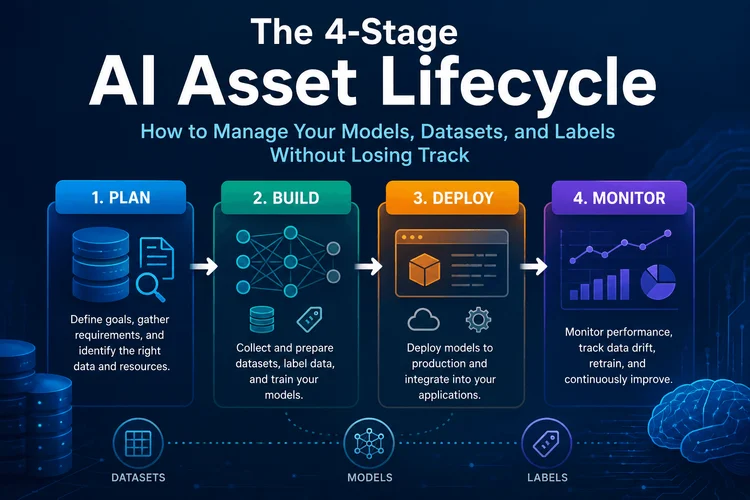
The 4-Stage AI Asset Lifecycle: How to Manage Your Models, Datasets, and Labels Without Losing Track
TL;DR Every machine learning project produces three core assets: labeled datasets, trained models, and the schemas that define how labels are structured. Most teams manage code with Git, infrastructure with Terraform, and models with… nothing systematic. The result is duplicated work, untraceable training data, models in production that nobody can reproduce, and compliance gaps that […]