










SAN CAMERON — The fundamental nature of B2B and B2C buyer behavior has undergone a seismic shift. Long before a prospect fills out a lead capture form, scrolls past a sponsored post, or lands on a corporate website, they are increasingly turning to artificial intelligence. Today’s modern buyers are asking answer engines for algorithmic recommendations, vetting competing vendors through conversational models, and gathering complex solutions entirely within AI-assisted interfaces.
While these initial interactions dictate which brands make the coveted shortlist, they present a profound structural challenge for modern enterprises. These critical touchpoints routinely happen entirely outside the traditional tracking frameworks, pixels, and cookies that marketing operations teams rely on to measure campaign performance.
This invisible discovery phase has birthed what industry experts are calling the "AI accountability gap." As legacy tools designed for traditional search engine optimization (SEO) and paid traffic fail to capture the nuances of AI-assisted discovery, organizations face an urgent operational imperative: building the modern infrastructure required to connect Answer Engine Optimization (AEO) directly to the buyer journey and, ultimately, to bottom-line revenue.
Main Facts: The Emergence of the AEO Blind Spot
The rise of conversational search and answer engines—such as ChatGPT, Google Gemini, Perplexity, and specialized enterprise AI tools—has fundamentally disrupted the top of the marketing funnel.
- The Pre-Site Journey: A significant percentage of modern buyers conduct their initial product research, vendor comparisons, and solution discovery within AI chat interfaces.
- The Attribution Black Hole: Because these interactions rely on citations, brand mentions, and algorithmic recommendations rather than traditional click-through links, they typically evade standard web analytics.
- The Revenue Miscalculation: When marketing operations teams cannot tie AI visibility to incoming traffic, executive dashboards routinely understate the true influence of marketing initiatives.
- The Solution Infrastructure: Bridging this gap requires a three-pronged operational strategy: integrating brand visibility metrics into customer relationship management (CRM) platforms, redesigning multi-touch attribution models, and automating ongoing AEO monitoring.
According to proprietary data released by HubSpot, marketing and operations teams that actively deploy specialized infrastructure like HubSpot AEO experience a staggering 78% increase in contact creation, underscoring the massive untapped potential of capturing AI-driven visibility signals.
Chronology: From Traditional Search to Conversational Discovery
To understand how marketing operations arrived at the current accountability crossroads, it is helpful to trace the evolution of search and discovery mechanics over the past two decades.

Phase 1: The Era of Keyword Dominance (Early 2000s–2010s)
For over twenty years, digital marketing was governed by traditional search engine optimization and paid search advertising. The buyer journey was linear and predictable: a user typed a query into a search engine, scanned a list of blue links, clicked through to a website, and either converted or bounced. Attribution models—such as first-touch and last-touch tracking—were built explicitly to follow this cookie-and-click breadcrumb trail.
Phase 2: The Multi-Channel Complexity (Late 2010s–Early 2020s)
As digital ecosystems expanded to include social media, display advertising, and content marketing, attribution grew more sophisticated. Multi-touch attribution (MTA) models emerged to distribute credit across various touchpoints. However, these models still fundamentally relied on trackable user clicks, form submissions, and direct site visits.
Phase 3: The Generative AI Revolution (2023–Present)
The public proliferation of generative AI fundamentally bypassed the traditional click-based paradigm. Instead of forcing users to browse multiple web pages to synthesize information, answer engines now synthesize answers directly on the results page. A buyer asks an AI engine to "recommend the top three enterprise CRM solutions for a mid-market manufacturing firm." The AI reviews its training data and indexed web sources, formulates a cohesive response, and cites specific brands.
The buyer reads the recommendation, gains brand awareness, and forms an opinion—all without a single click ever registering on the target company’s web server. Days later, that same buyer might navigate directly to the brand’s website or search for it organically. Traditional analytics tools automatically credit the direct visit or organic search, completely erasing the foundational role that the AI answer engine played in creating the initial demand.
Supporting Data: Quantifying the Impact of AI Visibility
As marketing budgets face tighter scrutiny from CFOs, the inability to measure AEO creates a dangerous paradox: channels that successfully drive demand via AI recommendations risk being defunded because legacy reporting tools show zero direct attribution.
The Breakdown of Traditional Attribution
Consider a typical B2B buying committee. Data suggests that up to 30% of inbound enterprise traffic now features AI-assisted discovery as an unrecorded precursor touchpoint. If an attribution model is blind to these interactions:

- Pipeline Underreporting: Executive leadership sees diminished ROI on brand-building initiatives.
- Budget Misallocation: High-performing content strategies that successfully feed the "citation pool" for answer engines are starved of resources.
- Strategic Blindness: Teams lose visibility into how competitors are positioning themselves within AI-generated responses.
Bridging the Gap Through CRM Integration
To resolve these discrepancies, progressive marketing operations teams are moving beyond basic web traffic metrics. By integrating specialized AEO performance data directly into CRM and business intelligence systems, organizations can finally unify qualitative visibility data with quantitative revenue pipelines.
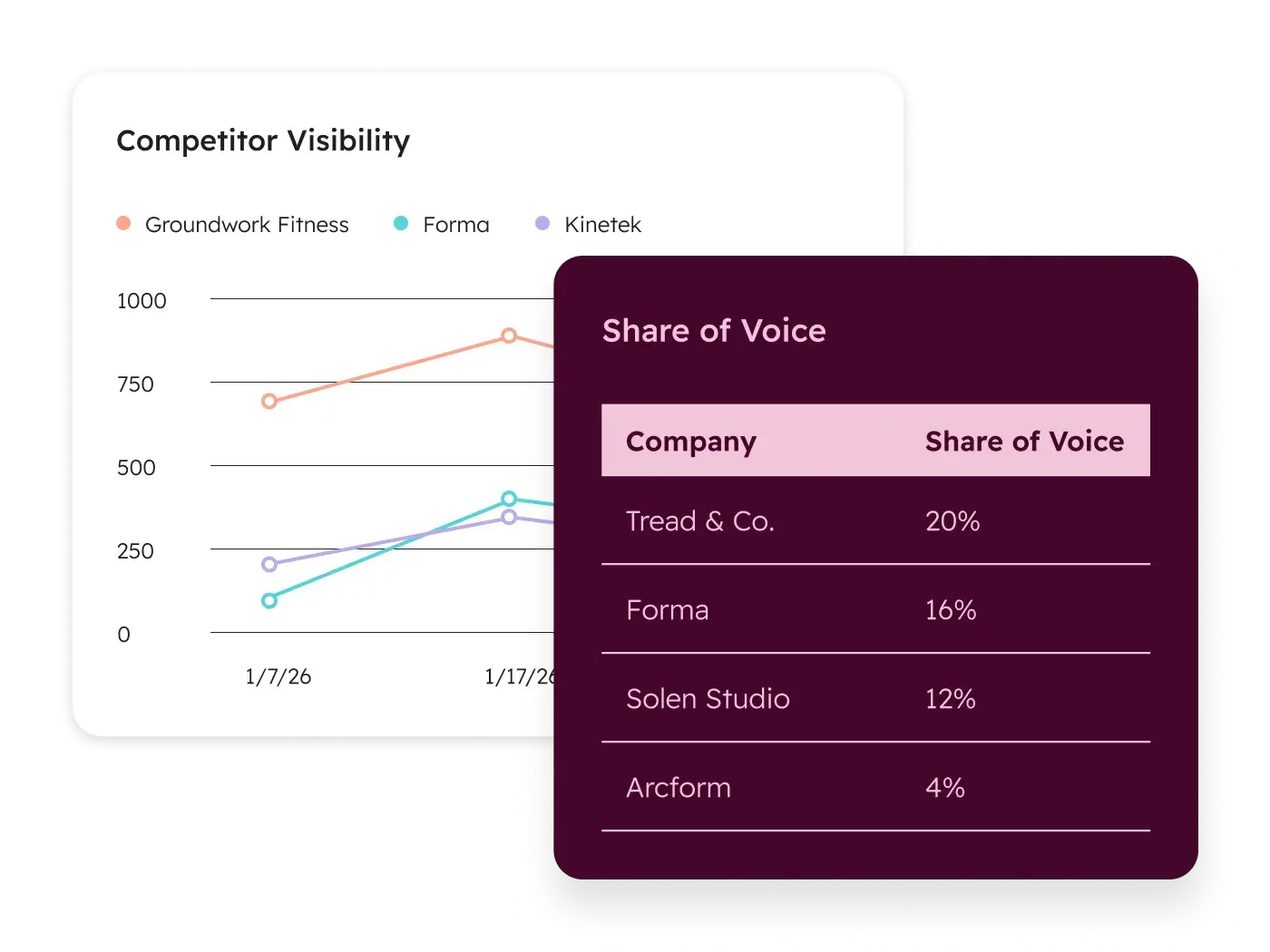
Tools like HubSpot AEO allow organizations to track core metrics—such as brand visibility scores, share of voice across various answer engines, and citation frequency—and map them directly to contact and deal records. When an inbound lead enters the CRM, sales and marketing teams can review the historical touchpoints that influenced the account, gaining a holistic view of how AI-driven discovery accelerated the sales cycle.
Official Responses and Industry Perspectives
Marketing technologists and operations leaders are increasingly vocal about the necessity of adapting tech stacks to the realities of generative search.
"We are witnessing the obsolescence of click-only attribution," notes a prominent marketing systems architect. "For years, our dashboards operated under the assumption that if a user didn’t click a link, the interaction didn’t happen. Generative AI has shattered that assumption. Buyers are consuming brand messaging inside synthetic environments, and if your CRM cannot ingest citation and share-of-voice data, you are essentially flying blind through half of your funnel."
Industry analysts emphasize that AEO is not merely an extension of traditional SEO, but an entirely different operational discipline. While SEO focuses on ranking algorithms and keyword density, AEO focuses on semantic authority, structured data readiness, and digital PR footprint—ensuring that third-party review sites, knowledge bases, and industry publications frequently reference a brand in ways that answer engines recognize as authoritative.
Furthermore, platform providers are rushing to meet the demand. The integration of automated AEO dashboards directly into major CRM ecosystems signals a broader industry recognition: visibility data must live where customer data lives. By automating the collection of share-of-voice trends and citation growth, platforms eliminate the administrative burden of manual spreadsheet tracking, allowing operations professionals to focus on strategic pipeline optimization rather than data collection.

Implications for the Future of Marketing Operations
As artificial intelligence solidifies its place as the default starting point for consumer and B2B research, the long-term implications for marketing organizations are profound.
1. The Redefinition of "Traffic"
The obsession with raw web traffic is giving way to a more nuanced appreciation of "dark social" and "dark AI"—brand mentions and recommendations that occur outside trackable click paths. Marketers must accept that a growing share of brand consideration will happen in untrackable or semi-trackable conversational spaces. Success will be measured not just by sessions and pageviews, but by brand footprint density within major foundational models.
2. Evolution of the MarTech Stack
Marketing operations teams will no longer be able to maintain a strict wall between content strategy and revenue operations. AEO data—tracking how often a brand is cited alongside key industry terms—will become a core leading indicator for sales pipeline health. Teams that successfully integrate these visibility signals into their CRM and attribution logic will enjoy a distinct competitive advantage in forecasting revenue and optimizing campaign spend.
3. Continuous Monitoring as a Standard Operating Procedure
Because answer engines update their algorithmic outputs continuously in response to real-time web changes, competitor maneuvers, and new content publications, static quarterly reports are officially obsolete. Automation is no longer a luxury; it is a foundational requirement. Organizations must rely on automated monitoring tools to alert them when their share of voice drops in a key category or when a competitor captures a vital citation spot.
Conclusion
The advent of artificial intelligence has permanently altered the buyer journey, exposing a critical accountability gap in how organizations measure marketing effectiveness. By integrating AEO data into the CRM, evolving attribution models to account for pre-site AI influence, and automating ongoing monitoring, marketing operations teams can finally close the loop between AI visibility and revenue. The infrastructure to measure the true impact of AI is no longer a futuristic concept—it is the modern baseline for competitive survival.



