







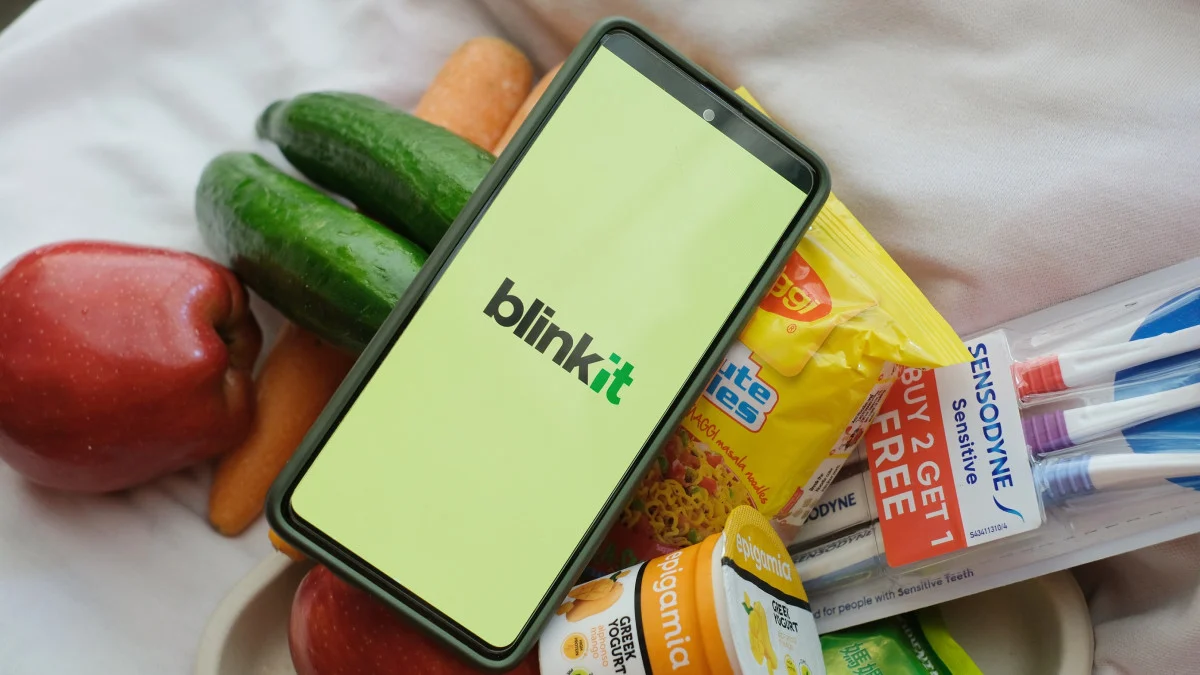
The landscape of Indian quick-commerce is witnessing a stark, widening chasm between its two primary protagonists. Recent fiscal disclosures for the September 2026 quarter reveal a tale of two divergent strategies: while Eternal’s Blinkit has successfully crossed the threshold into profitability, Swiggy’s Instamart remains entrenched in a high-burn battle for market share. This divergence, captured in the latest shareholder letters, provides a masterclass in how operational efficiency, customer retention, and unit economics define the victors in the lightning-fast world of 10-minute deliveries.
Main Facts: A Tale of Two Models
For the quarter ending September 2026, the contrast in financial performance is profound. Blinkit reported an adjusted EBITDA profit of Rs 184 crore—a remarkable turnaround from its Rs 156 crore loss during the same period last year. Conversely, Swiggy’s Instamart posted an adjusted operating loss of Rs 895 crore, a figure that has escalated by Rs 118 crore since the previous quarter.
At the core of this disparity is the ability to extract value from individual transactions. Blinkit currently commands a profit of approximately Rs 5 per order, while Instamart operates at a deficit of Rs 69 per order. While customers spend relatively similar amounts per transaction—Rs 525 on Blinkit versus Rs 506 on Instamart—the sheer volume and frequency of orders handled by Blinkit’s network have created a flywheel effect that Instamart is still struggling to replicate.
Chronology of the Shift
The journey to these current positions reflects a significant shift over the past twelve months. In the September 2025 quarter, Blinkit occupied a position similar to where Instamart stands today, struggling with negative unit economics. Through an aggressive scaling of its dark store network and a disciplined focus on customer cohort quality, Blinkit has managed to grow its order volume by 79% year-over-year.
Instamart, meanwhile, has faced a more complex trajectory. While its orders grew by 29% over the last year, the company chose to lean into "targeted pricing investments" to recover lapsed users, including aggressive promotional tactics like the Rs 9 store. This decision, intended to drive top-line growth, ultimately weighed down its contribution margins, which dipped to -1.0% of Gross Order Value (GOV) from -0.2% in the June quarter. Swiggy’s management maintains that these losses have "peaked" and that the investment phase is designed to lay the groundwork for future profitability.
Supporting Data: The Metrics of Efficiency
The comparative data between the two platforms highlights where the operational gaps exist.
| Metric (Q2 FY27) | Blinkit | Instamart |
|---|---|---|
| Adjusted EBITDA (Rs crore) | 184 | -895 |
| Total Orders (million) | 398.9 | 130.3 |
| Order Growth (YoY) | 79% | 29% |
| Net Average Order Value (Rs) | 525 | 506 |
| Monthly Transacting Customers (m) | 37.0 | 14.8 |
| Orders per Customer/Month | 3.6 | 2.9 |
| Total Dark Stores | 2,751 | 1,240 |
| Orders per Store per Day | ~1,700 | 1,192 |
| Contribution per Order (Rs) | ~28 | ~(-7) |
Blinkit’s superior performance is anchored in its store utilization. Each of its 2,751 dark stores processes approximately 1,700 orders per day, compared to the 1,192 orders processed by Instamart’s 1,240 stores. This gap in store density and throughput explains why analysts are increasingly questioning the current valuation disparity between the two companies. As noted by CLSA analyst Aditya Soman, the widening gap in metrics for businesses that are "largely similar" suggests that Blinkit’s operational leverage is significantly more advanced.
Official Responses and Strategic Outlook
Swiggy’s Roadmap to Breakeven
Swiggy’s Chief Financial Officer, Rahul Bothra, has framed the current loss as a strategic investment. To reach the break-even point, Swiggy has outlined a clear two-pronged strategy:
- Revenue Enhancement: Two-thirds of the path to profitability will be driven by increasing revenue per order through a refined product mix, an expansion of private label offerings, and the scaling of its advertising platform.
- Cost Optimization: The remaining third will come from "densification"—increasing the number of orders per store—alongside automation and improved operating leverage.
Swiggy aims to grow Instamart’s annualized net order value from the current Rs 26,400 crore to roughly Rs 60,000 crore. Crucially, Swiggy is shifting its expansion philosophy: it will no longer enter new cities in the immediate future, choosing instead to wait until existing stores reach high saturation levels (approx. 2,000 orders per day) before opening new, adjacent facilities.
Blinkit’s Focus on Cohort Quality
Blinkit’s leadership, led by CEO Albinder Dhindsa, has adopted a more clinical approach to growth. The focus has shifted from mere volume to "profitable service." Dhindsa emphasized that the company is deprioritizing customers who are solely driven by deep discounts, as they occupy the same operational capacity as high-value, repeat users.
The future for Blinkit lies in geographic expansion and deepening penetration. With a target of 5,000 stores by March 2028, Eternal is looking to penetrate smaller, tier-2 cities. Interestingly, the company reports that new stores in these smaller markets are reaching the 1,000-order-per-day milestone at a pace comparable to their metro counterparts, signaling that the quick-commerce habit is successfully transcending major urban centers.
Implications for the Sector
The divergence between Swiggy and Eternal offers several critical implications for the future of the Indian retail sector:
1. The End of the "Growth at All Costs" Era
The market is clearly rewarding Blinkit’s pivot toward profitability. Investors are increasingly skeptical of cash-burn strategies, and the market valuation of Eternal—currently over five times that of Swiggy—serves as a cautionary tale for platforms that continue to prioritize customer acquisition over unit economics.
2. The Power of Density
The data confirms that quick-commerce is a game of hyper-local density. Blinkit’s ability to force 1,700 orders per day through its stores creates a barrier to entry that competitors find difficult to overcome. Instamart’s struggle to reach similar density underscores the difficulty of managing a massive, distributed physical network while simultaneously trying to stabilize margins.
3. The Shift to Advertising as Revenue
Both companies are increasingly viewing their digital storefronts as advertising platforms. By monetizing the visibility of products within the app, both firms are effectively subsidizing their delivery costs through high-margin ad revenue. This transition from purely transactional retail to a hybrid media-retail model will likely be the decisive factor in who achieves long-term, sustainable EBITDA margins.
4. The Customer Loyalty Paradox
Blinkit’s data suggests that loyalty is built through reliability and product availability rather than just price cuts. The fact that their orders per customer have held steady at 3.6 per month, despite a reduction in the "discount-seeking" customer base, suggests that a core, loyal user base has been established. Instamart’s reliance on "Rs 9" promotions to lure back lapsed users highlights the volatility of customers who are acquired primarily through price incentives.
Conclusion
As the fiscal year progresses, the quick-commerce industry in India is transitioning from a period of land-grabbing to a period of institutional maturity. Blinkit has provided a blueprint for how to scale while remaining disciplined, and Swiggy is currently engaged in an intensive catch-up process. Whether Instamart can achieve its goal of breaking even through product mix optimization and store densification remains the most critical question in Indian tech retail. For now, the numbers suggest that the race is no longer just about who can deliver the fastest, but who can deliver the most efficiently.