








Marketing, much like the e-commerce industry it fuels, is in a perpetual state of flux. Every year, the playbook is rewritten, driven by the aggressive strategies of global conglomerates, the innovative experimentation of boutique agencies, and the shifting sands of consumer behavior. As we navigate the current landscape, it is clear that marketing is no longer just about visibility; it is about resonance, responsibility, and technological precision.
The modern consumer is more informed, more skeptical, and more demanding than ever before. To capture their attention, brands must move beyond traditional interruption marketing. Today’s most successful strategies are rooted in deep social interaction—leverage the intimacy of social media, the immediacy of short-form video, and the intelligence of data-driven personalization. As the competition for digital real estate intensifies, businesses are pouring record levels of investment into both organic and paid acquisition. This shift is not merely a trend; it is a fundamental recalibration of how brands meet consumers at the right time, on the right channel, with the right message.
In this analysis, we will explore the five pillars of modern marketing that are defining the coming period, providing the insights necessary to optimize your acquisition channels and future-proof your business.
1. Responsible Artificial Intelligence: The New Ethical Standard
The rise of Artificial Intelligence (AI) has been the most significant disruption to marketing in the last decade. However, the narrative has shifted from "AI for efficiency" to "Responsible AI."
The Shift Toward Ethical Automation
Responsible AI refers to the commitment to using machine learning and generative tools in a manner that is transparent, ethical, and socially conscious. As brands deploy AI to automate customer service, generate content, and manage advertising spend, they face increasing scrutiny regarding data privacy and bias.
Key Principles:
- Algorithmic Transparency: Brands are now expected to disclose when content or interactions are AI-generated, fostering trust with a wary audience.
- Data Privacy: With the deprecation of third-party cookies, AI must be trained on first-party data that is gathered with explicit, informed consent.
- Bias Mitigation: Companies are auditing their models to ensure that automated targeting does not inadvertently discriminate or perpetuate harmful stereotypes.
The implication for marketers is clear: AI is a powerful force multiplier, but it must be governed by a framework that prioritizes the user experience over mere volume of output.
2. Sustainability as a Strategic Pillar
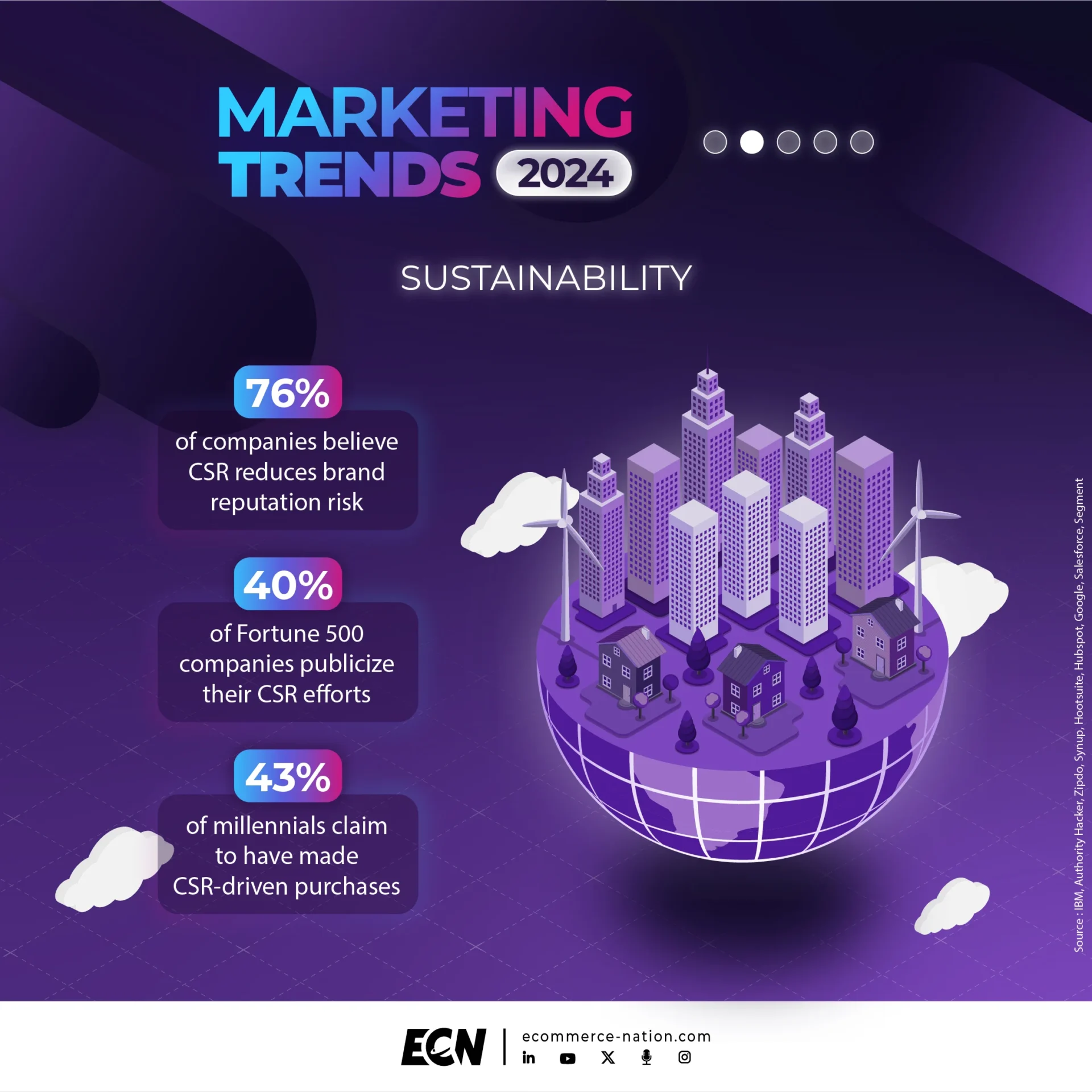
Sustainability is no longer a "nice-to-have" or a footnote in a corporate social responsibility report—it is a core marketing metric. Modern consumers are increasingly voting with their wallets, favoring brands that demonstrate a tangible commitment to the planet.

Communicating Purpose in the Digital Age
Companies are integrating sustainability into the very fabric of their digital storytelling. This involves more than just greenwashing; it requires an authentic narrative that permeates every touchpoint.
- Content Strategy: Brands are utilizing their blogs and social media channels to document their supply chain improvements, carbon offset initiatives, and ethical manufacturing processes.
- The Power of Influence: Partnerships with sustainability-focused influencers are becoming the gold standard for reaching eco-conscious demographics. These creators provide a layer of credibility that traditional corporate messaging often lacks.
- Technological Traceability: We are seeing the rise of blockchain-enabled transparency. By allowing consumers to scan a QR code on a product and view its entire lifecycle—from raw material sourcing to final delivery—brands are building a level of trust that was previously impossible.
3. The Rise of Conversational Search
The days of typing rigid keyword strings into a search bar are fading. We have entered the era of the "conversational query." Driven by the ubiquity of smart assistants like Siri, Alexa, and Google Assistant, search has become an extension of human dialogue.
Adapting to Semantic Understanding
Conversational search is not about keywords; it is about intent. When a user asks their smart speaker, "Where can I find a durable, eco-friendly running shoe under $100 nearby?", they are engaging in a complex, context-rich interaction.
Strategic Implications:

- Semantic SEO: Marketers must shift from "keyword stuffing" to "topic modeling." Content must answer specific, long-tail questions in a conversational tone that mirrors how customers speak.
- Optimizing for Snippets: The goal is to become the "featured answer" provided by voice assistants. This requires structured data markup and concise, direct responses to common industry questions.
- Anticipatory Marketing: Advanced AI models can now anticipate user needs based on previous history and environmental factors. For brands, this means ensuring their digital presence is optimized to be the solution the assistant recommends.
4. The Short-Form Content Revolution
If the attention economy has a currency, it is seconds. Platforms like TikTok, Instagram Reels, and YouTube Shorts have fundamentally altered the cognitive capacity of the average consumer. Brands that fail to capture interest within the first three seconds are effectively invisible.
The Duel: Engagement vs. Immersion
The current content strategy landscape is defined by a dichotomy between high-velocity short-form content and high-value immersive experiences.
- Short-Form Mastery: This is about "snackable" storytelling. Success here depends on high-energy hooks, authentic, lo-fi aesthetics, and a clear call to action. It is the most effective way to build brand awareness at scale.
- Immersive Technologies: Conversely, Augmented Reality (AR) and Virtual Reality (VR) offer a depth of engagement that short videos cannot match. When a furniture retailer allows a customer to "place" a couch in their living room via a smartphone camera, the friction to purchase drops significantly.
The data suggests that combining these two—using short-form content to drive traffic to an immersive, interactive digital experience—is currently the most effective funnel architecture for e-commerce.
5. Hyper-Personalization: The End of Mass Marketing
The "one-size-fits-all" email blast is dead. In its place is hyper-personalization, a strategy that utilizes real-time data to serve the right content to the right person at the exact moment of need.

The Role of Predictive Analytics
Hyper-personalization relies on the sophisticated integration of Customer Relationship Management (CRM) systems with AI-driven analytics. By analyzing purchase history, browsing behavior, and even local weather or time-of-day data, brands can curate a shopping experience that feels bespoke.
- Dynamic Content: Websites are no longer static. They now shift their layout, product recommendations, and messaging based on who is viewing the page.
- Predictive Purchasing: By identifying patterns, brands can reach out to customers with a replenishment offer exactly when they are likely to run out of a product, effectively turning marketing into a helpful service.
- Ethical Data Usage: The success of this strategy hinges on the "value exchange." Consumers are willing to share their data, but only if they receive a tangible, personalized benefit in return.
Implications and The Path Forward
The common thread running through these five trends is the transition from transactional marketing to relational marketing. Whether it is through the ethical use of AI, the commitment to sustainability, or the precision of hyper-personalization, the brands that win will be those that view their marketing as a service to their customer.
Summary of Future-Proofing
For businesses looking to thrive, the mandate is clear:
- Invest in First-Party Data: Build a direct relationship with your audience to survive the privacy-centric future.
- Prioritize Video: If you aren’t producing high-quality short-form video, you are ceding the market to those who are.
- Audit Your Ethics: Ensure your AI and sustainability claims are robust, transparent, and defensible.
- Embrace Conversational Commerce: Prepare your digital assets to be "read" and recommended by machines.
The digital landscape will continue to evolve at a breakneck pace. However, the fundamental truth remains unchanged: marketing is the art of understanding human behavior. By leveraging technology to better understand and serve the human behind the screen, brands can move beyond the noise and build lasting, profitable, and meaningful connections.