







NEW DELHI — In a sweeping vision for the nation’s technological trajectory, Union Minister for Electronics and Information Technology Ashwini Vaishnaw has announced that India is poised to initiate widespread public consultations on dedicated artificial intelligence (AI) legislation. Speaking at a prominent industry event, the Minister outlined a remarkably aggressive roadmap for the country’s digital economy—one that includes the rollout of homegrown mobile phone brands designed and manufactured entirely within the country by October 2028, the debut of the first indigenous semiconductor chips, and a calculated push to cement India’s status as a global powerhouse in electronics and semiconductor design.
The announcements signal a decisive shift in India’s policy framework, moving from rapid technology adoption and manufacturing catch-up toward proactive legal stewardship and high-end technological sovereignty.
Main Facts
The core announcements made by Union Minister Ashwini Vaishnaw at the NDTV event center around three major pillars of India’s future technological landscape:
- AI Legislation and Consultations: The Union government will release a formal consultation paper on artificial intelligence in the coming weeks. This document will serve as the foundation for drafting comprehensive AI legislation aimed at mitigating technological harms, protecting citizens, and regulating risks that have crossed acceptable thresholds.
- Indigenous Mobile Phones by October 2028: Setting a firm deadline of October 23, 2028, the government has targeted the commercial launch of entirely domestic mobile phone brands—featuring local design, local intellectual property, and local manufacturing.
- Semiconductor Independence and Design Leadership: Backed by the India Semicon Mission, the government is accelerating chip manufacturing, with the sixth semiconductor plant slated for inauguration soon as part of the 12 approved projects under Semicon 1.0. Furthermore, under the upcoming Semicon 2.0 framework, India aims to transform itself into the global "design capital" of the semiconductor industry.
Chronology of India’s Tech Evolution
To fully appreciate the scope of the government’s 2028 targets, it is necessary to examine the evolutionary timeline of India’s electronics and manufacturing policies.
- The Pre-2014 Era: For decades, domestic manufacturing policy struggled to scale, leaving the country heavily dependent on imported electronics. Critics and current policymakers alike point to this period as a time when industrial ecosystems were largely neglected.
- The Rise of "Make in India" (2014–2020): Following the introduction of structural policy reforms and targeted Phased Manufacturing Programmes (PMP), India began building its assembly capabilities. What started as basic "knocked-down" unit assembly gradually matured into high-volume smartphone manufacturing.
- The Production-Linked Incentive (PLI) Era (2020–2025): The introduction of the PLI scheme for large-scale electronics manufacturing catalyzed a massive influx of global and domestic capital. Electronics transformed from a niche import category into one of India’s fastest-growing export commodities, climbing to the country’s third-largest export sector.
- The Semiconductor Mission (2021–Present): Recognizing that hardware dominance requires semiconductor self-reliance, the government launched the India Semiconductor Mission (ISM). Billions in fiscal support were allocated to attract fabrication (fab) and packaging units.
- The Horizon of 2028: Identified by Minister Vaishnaw as a watershed moment. By October 2028, the maturation of the Semiconductor Mission is projected to coincide with the rollout of the nation’s first homegrown silicon chips and fully indigenous mobile device ecosystems.
Supporting Data and Policy Frameworks
The ambitious timelines laid out by the Ministry are underpinned by concrete metrics, structural incentive programs, and demographic advantages.
The Rise of Electronics Exports
Just over a decade ago, finished electronics were virtually non-existent on India’s major export ledgers. Today, electronics represent India’s third-largest export category and are on a steep trajectory to capture the second spot. This growth has created a robust component-supplier ecosystem, reducing import dependency and building the manufacturing depth required for complex consumer electronics.
The India Semicon Mission (ISM) Momentum
The semiconductor strategy is bifurcated into distinct phases to maximize efficiency:
- Semicon 1.0: Focused on building foundational manufacturing capacity. Twelve distinct projects have been approved, with the sixth plant scheduled for inauguration in the immediate future. These plants cover various nodes of fabrication, outsourced semiconductor assembly, and test (OSAT) facilities.
- Semicon 2.0: Moving beyond basic manufacturing, the next phase focuses heavily on design, intellectual property, and advanced research.
According to Ministry data, India currently houses approximately 20 per cent of the world’s design engineers. Supported by a talent pipeline pouring out of more than 300 specialized universities and technical institutions, the country possesses the human capital required to transition from a manufacturing workshop to the global epicentre of semiconductor design.
Official Responses and Stakeholder Perspectives
Minister Vaishnaw’s remarks have triggered widespread discussion among industry leaders, legal experts, and civil society organizations.

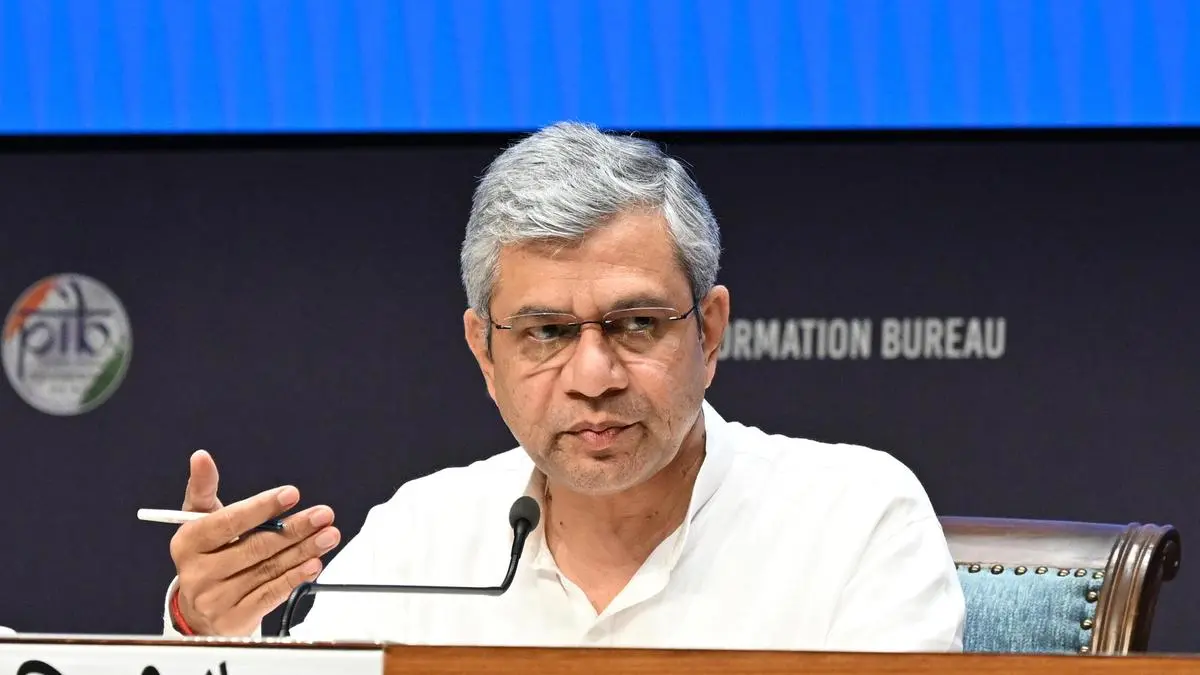
Speaking on the urgency of regulating artificial intelligence, Vaishnaw noted that the risks associated with the technology have surpassed safety thresholds. "Today the time has come when the risks of AI have crossed a threshold where we should come up with a law and new regulations. Harms from the new technology can be regulated," he stated.
Highlighting the collaborative nature of the upcoming policy, the Minister emphasized that global tech giants—particularly those operating within the top tiers of the global AI ecosystem—must work in tandem with regional policymakers to establish fundamental safety principles. However, the government is equally determined to capture grassroots perspectives. "We will come up with a consultation paper in the coming weeks. We are drafting the consultation paper, and that paper will gather inputs from society, citizens and industry," Vaishnaw added, pointing out that industrial adoption of AI has outpaced legal frameworks, making public-private feedback essential.
On the industrial front, manufacturing associations have largely welcomed the focus on domestic brands. While multinational corporations have driven the initial wave of mobile phone assembly under government incentives, the October 2028 deadline challenges local enterprises to develop proprietary hardware architectures, operating system layers, and original equipment manufacturing (OEM) designs that can compete on a global stage.
Implications for the Future
The convergence of AI regulation, semiconductor self-reliance, and indigenous consumer electronics branding carries profound implications for India’s geopolitical standing and domestic economy.
1. Regulatory Balance in the Age of AI
As artificial intelligence permeates healthcare, finance, education, and governance, India’s forthcoming legislation will walk a tightrope. Over-regulation could stifle innovation and discourage global AI research labs from partnering with Indian enterprises. Conversely, under-regulation leaves citizens vulnerable to deepfakes, algorithmic bias, data privacy breaches, and widespread labor displacement. The consultation paper will serve as a critical stress test for how a developing democracy balances technological innovation with ethical safeguards.
2. Technological Sovereignty and Economic Security
By targeting indigenous mobile brands and domestically designed silicon chips by 2028, India is seeking to insulate itself from global supply chain shocks. The semiconductor shortages of the post-pandemic era exposed the fragility of relying on a handful of foreign geographies for critical hardware components. A self-sustaining loop—where Indian engineers design chips, Indian plants fabricate them, and Indian brands assemble them into consumer devices—creates a resilient economic moat.
3. Employment and Talent Retention
With 20 per cent of the world’s semiconductor design talent already rooted in India, the strategic push under Semicon 2.0 will likely reverse historical "brain drain" trends. High-value engineering jobs will stay within the country, fostering a culture of deep-tech entrepreneurship, venture capital funding for hardware startups, and robust industry-academia linkages.
Conclusion
As the October 2028 deadline approaches, India stands at a critical juncture in its modern history. By aggressively pursuing legal frameworks for emerging technologies while laying down the physical iron and silicon required for industrial independence, the nation is signaling that it no longer wishes to merely participate in the global digital economy—it intends to help write its rules.