





By Sudhanshu Kumar Mangalam
Technology and Consumer Lifestyle Journalist
Main Facts: The Anatomy of Late-Night Screen Fatigue
For millions of smartphone users worldwide, a familiar ritual plays out every single night. We slip under the covers with the best of intentions, promising ourselves that we will finally turn in early, get a full eight hours of rest, and wake up revitalized. Yet, within minutes, the glowing screen casts an eerie blue light across the dark bedroom. A quick check of Instagram or X (formerly Twitter) effortlessly bleeds into an hour, then two, and suddenly it is 2:00 a.m. or 3:00 a.m.
The next morning greets us with a familiar wave of self-reproach, brain fog, and exhaustion. We know the routine intimately, yet breaking it remains astonishingly difficult. Traditional software solutions—such as operating system screen-time warnings, app limits, and "Do Not Disturb" modes—fail because they rely entirely on willpower. When a phone is resting comfortably in the palm of your hand, tapping "Ignore for 15 minutes" takes less effort than closing the app.
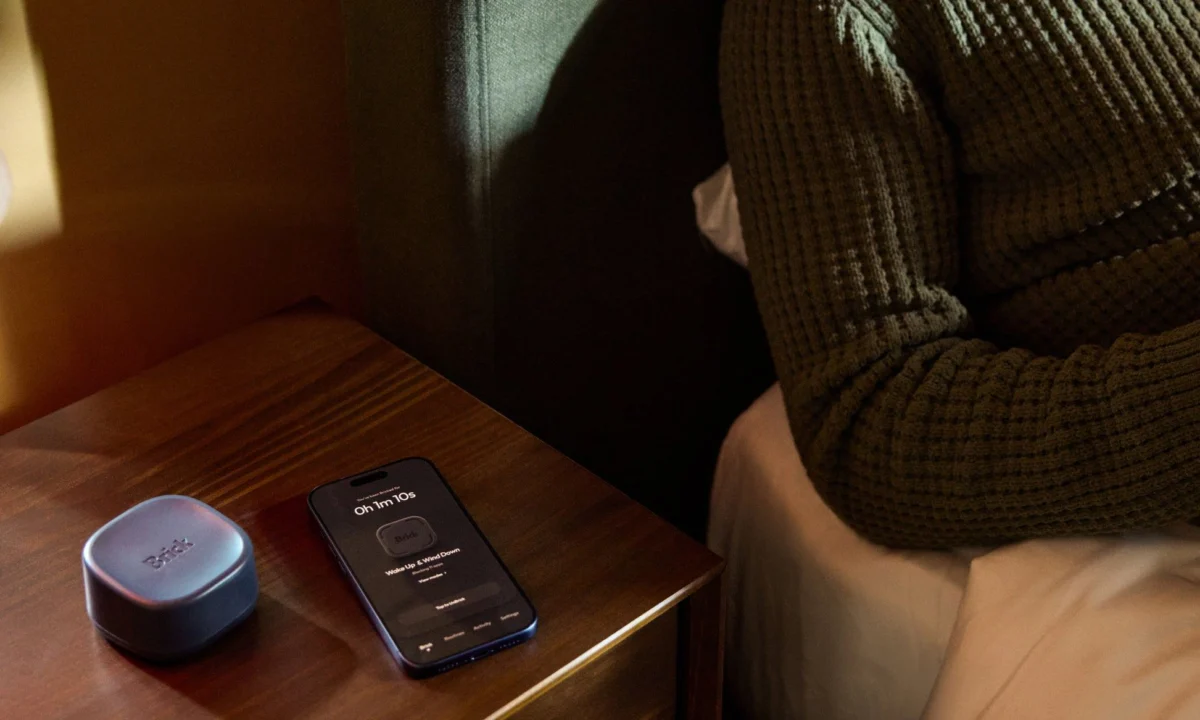
Enter Brick Night, a novel hardware gadget designed to tackle this exact psychological vulnerability. Created by the productivity company Brick, the device does not rely on software notifications or user discipline. Instead, it uses physical proximity and Bluetooth signal strength to automatically lock distracting apps and websites the moment your phone crosses the threshold of your designated "sleep space."

Priced at $129, Brick Night represents an aggressive, physical-world intervention for a digital-age addiction. But as consumers weigh its steep price tag against its core promise, it raises a fundamental question: Do we really need to buy a dedicated piece of hardware to force ourselves to sleep?
Chronology: From Software Restrictions to Hardware Interventions
The journey toward combating smartphone addiction has evolved significantly over the past decade, shifting from passive self-monitoring tools to active, frictionless blocks.
- The Early Era of Screen Tracking (2018–2021): Tech giants Apple and Google introduced built-in digital wellness dashboards—Screen Time and Digital Wellbeing. These tools provided sobering weekly reports detailing how many hours users spent staring at social media feeds, but offered virtually no friction to stop usage.
- The Rise of App Blockers (2022–2024): Developers released numerous software-based blockers requiring users to type complex sentences, scan physical barcodes, or wait out timers before accessing restricted apps. While moderately effective, tech-savvy users quickly found workarounds, such as deleting the blocker apps entirely or bypassing permissions in device settings.
- The Hardware Pivot (2024–Present): Recognizing that software limitations can easily be overridden by a sleepy brain, companies began looking at physical hardware. Brick initially launched a $59 NFC-based puck that allowed users to physically tap their phone to lock or unlock apps on a schedule.
- The Introduction of Brick Night (Late 2026): Building on the success of its predecessor, Brick developed Brick Night. Moving away from manual NFC tapping, the new iteration automates the process completely using spatial Bluetooth tracking, targeting the vulnerable bedroom environment where late-night doomscrolling does the most damage.
Supporting Data: The High Cost of Poor Sleep and Screen Habits
The market for anti-doomscrolling devices is underpinned by a growing body of scientific research highlighting the severe health toll of late-night phone usage.
The Sleep-Screen Connection
According to recent clinical studies highlighted by public health researchers, poor screen habits are among the leading drivers of plummeting sleep quality and deteriorating mental health, particularly among younger demographics. Artificial blue light emitted by smartphone displays suppresses the body’s natural production of melatonin, the hormone responsible for regulating sleep-wake cycles.

However, neuroscientists note that the physiological impact of light is only part of the problem. The psychological stimulation of doomscrolling—consuming a continuous, high-anxiety stream of news, algorithmic video feeds, and social comparison—triggers a state of hyper-arousal. The brain remains on high alert, making it biologically difficult to transition into deep, restorative sleep.
How Brick Night Operates
Brick Night attempts to short-circuit this loop through spatial automation. During the initial setup process, users define a Bluetooth proximity zone measuring up to 25 by 25 feet. Crucially, the signal can penetrate interior walls, meaning the device does not strictly need to sit directly on a nightstand to be effective; it can monitor an entire bedroom or studio apartment.
Once configured, users set a specific active window (for example, from 11:00 p.m. to 6:00 a.m.). The moment a paired smartphone enters that designated zone within the specified timeframe, pre-selected apps and websites instantly lock down.
The "Friction" Factor
What sets Brick Night apart from traditional digital limits is its unique method of release. If a user suffers a moment of weakness and desperately wants to check social media at 1:30 a.m., simply tapping away an alert will not work. To regain access to the blocked applications, the user must physically get out of bed, leave the designated 25×25-foot zone, and walk into another room.

Once the scheduled morning window expires, restrictions lift automatically. Furthermore, the battery-powered device operates entirely independently—requiring no Wi-Fi connection and eliminating the need for regular charging. Households with multiple family members or roommates can also share a single unit, with each person customizing their own schedules, exclusion zones, and blocked application lists.
Official Responses and Industry Perspective
The launch of Brick Night has sparked lively debates across consumer tech circles regarding the psychology of digital minimalism and the monetization of basic self-control.
Proponents of the hardware argue that modern software design is intentionally engineered by multi-billion-dollar corporations to exploit human psychology. In an interview discussing the philosophy behind physical app blockers, product designers emphasized that fighting a rigged system with willpower alone is a losing battle. "When an app is engineered to exploit dopamine loops, expecting a tired brain to resist it at 2 a.m. is fundamentally unfair to the consumer," industry analysts note. By introducing physical friction—forcing a user out of bed—the device interrupts the automatic, semi-conscious habit loop.
Conversely, skeptics and consumer advocates question the necessity of a $129 price tag, especially when Brick’s original, more affordable $59 blocking device already exists. Critics point out that users can achieve similar physical separation simply by leaving their smartphones to charge in the kitchen, hallway, or living room overnight—a free solution that requires only a traditional alarm clock.

Moreover, tech enthusiasts have raised practical concerns regarding multi-user households and edge cases. For instance, if an individual lives in a small studio apartment where the bed and the desk sit within the same 25-foot radius, the proximity zone might trigger prematurely during evening work hours, potentially blocking productivity apps alongside recreational ones.
Implications: The Future of Digital Wellness and Hardware
Brick Night occupies a fascinating intersection between consumer electronics, psychology, and wellness. Its market performance will likely answer a broader question about how far consumers are willing to go—and how much money they are willing to spend—to reclaim their attention from their devices.
1. The Commodification of Self-Control
As digital addiction is increasingly recognized as a public health concern, a lucrative market has emerged around "digital detox" products. From minimalist e-ink phones like the Light Phone to mechanical lockboxes for smartphones, consumers are showing a willingness to pay cold hard cash for offline peace of mind. Brick Night tests whether automation and physical architecture can successfully replace software-based discipline.
2. Shifting Responsibility to the Ecosystem
While gadgets like Brick Night offer clever band-aid solutions, they also highlight a systemic failure within mainstream mobile operating systems. Critics argue that tech giants like Apple and Google could easily implement robust, location-based or friction-heavy scheduling features natively into iOS and Android. The fact that startups must build $129 Bluetooth pucks to achieve basic sleep hygiene suggests that platform holders have little financial incentive to help users look away from their screens.

3. The Ultimate Verdict
For the chronic doomscroller who has tried every free app, exhausted every software setting, and repeatedly failed to keep their phone out of reach, Brick Night offers an ingenious, hard-to-ignore safeguard. By weaponizing physical distance against digital temptation, it removes choice from the equation entirely.
However, whether that extra layer of automated friction justifies a $129 investment—rather than simply plugging your phone in across the hall—remains a deeply personal calculation. For those whose sleep and mental health are chronically compromised by the glowing rectangle on their nightstand, the price of a good night’s sleep might just be worth it.