






The landscape of web development is shifting at an unprecedented pace. From the standardization of advanced color spaces to the democratization of robotics, developers are no longer just building websites—they are architecting complex, cross-platform experiences. This report examines the latest shifts in the JavaScript and frontend ecosystems, focusing on critical framework updates, performance benchmarking, and emerging tools that are redefining how we ship software.
Main Facts: A Convergence of Performance and Utility
The current development cycle has been defined by a focus on "getting the basics right" while pushing the boundaries of what browser-based environments can handle.
Key developments include:

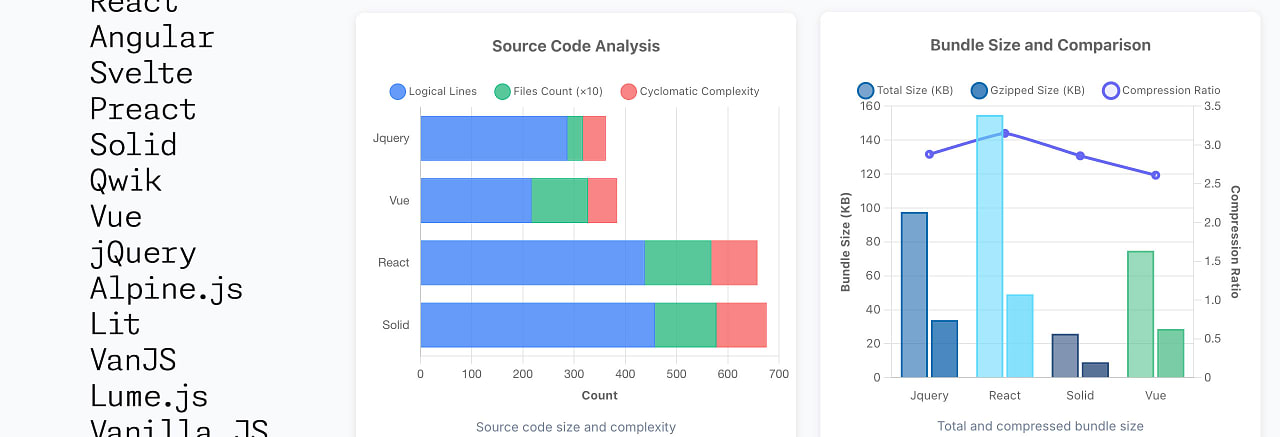
- Framework Benchmarking: Developer Alicia Sykes has released an extensive comparative study of frontend frameworks, offering granular insights into bundle sizes, execution speeds, and user experience (UX) metrics across industry staples like React, Angular, and Solid.
- Nuxt 4.5 Arrival: The full-stack Vue framework has undergone its most significant update in recent history, introducing Vite 8, Rspack 2, and experimental SSR streaming.
- Declarative Visualization: Microsoft Research has introduced Flint, an intermediate JSON-based format designed to bridge the gap between agentic AI generation and web-based charting libraries like Vega-Lite and ECharts.
- Advanced Color Management: Color.js 0.7 has arrived, marking a pivotal moment for CSS-driven design by implementing robust gamut mapping and modern color space support.
Chronology of Recent Advancements
The recent surge in development tools follows a clear trajectory of increasing abstraction and automation.
- Mid-2024: The industry sees a pivot toward "Framework-Agnostic" thinking. Developers are moving away from religious adherence to a single framework and toward selecting tools based on performance metrics, a shift fueled by projects like Sykes’ Framework Benchmarks.
- Early July 2024: Nuxt 4.5 is officially unveiled. This release is widely considered a foundational step for Nuxt 5, signaling a transition period for the Vue ecosystem.
- Ongoing: The rise of "ActivityPub" integration for non-human entities. Tools like BotKit are allowing developers to deploy autonomous bots to the Fediverse without the traditional friction of account management, signifying a new wave of decentralized social integration.
- Late July 2024: The EOL (End of Life) for Nuxt 3 is approaching (July 31). This deadline forces a massive migration effort across the Vue community, emphasizing the rapid obsolescence cycles in modern frontend development.
Supporting Data: Performance and Selection
The Benchmarking Reality
Alicia Sykes’ comprehensive benchmarking project provides much-needed transparency in a market saturated with marketing hype. By standardizing the build and execution environment for apps across Angular, Solid, React, and Alpine.js, the data offers a clear "performance profile" for each framework.
- Bundle Size: Solid and Alpine.js continue to lead in lightweight performance, ideal for edge-compute scenarios.
- Build Time: The inclusion of Rspack in frameworks like Nuxt demonstrates a clear trend toward Rust-based tooling to minimize developer feedback loops.
- Stack Matching: Sykes’ companion project, Stack Match, addresses the "Paradox of Choice." By allowing developers to input their specific project constraints—such as SEO needs, state management complexity, and team experience—the tool provides data-backed recommendations, with Vue frequently emerging as the optimal choice for balance between productivity and performance.
The Color.js Revolution
Color.js 0.7 is not merely a library update; it is an attempt to force the web to "get serious about color." The inclusion of smarter display() fallbacks and gamut mapping addresses a long-standing pain point: the discrepancy between high-end design software (like Figma or Adobe Suite) and browser rendering engines. This update ensures that as monitors evolve to support wider color gamuts, web applications won’t be left behind.
Official Responses and Strategic Shifts
The Nuxt 4.5 Strategy
The Nuxt team, led by Daniel Roe, has been transparent about the intent behind the 4.5 release. By integrating Vite 8 and Rspack 2, the team is explicitly targeting the enterprise market—where build times often reach prohibitive levels. The experimental SSR (Server-Side Rendering) streaming feature is a direct response to the industry’s demand for improved Core Web Vitals and "Time to Interactive" (TTI) metrics.
Microsoft’s "Flint" Philosophy
Microsoft Research’s decision to open-source Flint reflects a strategic shift in how AI-generated code is managed. Rather than having an AI attempt to write complex, error-prone ECharts code, Flint provides a simple, declarative JSON contract. This acts as a "safety layer" between the generative agent and the final UI, ensuring that data visualizations remain stable and consistent, regardless of which underlying rendering engine is used.
Implications: The Future of the Ecosystem
The "Ops" Shift: Automation and Reliability
The integration of tools like xyOps (from the Cronicle team) highlights a growing need for automated operations in the JS ecosystem. As developers build more complex full-stack applications, the line between "Frontend" and "DevOps" is blurring. Self-hosted, BSD-licensed automation tools that allow for visual runbooks and automated alerting are becoming the standard for teams that want to maintain control over their infrastructure without relying on black-box SaaS solutions.

The Rise of Agentic Development
We are entering an era of "Agentic Web Development." Tools like Flint and BotKit are designed not just for human consumption, but for machine consumption. As AI agents begin to take over more of the boilerplate code generation, the industry is creating intermediate formats that machines can easily understand and maintain. This is a critical evolution; it moves us away from "LLM-generated spaghetti code" and toward "LLM-generated structural contracts."
The "Framework Fatigue" Counter-Movement
The sheer volume of new frameworks and updates has led to a natural pushback. The popularity of the Framework Benchmarks project is proof that developers are tired of marketing and eager for empirical data. The industry is moving toward a more pragmatic, performance-first approach where the "best" framework is the one that minimizes the total cost of ownership—measured in bundle size, build time, and maintenance overhead.
Educational Shifts
The inclusion of initiatives like Viam 101—which offers a 90-minute course on robotics without the need for physical hardware—signals that the web development skill set is expanding into the physical world. JavaScript is no longer just for browsers; it is now a control language for robotics, IoT, and complex automation. The developers who thrive in the next five years will be those who can bridge the gap between high-level web interfaces and low-level system operations.
Final Thoughts: What Should Developers Prioritize?
As we look toward the remainder of the year, developers should prioritize:
- Observability: Implementing tools that monitor performance in real-time.
- Infrastructure as Code: Moving toward self-hosted, automated operations to gain independence from expensive cloud providers.
- Standardization: Adopting tools that utilize emerging web standards, such as the new color spaces in Color.js 0.7, rather than relying on proprietary polyfills.
The web is becoming faster, more standardized, and increasingly automated. While the pace of change is daunting, the tools being built today are providing the infrastructure necessary to handle the next decade of digital growth. Whether you are building a simple landing page or a complex, robot-controlled application, the foundational shift is clear: the focus has moved from "how does it look?" to "how does it perform and scale?"