Google is rolling out a significant suite of updates that fundamentally alter how links, publishers, and creators are presented within AI Mode and AI Overviews. Announced via a recent blog post by Hema Budaraju, VP of Product Management at Google, the changes introduce five distinct modifications designed to enhance user navigation, elevate authoritative official sources, expand the reach of timely content carousels, and integrate creator profiles directly into generative video results.
For digital marketers, SEO professionals, content creators, and publishers, these adjustments mark a critical evolution in how search engine real estate is shared between Google’s generative AI and external web properties. While some features—such as inline link repositioning—are already rolling out, others like task-specific official source sections and AI Mode profile integrations are currently entering early testing phases.
1. Main Facts: The Five Key Updates at a Glance
Google’s latest overhaul focuses heavily on optimizing traffic flow, improving resource transparency, and strengthening the connection between users and their preferred content ecosystems. The five core announcements include:
- Higher Placement for Inline Links: Google is substantially increasing the presence and frequency of inline links, placing them higher up within AI-generated response listings.
- Top-Level Official Source Sections: Google is testing a dedicated section at the very top of specific AI search responses. This feature highlights official websites when queries revolve around concrete tasks with limited authoritative resources.
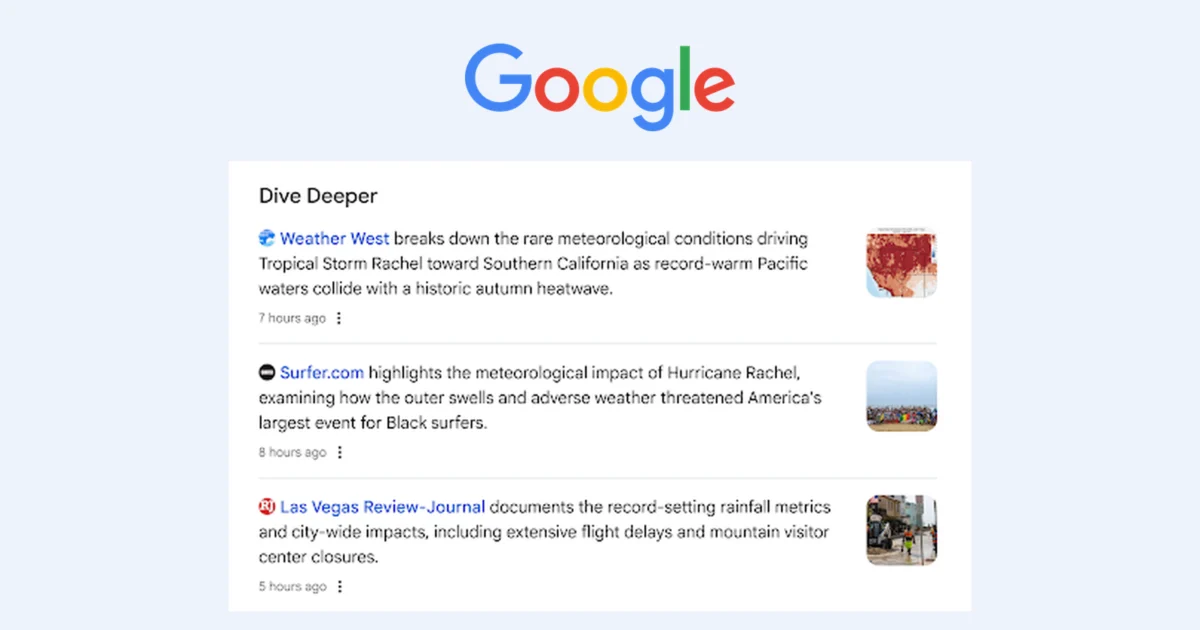
- Enhanced Related-Article Design: Links appearing at the bottom of AI responses are receiving a visual refresh complete with image thumbnails and a more engaging, clickable layout.
- Global Expansion of Timely Article Carousels: The carousels highlighting breaking and developing news—which heavily feature a user’s "Preferred Sources"—are expanding to new geographic regions and languages.
- Search Profile Integration in AI Video Results: Google has begun testing direct links to publisher and creator Search profiles from within AI Mode video results.
2. Chronology: The Evolution of Google’s AI Link Strategies
To understand the weight of this announcement, it helps to view it within the broader timeline of Google’s 2026 search updates. Google has steadily iterated on its generative search interface to combat publisher anxiety regarding traffic loss and to improve attribution clarity.
- May 2026: Google initially introduced the concept of contextual inline links, promising users that relevant web links would appear directly adjacent to corresponding text within AI Overviews. During this same period, Google laid the groundwork for timely article carousels designed to showcase a user’s Preferred Sources.
- June 2026: Google officially launched Search profiles for creators and publishers meeting specific follower thresholds, bundling articles, videos, and social channels into centralized hubs accessible via mobile knowledge panels and Discover.
- October 2026: Google formalizes its latest batch of five updates through Hema Budaraju’s product management blog post. This includes the accelerated rollout of inline links, tests for task-based official source blocks at the top of responses, and the integration of Search profiles directly into AI Mode video listings.
3. Supporting Data and Metrics
While Google’s official announcements often omit exact performance metrics or raw user counts, industry observations and data released alongside the updates shed light on changing user behaviors:

- Preferred Sources Surge: Google reported that adoption of the Preferred Sources feature—which allows users to curate a personal whitelist of preferred publications—has skyrocketed, increasing to more than seven times its user volume from the beginning of the year. Although Google did not disclose the absolute user base number or explain the exact tracking methodology, the sharp multiplier indicates a strong consumer demand for personalized editorial curation in AI-driven search environments.
- Creator Eligibility Criteria: According to Google’s documentation, Search profiles are currently available to creators and publishers in the United States, Canada, and India who maintain a minimum of 10,000 followers across major platforms like YouTube, Instagram, X (formerly Twitter), or TikTok, provided the managing Google Account belongs to an adult aged 18 or older.
- Inline Link Density: Google’s internal metrics confirm "continued and substantial increases" in inline link frequency, though precise statistical figures detailing the absolute percentage increase in click-through rates or impression shares remain unreleased.
4. Official Responses and Implementation Details
Google’s leadership has framed these changes as part of an ongoing mission to balance conversational AI efficiency with robust referral traffic to the open web.
Revamping Inline Links and "Dive Deeper" Sections
Inline links are now dynamically surfaced higher in multi-paragraph generative outputs. However, SEO analysts note an important technical caveat: because Google Search Console aggregates all links within a single AI Overview into the overview’s collective search result position, simply moving an inline link higher inside the text block does not inherently alter its reported Search Console rank position.
Complementing the inline links, the "Dive Deeper" sections—the related-article suggestions appearing at the base of AI responses—now incorporate bold image thumbnails designed to arrest user scrolling and drive secondary exploration.
Task-Based Official Source Blocks
For transactional or procedural queries with restricted authoritative landscapes (such as applying for government documents, checking airline refund policies, or managing official health directives), Google is testing a dedicated banner at the absolute top of the AI response.
[User Query: "How do I request a flight refund?"]
 __________________________________________________
| AI Response Top Section: Official Sources         |
| • Official Airline Support Portal (Why this link) |
| • Department of Transportation Guidelines         |
|__________________________________________________|
| [Standard AI-generated conversational summary...] |
Unlike traditional web results, these blocks explicitly supply context explaining why a particular official link serves as the optimal resource for the user’s specific task.

Expanding Timely Article Carousels and Preferred Sources
The expansion of timely article carousels brings localized news and developing story coverage directly into AI Overviews worldwide. When users configure their Preferred Sources, these outlets receive prioritized visibility whenever breaking news triggers a real-time carousel.
To qualify as a Preferred Source, publishers must ensure their sites are fully integrated with generative AI features within Google Search Console and utilize official deep-linking mechanisms to encourage audience sign-ups.
5. Strategic Implications for Publishers, Creators, and SEOs
As Google continues to blur the lines between traditional organic listings and generative answers, these five updates carry distinct strategic takeaways for digital content producers:
The Value of Official Status
For brands that operate as primary sources for specific services or products, the new top-level official source sections represent a massive opportunity. Ensuring metadata, schema markup, and site architecture clearly establish official authority will be paramount to capturing these high-intent, task-based search blocks.
The Rise of Creator Identity via Search Profiles
The integration of Search profiles into AI Mode video listings underscores Google’s emphasis on E-E-A-T (Experience, Expertise, Authoritativeness, and Trustworthiness). Creators and publishers who cross the 10,000-follower threshold must claim and optimize their Search profiles. Doing so ensures that when users encounter their video content within AI Mode, a single click connects the viewer directly to a unified portfolio of their broader digital footprint.

Optimizing for Preferred Sources
With Preferred Source usage multiplying rapidly, publishers should actively prompt their core audiences to add their domains to personal preference lists. Utilizing Google’s deep-link and button developer tools on owned properties can help bypass generic search volatility by securing direct placement in timely content carousels.
Looking Ahead
While features like the official-site blocks and AI Mode profile links remain in active testing phases with undisclosed nationwide release dates, the carousel expansions and inline link modifications are live today. Publishers and SEO professionals are advised to closely monitor Google Search Console impressions, analyze traffic shifts across AI Overviews, and audit their brand’s readiness across Preferred Source and Search Profile ecosystems to maintain visibility in the evolving generative search landscape.