







In the complex ecosystem of Search Engine Optimization (SEO), few elements are as fundamental—or as frequently misunderstood—as the "focus keyword." Serving as the North Star for your digital content, a focus keyword is the primary term or phrase that encapsulates the essence of a webpage. It acts as a beacon, signaling to both search engine crawlers and human readers exactly what the content is about and why it is relevant.
To succeed in the modern search landscape, content creators must move beyond the antiquated practice of "keyword stuffing" and embrace a more sophisticated, strategic approach to keyword selection and placement.
Main Facts: Defining the Focus Keyword
At its core, a focus keyword is the most precise representation of your page’s topic. While the terms "topic" and "keyword" are often used interchangeably, there is a nuanced distinction. A topic represents the subject matter (e.g., "Pilates exercises for abs"), while a keyword is the specific query a user might type into a search bar to find that topic.
The focus keyword is the specific phrase you choose to prioritize. It is the term you intend to rank for, and it should be integrated into the architecture of your page—including the title tag, headers, meta descriptions, and body content.
The Golden Rule: Every page on your website should have one, and only one, unique focus keyword. This prevents "keyword cannibalization," a scenario where your own pages compete against each other for the same search traffic, effectively diluting your ranking potential.
Chronology of Keyword Evolution
The history of SEO is a timeline of shifting priorities. In the early 2000s, the "Meta Keyword" tag was the primary tool for communicating with search engines. Webmasters would list dozens of keywords in the HTML header, hoping to trick algorithms into ranking them for various terms.
However, as search engines like Google evolved, they became more sophisticated, moving away from relying on static HTML tags that were easily abused. Today, Google does not consider meta keyword tags in its ranking algorithm at all.

The current era, defined by semantic search and Natural Language Processing (NLP), prioritizes user intent over raw keyword frequency. Modern SEO is no longer about satisfying a robot; it is about providing the most relevant, high-quality answer to a user’s query. Consequently, the focus keyword has transitioned from a "tagging" tool to a strategic roadmap for content creation.
Supporting Data: The Keyword Tripod Rule
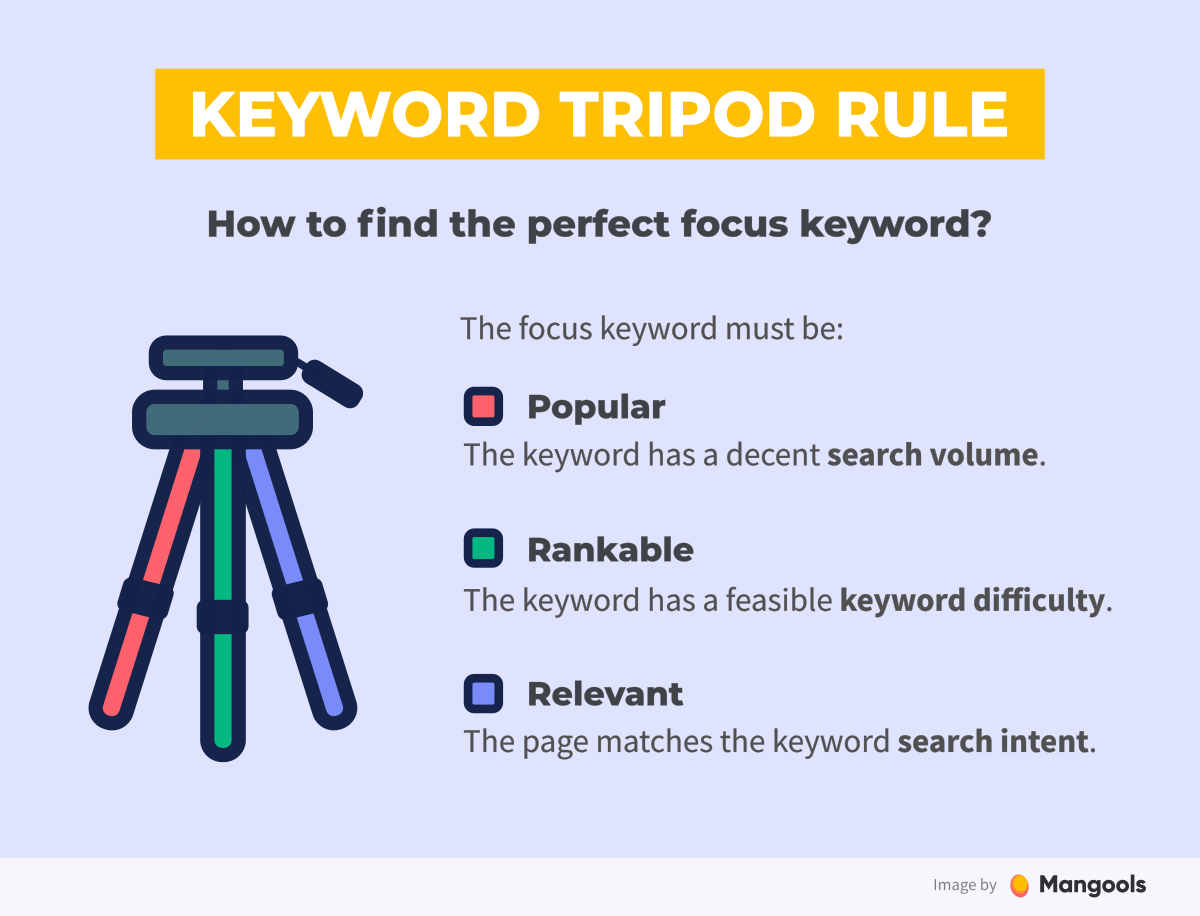
How does one determine which keyword deserves to be the "focus"? The industry standard for this decision-making process is the Keyword Tripod Rule. This methodology suggests that the best keywords are found at the intersection of three critical metrics:
- Search Volume: Does the query have enough monthly search volume to justify the effort of creating content? High volume generally implies high interest, though it often comes with higher competition.
- Keyword Difficulty: How hard will it be to rank for this term? You must balance your domain authority against the authority of existing sites ranking for that term.
- Search Intent: Does the keyword match the type of content you are providing? A user searching for "how to fix a leaky faucet" (informational) has a different intent than someone searching "buy wrench set" (transactional).
By utilizing SEO research tools, content managers can analyze these variables to select a focus keyword that offers the highest probability of success.
The Strategic Implementation: A Step-by-Step Guide
Step 1: Selecting the Unique Focus Keyword
Before a single word is written, the focus keyword must be finalized. If you find yourself wanting to optimize a page for five different keywords, you are likely trying to cover too much ground. Pick the most descriptive, high-value phrase and stick to it. If the page is genuinely relevant to those other keywords, they will naturally appear in your copy as "secondary keywords" or "LSI (Latent Semantic Indexing) keywords."
Step 2: Content Architecture and Quality
The most common mistake in SEO is writing content first and trying to "bolt on" keywords later. This often leads to awkward phrasing and forced integration. Instead, establish your focus keyword as your primary heading (H1) and use it to structure your H2 and H3 subheadings.
However, remember the paramount rule: Content quality is king. If your article is poorly written or fails to answer the user’s question, no amount of keyword optimization will save your rankings. Google’s algorithms are increasingly adept at identifying "helpful content" that provides a positive user experience.
Step 3: Strategic Placement
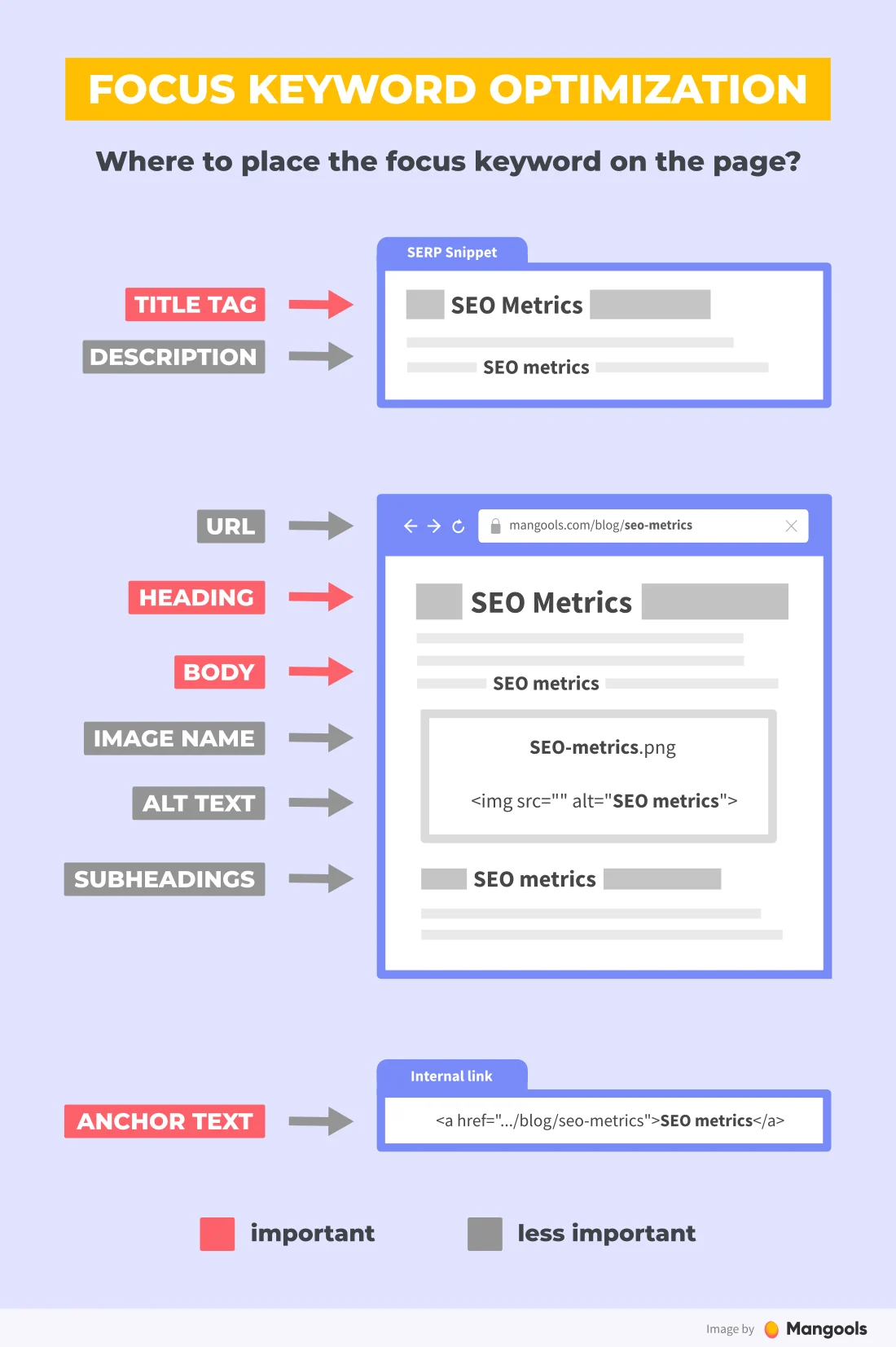
While there is no "secret code" to force Google to rank a page, there are high-impact areas where your focus keyword should appear to provide clarity:
- The URL Slug: Keeps the address clean and descriptive.
- The Title Tag: The most visible element in search results.
- The H1 Heading: The main headline of your page.
- The First 100 Words: Establishes relevance immediately for the reader.
- Image Alt Text: Improves accessibility and provides context for image searches.
Official Responses and Expert Perspectives
In a candid discussion regarding content structure, Google’s Search Advocate John Mueller addressed the common struggle of keyword placement. When asked about a massive, 20,000-word document that failed to mention its primary topic until the very end, Mueller’s advice was clear: It must be obvious to the reader what the page is about.
If a user—or a search crawler—has to dig through thousands of words to discern the topic, you have failed the user experience test. Your focus keyword should serve as an anchor, grounding the content and ensuring that the topic is introduced early, clearly, and naturally.
Implications for Modern SEO
The shift toward user-centric optimization has profound implications for digital marketers:
- Avoid Keyword Stuffing: The practice of repeating a keyword unnaturally is now a negative ranking signal. Google identifies this as "webspam," and it can result in penalties or lower rankings.
- Prioritize Semantic Relevance: Instead of focusing on exact-match keywords, focus on the context of your topic. Use related terms and synonyms that build a comprehensive narrative around your focus keyword.
- Focus on the User Journey: Ask yourself: "If I were a user searching for this term, what would I want to see?" If your page provides that exact value, the SEO will naturally follow.
Conclusion
The focus keyword is not a magic spell; it is a fundamental element of clear communication. By selecting one unique, high-intent keyword, balancing it against search data, and integrating it naturally into high-quality content, you create a bridge between your brand and your audience.
In an era where content is abundant but relevance is scarce, the disciplined application of the focus keyword strategy remains one of the most reliable ways to ensure your content is found, read, and valued. Stop trying to "trick" the algorithm—start helping your audience find the answers they are searching for.