AWS Redefines Serverless Architecture: Amazon EventBridge Introduces Enhanced Custom Event Bus for Multi-Account Scaling
Main Facts: The Evolution of Enterprise Event-Driven Infrastructure
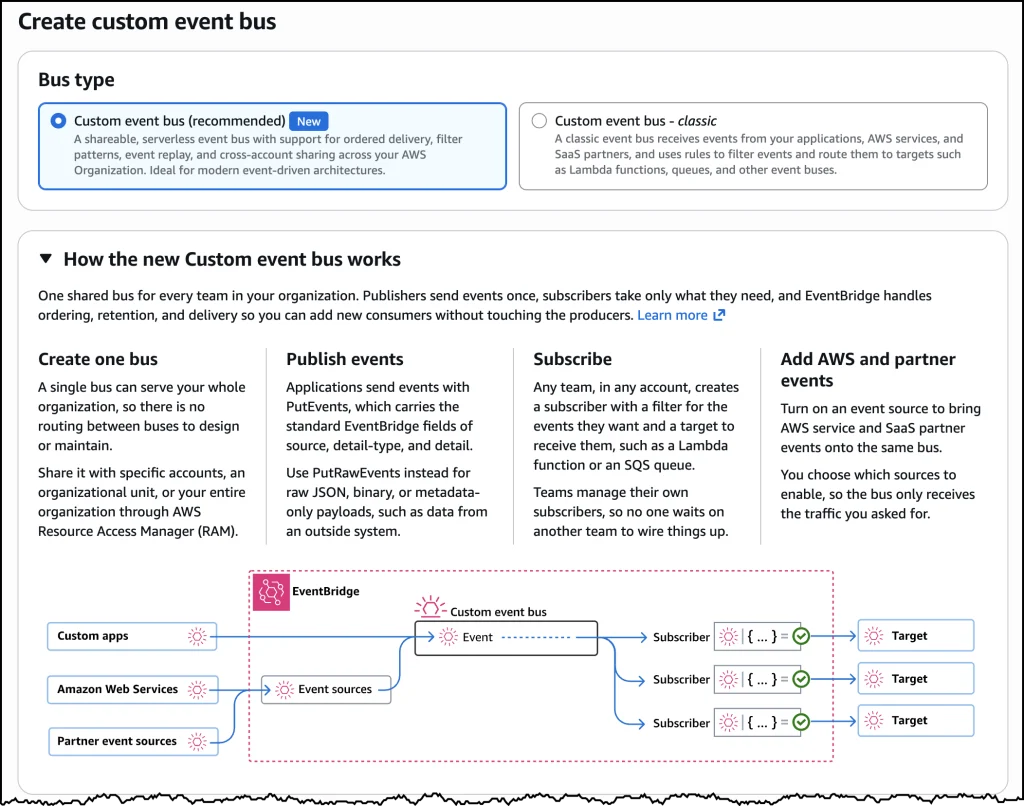
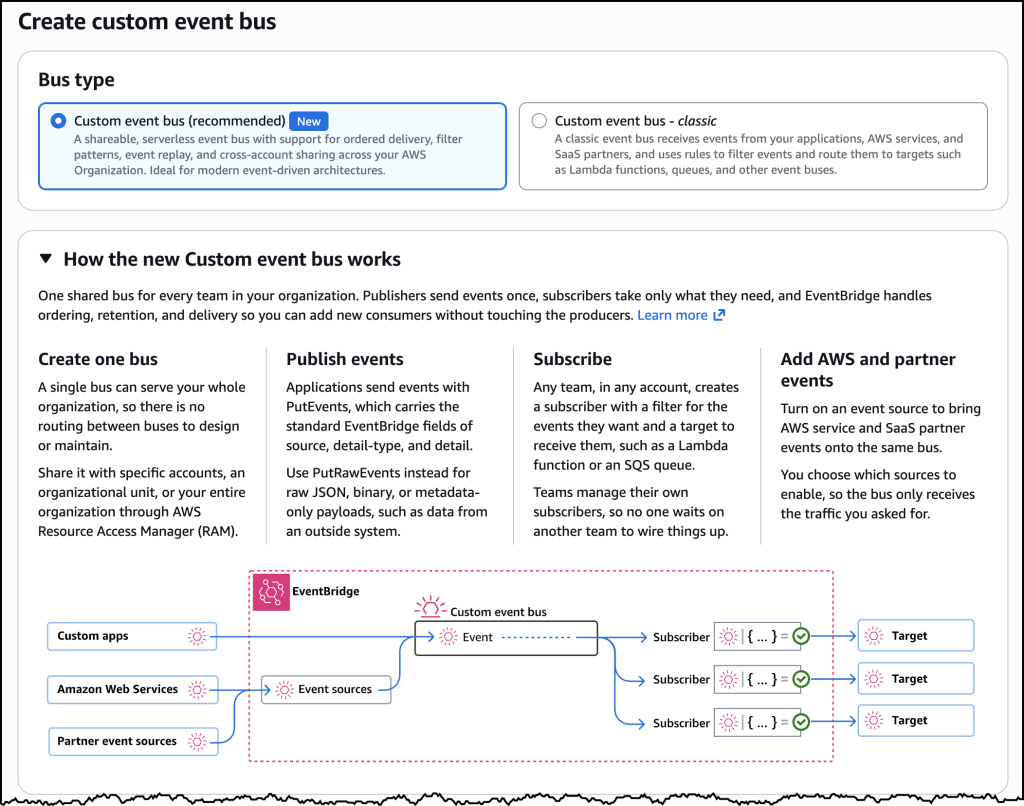
Amazon Web Services (AWS) has officially announced a transformative update to its flagship serverless routing service with the launch of the enhanced custom event bus in Amazon EventBridge. Purpose-built to address the operational and architectural friction that organizations face when scaling event-driven applications across complex, multi-account environments, this new offering fundamentally alters how cloud architects design distributed systems.
Traditionally, organizations starting with Amazon EventBridge deploy a single custom event bus within a localized AWS account. While this model thrives under the purview of a single development team, enterprise growth inevitably demands a shift toward a multi-account structure aligned with AWS security and governance best practices. Previously, maintaining communication across these distinct accounts required engineers to construct intricate webs of cross-account rules, permission policies, and bus-to-bus routing configurations.
Rather than simplifying operations, these legacy workarounds frequently reintroduced the exact operational complexity that serverless architectures were engineered to eliminate. Platform teams rapidly lost visibility into event subscribers, compound cross-account routing charges inflated monthly AWS bills, and developers needing strict event ordering were forced to implement bespoke workarounds or abandon serverless models entirely.
The newly launched enhanced custom event bus eliminates these structural roadblocks. By permitting the deployment of a single, centralized event bus that can be shared seamlessly across all AWS accounts within an enterprise organization, AWS has streamlined event-driven infrastructure. The system introduces native ordering guarantees, a consolidated "Subscriber" resource model, and an innovative throughput-based pricing framework designed to deliver optimal economics and granular cost allocation for both event publishers and consumers.
Crucially, AWS has ensured operational continuity: legacy event buses will remain fully supported under the designation "Custom event bus — classic," allowing engineering teams to adopt the new enhanced architecture entirely at their own pace without forced migrations.
Chronology: The Journey to Enterprise-Scale Event Routing
To fully appreciate the significance of this release, it is helpful to trace the evolution of event-driven architectures (EDA) within modern cloud computing and the specific developmental milestones that led to today’s announcement.
Phase 1: The Single-Account Paradigm
In the early days of serverless adoption, EventBridge served as the premier broker for SaaS integration and custom application telemetry. Developers typically provisioned one custom event bus per AWS account. As long as applications remained monolithic or tightly bound within a single business unit, this architecture offered low latency, high availability, and minimal administrative overhead.
Phase 2: The Multi-Account Complication
As enterprise cloud footprints expanded to encompass dozens—or even hundreds—of distinct AWS accounts for security isolation and compliance, the single-bus model broke down. To bridge the gap, AWS introduced cross-account target permissions. While functional, this forced platform teams to manually manage complex trust policies and routing rules between accounts. The resulting operational overhead often negated the agility benefits of serverless computing, creating administrative bottlenecks where development teams had to wait for infrastructure changes just to publish or consume an event.
Phase 3: The Search for Workarounds
Faced with strict FIFO (First-In, First-Out) requirements in domains like financial transactions, logistics tracking, and inventory management, engineers frequently placed intermediary services—such as Amazon Simple Queue Service (Amazon SQS)—between EventBridge and AWS Lambda functions. While effective at preserving event sequence, this added architectural layers, increased maintenance overhead, and inflated cloud spend.
Phase 4: The Introduction of the Enhanced Custom Event Bus
Culminating years of architectural feedback from enterprise customers, AWS developed the enhanced custom event bus. By integrating AWS Resource Access Manager (AWS RAM) directly into the EventBridge console and overhauling resource primitives, AWS has effectively bridged the gap between centralized governance and decentralized application development. The service is now live across a wide array of global AWS Regions, providing an out-of-the-box solution for enterprise-scale event routing.
Supporting Data, Features, and Technical Mechanics
The technical sophistication of the enhanced custom event bus lies in its granular control over data routing, filtering, and delivery mechanics. Below is a breakdown of the core capabilities introduced in this release:
1. Organization-Wide Resource Sharing via AWS RAM
Through native integration with AWS Resource Access Manager (AWS RAM), platform engineers can provision one central event bus and share it across an entire AWS Organization, Organizational Unit (OU), or specific IAM principals.
Zero Cross-Account Policies: Teams no longer need to write complex cross-account resource policies or manage bus-to-bus routing rules.
High-Density Scaling: The enhanced bus supports a default quota of 10,000 Subscribers per bus (with limits adjustable upon request), drastically reducing the fragmentation previously required to bypass strict subscriber limits.
2. Native Event Ordering and Synchronous Invocation
While asynchronous, out-of-order event consumption remains the hallmark of scalable EDAs, specific business domains—such as IoT fleet tracking or supply chain logistics—demand strict sequential processing.
EventGroupId: Publishers can attach an EventGroupId payload attribute. EventBridge ensures that events sharing this identifier are delivered in exact sequence to subscribers configured for ordered delivery, leaving other asynchronous consumers unaffected.
Synchronous Lambda Targets: To maintain order without relying on intermediary queues, the new bus supports synchronous invocation for targets like AWS Lambda, verifying successful downstream execution before acknowledging the event.
The new Subscriber resource consolidates these elements into a single manageable unit.
Includes variable start-time capabilities, allowing teams to seamlessly onboard new consumers, hydrate new applications, or replay historical events to recover from downstream outages.
4. Advanced Event Evaluation: Deduplication and Transformation
Content-Based Deduplication: EventBridge can automatically hash meaningful payload attributes and drop duplicate events arriving within a five-minute window, conferring exactly-once delivery semantics on publishers that lack native idempotency tokens.
JSONata and Serialization: Subscribers can leverage JSONata expressions to reshape payloads on the fly before they reach downstream targets. Additionally, EventBridge can natively deserialize incoming Apache Avro or Protocol Buffers payloads into JSON, enabling deep payload filtering without custom parsing code.
5. A Scalable Ingress/Egress Pricing Model
The pricing architecture has been modernized. Instead of legacy per-event compounding fees across multi-bus topologies, the enhanced bus utilizes a throughput-based model: publishers pay for events ingested, while subscribers pay for events delivered, ensuring cost predictability at scale.
Official Responses and Industry Perspectives
Cloud architects and enterprise engineering leads have long flagged multi-account event routing as a prime candidate for simplification. Industry response to the EventBridge announcement highlights a major shift in how serverless platforms will be managed moving forward.
According to preliminary briefings from AWS product engineering leads, the overarching design philosophy was rooted in "removing the cognitive load of infrastructure plumbing." A senior product spokesperson noted:
"Our customers were succeeding wildly with event-driven architectures, but success brought scale, and scale brought architectural friction. Engineering teams should be spending their cycles writing business logic, not wrestling with cross-account permission policies and bus-to-bus routing topologies. With the enhanced custom event bus, we have unified enterprise governance with developer agility."
Early adopters participating in private previews have similarly emphasized the operational relief provided by the unified Subscriber resource and native event ordering. Financial technology analysts observing the serverless landscape point out that by removing the need for auxiliary SQS queues in ordered workflows, AWS has effectively lowered the total cost of ownership (TCO) for mission-critical event meshes.
Implications for Cloud Architects and Enterprise Developers
The launch of the enhanced custom event bus has profound implications for software development lifecycles, enterprise governance, and cloud financial management (FinOps).
1. Decentralization Meets Centralized Governance
In many enterprises, platform teams face a perennial tension: how to maintain security, visibility, and guardrails without becoming a bottleneck for product development teams. The new EventBridge architecture solves this by allowing platform teams to act as infrastructural curators—deploying and securing the central event bus once—while enabling application teams to independently attach publishers and subscribers via AWS RAM sharing. Platform administrators retain complete visibility into event flows without needing to manually provision every routing pathway.
2. Architectural Simplification and Reduced TCO
By combining deduplication, payload transformation (JSONata), deserialization (Avro/Protobuf), and native event ordering into a single managed service, AWS has reduced the architectural surface area of serverless applications. Developers no longer need to write custom glue code or deploy auxiliary queuing infrastructure merely to guarantee message sequence or format compatibility. This leads to cleaner codebases, fewer points of failure, and streamlined debugging.
3. Strategic Adoption Path
Because AWS has maintained full backward compatibility via the "Custom event bus — classic" designation, enterprises are not forced into disruptive, high-risk migrations. Organizations can systematically evaluate their existing topologies, routing new workloads toward the enhanced event bus while migrating legacy applications at a sustainable, risk-managed pace.
Availability
The enhanced custom event bus is available immediately across a broad footprint of global AWS Regions, including US East (N. Virginia, Ohio), US West (Oregon), Europe (Ireland, Frankfurt, Stockholm, Spain), and Asia Pacific (Hong Kong, Malaysia, Mumbai, Singapore, Sydney, Thailand, Tokyo). Engineering teams can provision their first enhanced event bus today via the AWS Management Console, AWS Command Line Interface (AWS CLI), or infrastructure-as-code (IaC) frameworks utilizing EventBridge APIs.