






In an era where software supply chain attacks have transitioned from theoretical risks to headline-grabbing catastrophes, the integrity of the build process has become the new frontline of cybersecurity. When a compiled binary arrives at its destination, it is—by default—a "black box." It reveals nothing about the environment that birthed it, the source code that constitutes its logic, or the hands that touched the keyboard during its creation.
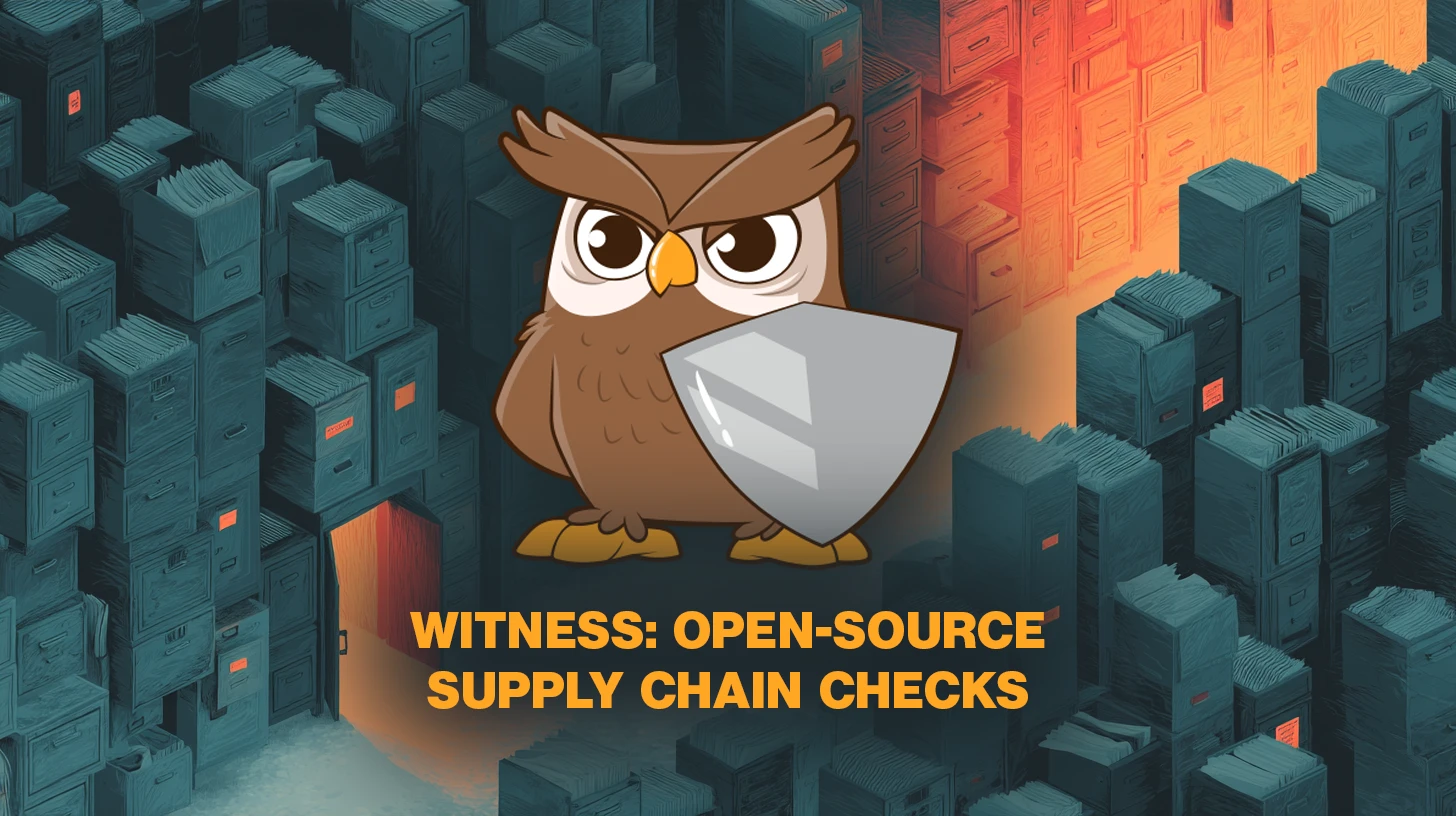
Enter Witness, an open-source command-line utility designed to dismantle this opacity. Originally developed by TestifySec and subsequently donated to the in-toto ecosystem under the Cloud Native Computing Foundation (CNCF), Witness is redefining how organizations verify the provenance and integrity of their software artifacts. By recording the software build process, cryptographically signing those records, and enforcing stringent policy checks, Witness provides a robust framework for ensuring that what you deploy is exactly what you intended to build.
The Core Problem: The Black Box Binary
For decades, the standard software delivery pipeline has relied on trust. Developers commit code, build systems compile that code into binaries, and those binaries are pushed to production. However, this model assumes that the build server is secure, the build scripts are immutable, and no unauthorized actors have injected malicious dependencies or altered the binary post-compilation.
Witness addresses this vulnerability by acting as a verifiable audit trail for the entire lifecycle of a software artifact. When a user runs witness verify, the tool evaluates the artifact against a pre-defined policy. If the artifact cannot prove its lineage—or if the cryptographic signatures don’t match the expected outcomes—the command exits with a non-zero status. This provides an automated, programmatic "circuit breaker" that can halt a CI/CD pipeline instantly, preventing compromised software from ever reaching production environments.
Chronology of Development: From TestifySec to the CNCF
The evolution of Witness mirrors the broader maturation of the software supply chain security landscape.
- Initial Development: Witness was birthed by the engineers at TestifySec, a startup focused on solving the "trust gap" in software delivery. Recognizing that proprietary solutions often create vendor lock-in, the team adopted an open-source ethos from day one.
- The In-Toto Integration: The decision to donate Witness to the in-toto project—a CNCF project dedicated to supply chain security frameworks—was a strategic move to standardize how attestations are managed. By aligning with in-toto, Witness gained the benefit of a broad, community-driven ecosystem.
- Current State: Today, Witness is maintained by a diverse open-source community. Its trajectory has moved from a niche developer tool to a sophisticated framework capable of supporting SLSA (Supply-chain Levels for Software Artifacts) requirements, making it a critical component for organizations looking to adhere to modern security compliance frameworks.
How It Works: The Anatomy of a Run
At its heart, Witness functions as a wrapper around existing build commands. It does not replace your build system; it observes it.
Recording the Build
When a developer executes witness run --step build, the tool initiates the specified build command (such as go build). As the process unfolds, Witness monitors the input materials, the command execution, and the final output. It packages this information into a JSON file containing signed attestations.
These files are formatted as DSSE (Dead Simple Signing Envelope), a standard wrapper designed for interoperability. Users can inspect these attestations using common tools like jq and base64, ensuring that the transparency promised by the tool is accessible to any security auditor.
SLSA Provenance
A key feature of Witness is its ability to generate SLSA-compliant provenance. By adding the -a slsa flag, Witness automatically generates the metadata required for SLSA Level 1 compliance. This provides a standardized, machine-readable record that allows organizations to prove that their build process follows a defined, repeatable path—a foundational requirement for any robust security posture.
The Policy Engine: Who Controls the Gate?
The power of Witness lies in its policy-based enforcement. An organization defines its security posture in a JSON-based policy file. This file acts as the "gatekeeper," specifying:
- Steps: Which stages (e.g., test, build, package) the artifact must pass through.
- Attestation Types: What kind of evidence is required for each step.
- Authorized Signers: A list of public keys permitted to sign off on specific build stages.
To handle complex logic, Witness integrates Rego, the policy language used by the Open Policy Agent (OPA). By embedding base64-encoded Rego rules, organizations can define granular logic—such as "only allow builds from specific GitHub runners" or "require a vulnerability scan report to be present before signing."
Beyond the Demo: Production Security
While the project’s getting-started tutorials often use a single key for both signing the build and signing the policy, the architects of Witness are careful to note that this is for demonstration purposes only. In a production environment, the separation of duties is paramount. A robust deployment would use a Key Management Service (KMS) or hardware security modules (HSMs) to ensure that the policy-signing authority remains isolated from the build-process authority. This prevents a "confused deputy" attack, where a compromised key could simultaneously generate malicious evidence and sign the rules that validate that same evidence.
Ecosystem Integration and Advanced Capabilities
Witness is designed to be platform-agnostic, ensuring it can fit into almost any modern development environment.
- Infrastructure Support: Whether your build runs on GitHub Actions, GitLab CI, Google Cloud Build, or AWS CodeBuild, Witness operates as a discrete process that does not require elevated privileges. This makes it highly secure, as it reduces the attack surface of the CI runner itself.
- Keyless Signing: One of the most significant modern advancements in Witness is its support for Sigstore and SPIFFE/SPIRE. These technologies allow for "keyless" signing, where short-lived identity tokens are used to sign attestations, eliminating the headache of managing, rotating, and securing long-lived cryptographic keys.
- Temporal Integrity: With support for RFC 3161 timestamps, Witness ensures that attestations are not only verified against a key but also against a trusted temporal source, preventing "replay attacks" where an attacker might try to use an old, valid signature for a new, compromised artifact.
- Archivista Integration: For long-term storage and retrieval of attestations, Witness works in tandem with Archivista, another in-toto companion project. This allows organizations to store the "proof of build" separately from the binary, which is essential for auditability and regulatory compliance.
Implications for the Industry
The adoption of tools like Witness signals a tectonic shift in how the industry approaches software security.
Moving from Reactive to Proactive
Historically, security was a "gate" at the end of the pipeline—a vulnerability scan or a pen test conducted just before release. Witness moves security to the beginning and middle of the process. By enforcing policy at the build stage, the industry is moving toward a model of "verifiable integrity," where the software provides its own proof of safety.

The Rise of the "Air-Gapped" Verifier
Because Witness verification only requires the signed policy, the artifact, and the matching public key, it enables security checks even in air-gapped or disconnected environments. This is a massive win for defense contractors, financial institutions, and critical infrastructure operators who cannot rely on real-time internet connectivity to verify software components.
The Standardization of Trust
By donating Witness to the CNCF and aligning it with in-toto and SLSA, the developers have contributed to a broader goal: the standardization of software supply chain language. When all tools speak the same "attestation" dialect, interoperability becomes the norm rather than the exception. This reduces the cognitive load on security teams and allows for a more unified approach to defending the software supply chain.
Conclusion: A Path Toward Resilient Infrastructure
Witness is more than just a command-line tool; it is a manifestation of a fundamental principle in modern cybersecurity: Never trust, always verify. By providing a transparent, immutable, and programmable way to record the history of a software build, Witness offers a shield against the sophisticated supply chain attacks that have characterized the last decade.
For organizations struggling to meet the demands of Executive Orders on cybersecurity or internal compliance mandates, Witness provides an accessible entry point. It is free, open-source, and backed by the robust community of the CNCF. As the industry continues to move toward a software-defined world, the ability to look inside the "black box" and verify the integrity of the code we run will no longer be a luxury—it will be a requirement for survival.
To get started, developers and security engineers are encouraged to visit the Witness GitHub repository, where the project documentation and tutorials provide a clear roadmap for integrating supply chain verification into existing workflows. As the open-source community continues to iterate on features like process tracing and advanced policy enforcement, Witness stands poised to remain a cornerstone of the modern DevSecOps toolkit.