







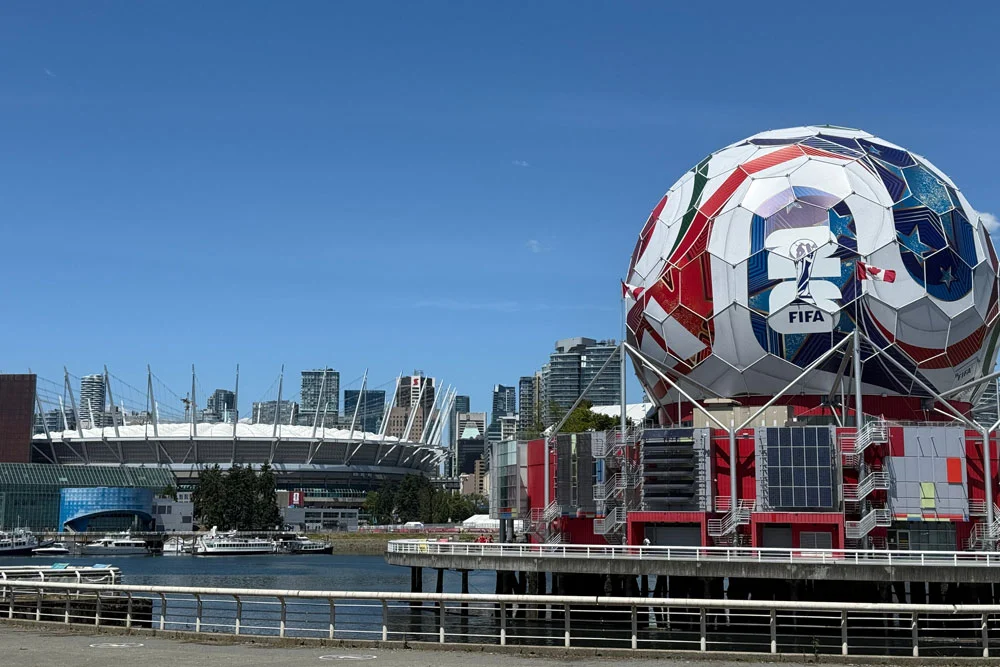
As the global sports spectacle of the FIFA World Cup 2026 unfolds across North America, capturing the attention of billions, the echoes of the tournament extend far beyond stadiums, grassy pitches, and roaring crowds. Tournaments of this magnitude eventually come to a close, but the strategic frameworks, psychological pressures, and performance dynamics that dictate success on the world stage are strikingly universal.
For industry veterans and newcomers alike, watching the high-stakes drama unfold—from fans traveling on crowded flights to the nail-biting finishes of the knockout rounds—offers a profound mirror to the digital economy. Specifically, the modern arena of affiliate marketing shares a staggering amount of DNA with elite international soccer.
Drawing from over two and a half decades of experience running an industry-leading affiliate management agency, the parallels between global athletic competition and digital revenue generation are impossible to ignore. Whether navigating the complexities of multi-channel strategies, confronting entrenched legacy players as an upstart brand, or refusing to become complacent in a volatile market, the lessons of the 2026 World Cup provide a masterclass in modern business strategy.
Main Facts: The Intersection of Global Soccer and Digital Strategy
At its core, affiliate marketing is rarely a solitary endeavor. Much like a national soccer team entering a tournament, an affiliate program or agency is only as formidable as the collective strength of its ecosystem. The 2026 World Cup has provided a vivid reminder that raw individual talent—even when embodied by world-class icons—cannot single-handedly secure a championship.
Simultaneously, the tournament has disrupted traditional power dynamics. Historic powerhouses have fallen early, while agile underdogs have utilized tactical discipline and unexpected innovation to stage historic upsets. In the digital landscape, these exact same forces govern success. Brands that treat affiliate marketing as a static, set-it-and-forget-it channel quickly find themselves outmaneuvered by nimble competitors who view the digital ecosystem as dynamic, fluid, and unforgiving.
To unpack these insights, industry leaders can look closely at three foundational pillars highlighted by the 2026 global tournament: the absolute necessity of collaborative teamwork, the dangerous fallacy of underestimating the underdog, and the peril of resting on historical laurels in a rapidly shifting environment.
Chronology: From London-Boston Flights to Global Digital Evolution
The conceptual framework linking the 2026 World Cup to digital marketing began taking shape long before the tournament’s opening whistle, forged through decades of observation within the performance-based marketing sector.
- Early Foundations (Late 1990s – 2000s): The establishment of foundational affiliate management agencies coincided with an era where digital marketing was largely misunderstood, treated as an afterthought rather than a core revenue driver. Survival required continuous adaptation, mirroring the tactical shifts seen in modern soccer strategies.
- The 2017 Disruption: A critical milestone in underdog positioning occurred when agency teams took on established mattress giants like Casper, Saatva, and Purple with the launch of the Nectar Sleep affiliate program. Within a year and five days, through meticulous strategy and diversified outreach, the program surged past thousands of competitors to claim the #1 spot on its network.
- The 2026 World Cup Present: As fans pack international flights—such as the lively Tartan Army traveling from London to Boston—the unfolding drama of the 2026 tournament provides real-time case studies in athletic resilience, early-stage tournament shocks, and the dramatic fall of traditional favorites. These on-field narratives run parallel to the current state of digital commerce, where artificial intelligence, changing consumer privacy laws, and shifting traffic acquisition models continually test the digital marketplace.
Supporting Data: Lessons from the Pitch and the Digital Dashboard
1. Success Requires Teamwork and Diversification
In elite soccer, individual brilliance is a catalyst, not a guarantee. During the 2026 World Cup, individual superstars proved unable to carry entire nations on their shoulders alone. Midfield maestro Luka Modrić fought valiantly, yet could not single-handedly propel Croatia past a cohesive Portuguese side. Similarly, the legendary Cristiano Ronaldo faced structural limits trying to drive Portugal past Spain in the Round of 16.
The digital parallel is precise. Having managed affiliate programs for over twenty-five years, empirical evidence proves that an agency or brand is entirely dependent on the strength of its collective network.
- The Affiliate "Team": An affiliate program’s results are only as robust as the diverse mix of partners onboarded.
- Channel Diversity: To protect revenue stability and ensure the high quality of consumer referrals, programs must actively diversify their affiliate bases. Relying on a single traffic source or a monolithic affiliate type creates a single point of failure. Modern programs must integrate content creators, coupon/deal sites, loyalty platforms, sub-affiliate networks, and review sites into a cohesive, collaborative strategy.
2. Watch Out for the Underdog
History warns against underestimating the less-heralded competitor. Attributed broadly to ancient strategic philosophies like those of Sun Tzu or Laozi, the axiom remains unchanged: there is no greater danger than underestimating your opponent.
The 2026 World Cup delivered stunning proof of this principle on the global stage:
- Tournament debutants Curaçao shocked the international community by holding powerhouse Ecuador to a resolute 0-0 draw during the Group Stage.
- Egypt stunned defending champions Argentina in the Round of 16, aggressively netting two goals and dominating the scoreboard for the vast majority of the match.
This dynamic mirrors digital commerce. When AM Navigator launched the Nectar Sleep affiliate program in early 2017, the mattress-in-a-box vertical was already saturated with deeply entrenched, well-funded legacy brands. Conventional wisdom suggested the market was locked down. Yet, by executing a focused, aggressive affiliate strategy, Nectar disrupted the status quo. Just one year and five days after launch, Nectar Sleep’s affiliate program captured the number one spot on its network, outperforming retail and consumer giants such as Wayfair, Deluxe, Reebok, Gymboree, the NFL, Viator, and over 5,000 competing programs.
[Legacy Giants: Casper, Saatva, Purple, Wayfair]
       vs.
[The Underdog: Nectar Sleep Affiliate Program]
       --> Result (1 Year, 5 Days): #1 Program on ShareASale
Being an underdog does not sentence a brand to perpetual mediocrity, just as established giants are never immune to agile disruption.
3. Never Rest on Your Laurels
Complacency is the silent killer of market share. The 2026 World Cup offered stark reminders that past glory does not guarantee future survival:
- Italy, a four-time World Cup champion, failed to even qualify for the 2026 tournament.
- The Netherlands experienced a premature exit, knocked out by Morocco in the Round of 32.
- Brazil, the historic standard-bearer of soccer excellence, was eliminated by Norway in the Round of 16.
Norway’s trajectory underscores the power of resurgence: having missed the World Cup entirely for nearly three decades, they advanced deep into the tournament, proving that continuous evolution beats historical reputation every single time.
In affiliate marketing, the underlying nature of the industry is fiercely dynamic. The digital landscape shifts constantly under the influence of new privacy regulations, algorithmic updates, and evolving consumer habits. Tactics that generated high ROAS (Return on Ad Spend) last year may underperform today; strategies that dominated five or ten years ago can easily become obsolete. Continuous education, auditing, and structural optimization are not optional extras—they are core requirements for survival.
Official Responses and Industry Perspectives
Digital marketing leadership and performance agencies continue to emphasize that agility and continuous learning separate stagnant programs from high-growth revenue engines.
Industry analysts tracking the intersection of sports analytics and digital marketing note that high-performing organizations treat data with the same rigorous scrutiny that national team managers apply to match footage. According to long-standing agency insights, the digital ecosystem rewards brands that embrace ongoing professional development.
"Affiliate marketing’s nature is best-described as dynamic. It evolves with the challenges and the opportunities that the ever-changing online landscape throws at us. What worked last year may no longer work this year." — Industry Affiliate Management Expert
As professionals gather at premier industry gatherings—such as the Affiliate Summit in New York and other international marketing conferences—conversations frequently circle back to these foundational truths: collaboration drives scale, underdogs must be watched and respected, and innovation must never pause.
Implications for Brands, Agencies, and Publishers
The convergence of lessons from the 2026 FIFA World Cup and the affiliate marketing landscape yields clear, actionable implications for digital stakeholders:
- Re-evaluate Partner Ecosystems: Brands must move away from transactional, hands-off affiliate management. Cultivating deep, collaborative relationships with a diversified mix of affiliate partners ensures resilience against market fluctuations and algorithm shifts.
- Embrace the Challenger Mentality: Emerging brands should not be deterred by crowded markets. With precise targeting, aggressive outreach, and innovative program structuring, underdogs can rapidly outpace legacy competitors. Conversely, established market leaders must remain vigilant against nimble new entrants.
- Prioritize Continuous Education: Stagnation equals decline. Digital marketers must consistently audit their programs, stay educated on emerging traffic channels, and adapt to shifting technological and regulatory landscapes.
As the 2026 World Cup races toward its dramatic conclusion, the victories and upsets on the pitch will fade into sports history. However, the foundational rules of engagement—teamwork, respect for the challenger, and relentless adaptation—will continue to dictate who wins and who gets left behind in the high-stakes arena of digital marketing.