










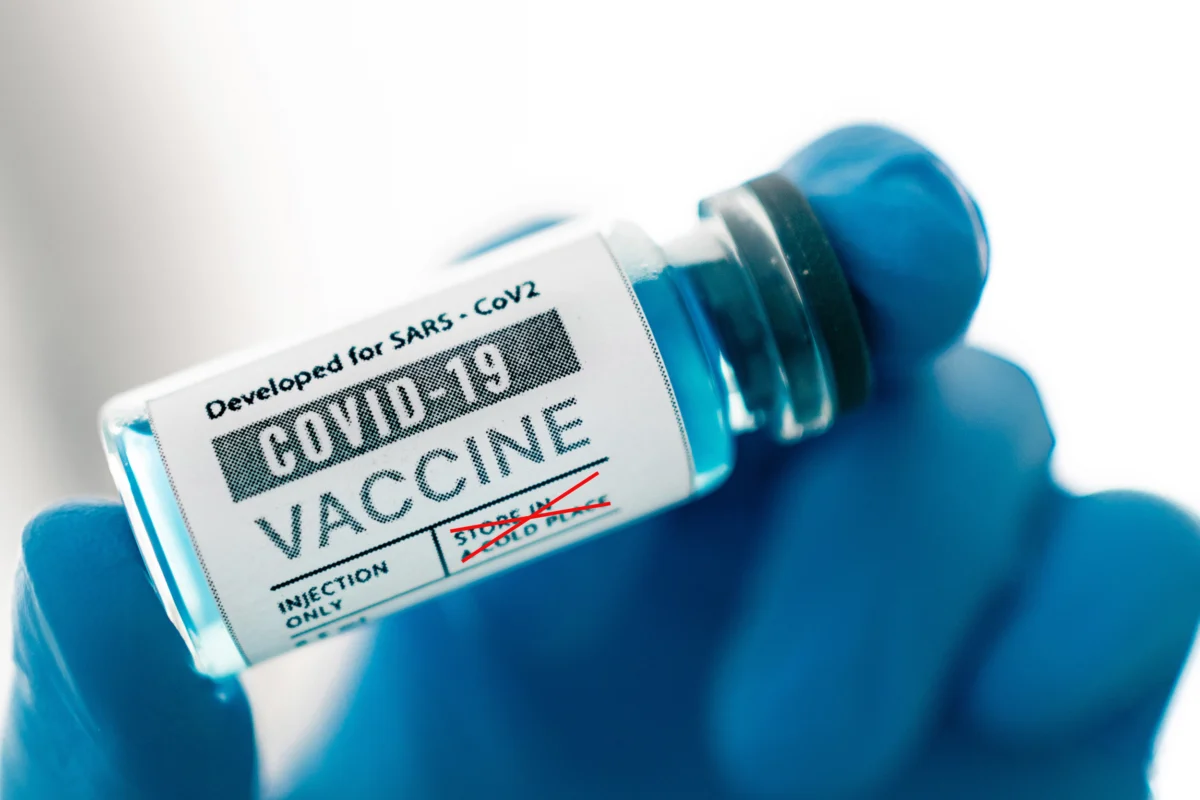
The global rollout of mRNA vaccines during the COVID-19 pandemic represented one of the most significant achievements in the history of modern medicine. Yet, this triumph was shadowed by a logistical bottleneck: the "cold chain." Because mRNA is a notoriously fragile molecule, vaccines developed by firms like Pfizer-BioNTech and Moderna required ultra-cold storage, often at temperatures as low as -80 degrees Celsius. This requirement effectively sidelined many developing nations and remote regions where the infrastructure for such deep-freeze storage is virtually non-existent.
Now, a team of researchers at the Massachusetts Institute of Technology (MIT) has unveiled a breakthrough that could render the cold chain a relic of the past. By leveraging a sophisticated artificial intelligence algorithm, the team has successfully engineered lipid nanoparticles (LNPs)—the delivery vehicles for mRNA—that remain stable at room temperature for up to a year and can withstand scorching temperatures of nearly 100 degrees Fahrenheit (37°C) for two months.
The Fragility of Innovation: The Main Facts
At the heart of the challenge is the mRNA molecule itself. To protect it from degradation and ensure it reaches the interior of human cells, scientists encapsulate it within lipid nanoparticles. While these LNPs are highly effective, they are susceptible to thermal degradation, leading to the strict storage mandates that defined the pandemic era.
The MIT team, led by principal investigator Ana Jaklenec and David H. Koch Institute Professor Robert Langer, sought to stabilize these FDA-approved formulations without altering the fundamental chemistry that has already been proven safe and effective. Their solution was not found through traditional trial-and-error chemistry, but through a machine-learning approach that optimized the "excipients"—the sugars, salts, and polymers added to stabilize the nanoparticles.
The results, published in the journal Nature Biotechnology, are transformative. Vaccines formulated with these AI-optimized nanoparticles showed immune responses in mice identical to those generated by standard, cold-stored vaccines. Furthermore, the technology allows for the creation of microneedle patches—painless, adhesive squares containing hundreds of vaccine-filled needles—that could simplify vaccine administration globally.
A Chronological Shift: From Frustration to Convergence
The path to this discovery was not linear. Initially, the researchers attempted to stabilize the LNPs using established excipients that had performed well in previous studies. However, the team hit a wall.
"We were trying to use and screen excipients that we’ve previously used successfully to stabilize LNPs, but it just wasn’t working," admitted Dr. Jaklenec. "It was really frustrating for the team."
Recognizing the need for a more efficient paradigm, the researchers pivoted to a machine-learning strategy in collaboration with MIT’s Computer Science and Artificial Intelligence Laboratory (CSAIL). The chronology of their success is as follows:
- Algorithmic Development: The team developed an AI model specifically designed to work with small datasets—a critical requirement in biological research where running thousands of wet-lab experiments is neither feasible nor cost-effective.
- The Screening Phase: Researchers analyzed nearly 50 FDA-approved excipients. They utilized a "firefly luciferase" assay, where the emission of bioluminescence in cells served as a proxy for how well an excipient protected the mRNA.
- Iterative Prediction: The AI took the performance data of these excipients and predicted optimal ratios for stabilization. The team tested two formulations at a time, fed the results back into the algorithm, and allowed the machine to refine its predictions.
- Convergence: Unlike the months of fruitless manual testing, the AI-guided process achieved a stable, high-performance formulation in a matter of weeks.
"It was surprising to see how quickly the algorithm converged on a stable formulation—getting there in just a handful of iterations, rather than the exhaustive search that would normally be required," noted Mina Konaković Luković, an assistant professor at CSAIL and a co-author of the study.
Supporting Data: Proof of Resilience
The strength of this research lies in its empirical verification. To ensure the new formulations could withstand real-world transport conditions, the team subjected their LNP-packaged COVID-19 antigens to rigorous stress tests.
Following a process called vacuum drying—which turns the liquid vaccine into a solid state—the researchers stored the samples at 37°C (98.6°F) for two months and at standard room temperature for 12 months. When these "stressed" vaccines were administered to animal models, the resulting immune response was statistically indistinguishable from the response produced by freshly prepared, cold-stored Moderna-style vaccines.
Moreover, the versatility of the algorithm was proven when the team successfully applied the same optimization process to different LNP configurations, including those similar to the Pfizer-BioNTech vaccine. By simply adjusting the ratios of the excipients based on the AI’s guidance, the researchers were able to stabilize different types of LNP structures, suggesting that this platform is a universal solution for the mRNA delivery field.
Official Responses and Peer Perspectives
The scientific community has reacted with significant interest to the paper, which was supported in part by the Bill & Melinda Gates Foundation. The ability to "de-risk" vaccine logistics is a major priority for global health organizations, as it directly impacts equity in immunization coverage.
"The real beauty of this algorithm is that we can use it with small data sets," Dr. Jaklenec said in a press statement. "It’s really hard to run thousands of experiments, so this algorithm allows us to more easily achieve formulations with features that we want—in this case, stability."
Lead authors Jinbi Tian and Khanh Tran emphasized that the implications extend far beyond COVID-19. "Our approach broadens the application of not only mRNA vaccines, but also therapeutics or advanced drug-delivery platforms like controlled-release particles or microneedle patches," said Tian.
The media response has mirrored the excitement of the researchers. Nancy Lapid, reporting for Reuters, highlighted the economic and humanitarian benefits of the breakthrough, noting that removing the ultra-cold storage requirement would drastically lower the costs of vaccine distribution and widen access to regions previously deemed "logistically impossible" to reach.
Implications for the Future of Medicine
The implications of this research are twofold: they change the what and the how of medical delivery.
1. Global Health Equity
The primary implication is the democratization of mRNA technology. By removing the need for a specialized cold-chain infrastructure—which requires expensive freezers, reliable electricity, and specialized transport logistics—these heat-resistant vaccines can reach the most remote corners of the globe. This represents a monumental step toward achieving the World Health Organization’s goals of equitable vaccine distribution.
2. The Rise of Microneedle Patches
Beyond shelf-life, the research paves the way for the widespread adoption of microneedle patches. Traditional vaccines require skilled healthcare workers and sterile syringes, which creates a barrier in resource-limited settings. A stable, solid-state vaccine that can be administered via a simple patch—potentially even by the patient themselves—would revolutionize vaccination programs for everything from seasonal influenza to emerging zoonotic threats.
3. Accelerated Drug Discovery
The use of AI in this study proves that "small data" machine learning is a viable tool for complex biological problems. As researchers continue to explore mRNA as a treatment for cancer, cardiovascular disease, and genetic disorders, the ability to rapidly optimize delivery formulations will shave years off the development cycle. By reducing the reliance on exhaustive laboratory screening, MIT has effectively provided a roadmap for the future of pharmaceutical development.
Conclusion
The MIT study is a landmark example of how interdisciplinary collaboration—merging computer science with material science and immunology—can solve humanity’s most pressing logistical challenges. While further clinical trials in humans will be required to confirm these findings, the laboratory and animal data provide a robust foundation for a future where vaccines are as easy to store as a bottle of water. In doing so, Jaklenec, Langer, and their team have not only stabilized a molecule; they have stabilized the future of global pandemic preparedness.



