







The promise of modern AI website builders is seductive: "Build a professional website in minutes." For the uninitiated, this implies that a business presence can be conjured from thin air with the click of a button. However, the reality of web development is more nuanced. While artificial intelligence has revolutionized the speed at which a foundational structure can be erected, the journey from a concept to a high-performing, traffic-driving website remains a multi-stage process that demands human oversight, strategic planning, and meticulous refinement.
In this comprehensive guide, we dissect the actual timeline of modern web creation, separating the automated heavy lifting from the essential human expertise required to build a sustainable online brand.
The Reality of AI-Driven Web Development
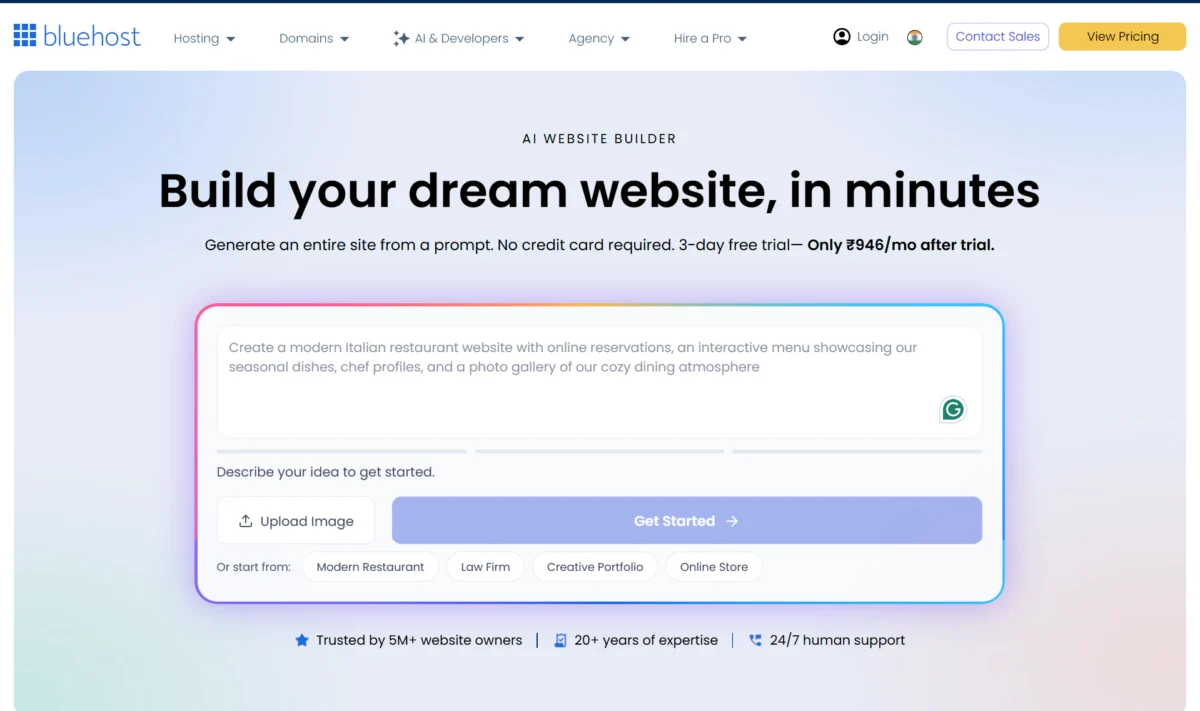
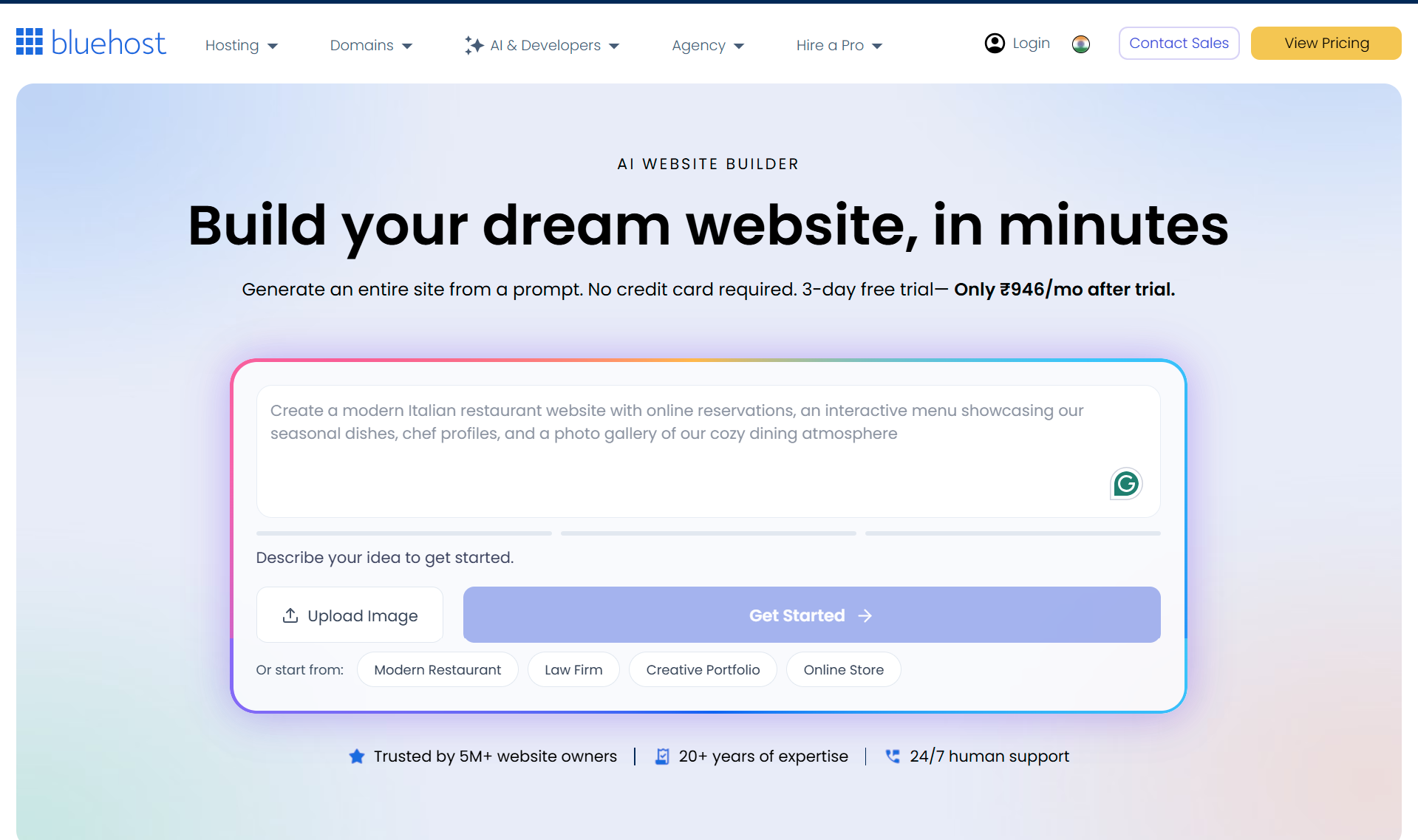
Most AI website builders, such as the Bluehost AI Website Builder, excel at eliminating the "blank page syndrome." Historically, launching a site meant manually selecting themes, configuring navigation menus, wrestling with page layouts, and drafting filler content. Today, these tasks are handled by generative algorithms that interpret user intent through a guided onboarding questionnaire.
Yet, "minutes" to generate a layout does not equate to "minutes" to launch a business-ready site. A functional, conversion-optimized website requires domain registration, hosting configuration, content personalization, and rigorous testing—all of which fall outside the immediate scope of an AI generator.
A Chronological Breakdown: The Lifecycle of a Website
Every professional website, whether a personal portfolio or a complex e-commerce storefront, follows a predictable developmental arc. The time investment for each stage varies significantly based on the complexity of your goals.
Phase 1: Conceptualization and Strategy (30 Minutes – 4 Days)
Before touching any software, you must define the "why." This phase involves identifying your target audience, outlining your primary goals, and researching market trends. Spending time here prevents costly pivots later. If you are entering a competitive market, allocating 1–3 days to competitive analysis is not just recommended; it is essential.
Phase 2: Infrastructure and Identity (1 – 2 Days)
Selecting a memorable domain name that aligns with your brand is a critical step. Following this, you must secure reliable web hosting. Tools like Bluehost offer an integrated approach, bundling hosting, SSL certificates, and domain management. This centralization is vital to avoiding the "service-juggling" trap that slows down many beginners.
Phase 3: The AI Generation Phase (3 – 10 Minutes)
This is where AI shines. By answering a series of business-related questions, the AI assembles the site’s architecture. It creates the header, footer, navigation structure, and preliminary page layouts. You are no longer building a frame; you are starting with a finished draft.
Phase 4: Refinement and Content Injection (1 – 7 Days)
This is the most labor-intensive stage. AI-generated copy is a baseline—it lacks the nuanced voice, specific product knowledge, and unique value proposition that only you can provide. Replacing stock photography with custom imagery, fine-tuning headers for tone, and adding company-specific testimonials are tasks that demand time and attention to detail.
Phase 5: Quality Assurance and Launch (2 – 10 Hours)
Before going live, you must conduct a "stress test." This includes:
- Cross-device testing: Does the site look good on mobile, tablet, and desktop?
- Link validation: Are there broken links?
- Functionality checks: Do contact forms, search bars, and checkout buttons perform as expected?
- Loading speed: Is the site optimized for performance?
Additional Factors That Extend Your Timeline
If your project scope expands beyond a brochure-style website, the complexity—and the time required—increases linearly.
| Requirement | Estimated Additional Time |
|---|---|
| E-commerce Setup | 1–5 Days |
| Product/Variant Management | 1–3 Days |
| Payment/Tax/Shipping Configuration | 2–5 Days |
| Third-party Integrations (CRM/Booking) | 1–2 Days |
| Multilingual Support | 1–3 Weeks |
Businesses that require integration with CRM systems, booking engines, or complex multilingual architectures should approach their timeline with realistic expectations. AI can handle the base, but the infrastructure for complex operations remains a manual effort.
The "WordPress Advantage" in AI Building
A common pitfall of some simplified AI website builders is that they lock users into proprietary, restrictive ecosystems. However, when using an AI tool built on top of a platform like WordPress, the user gains a significant advantage.
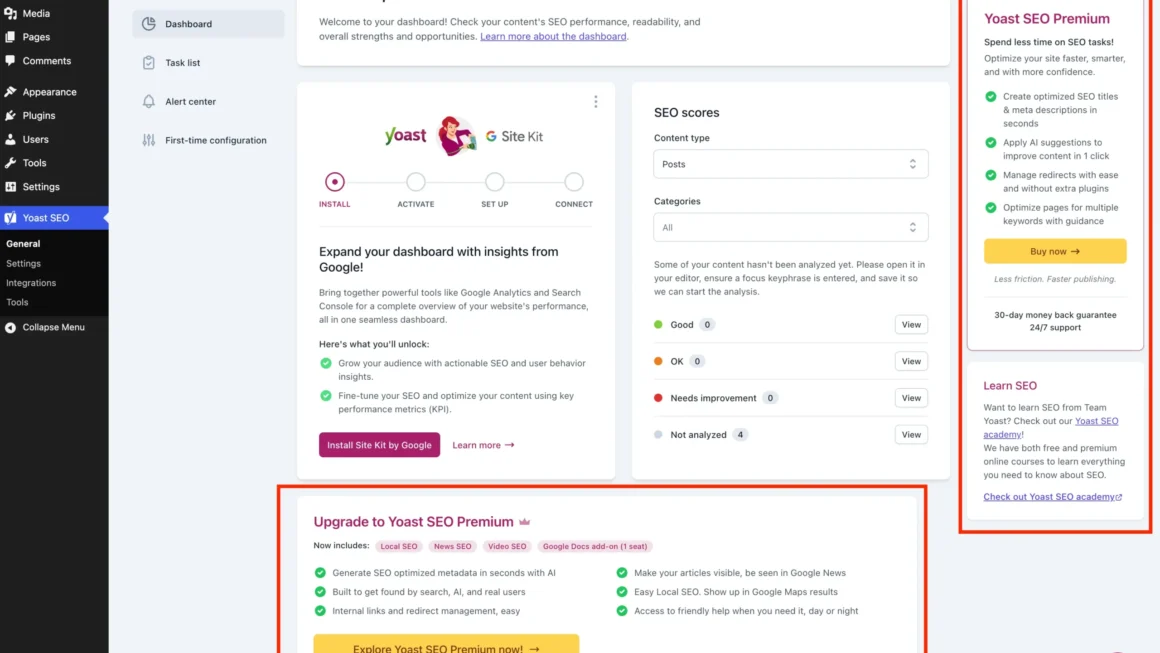
Because the AI-generated site is effectively a standard WordPress installation, the developer is not constrained by the builder’s UI. Once the AI provides the initial structure, you can access the full WordPress dashboard to install plugins, customize CSS, or implement advanced SEO strategies via tools like Yoast SEO. This hybrid approach—using AI for speed and WordPress for power—is the gold standard for modern, scalable web development.
Post-Launch: The Growth Phase
Launching the website is merely the "Day Zero" of your online presence. To achieve long-term success, you must transition from "builder" to "operator."
Content Strategy and SEO
Search engines favor fresh, authoritative, and helpful content. Implementing a strategy for regular blog updates—using structured data to help crawlers understand your site—is vital. If you are using plugins like Yoast SEO, utilizing "FAQ Blocks" and "Schema Markup" can significantly improve your visibility in AI-powered search results.
Monitoring and Iteration
Once live, you must integrate tools like Google Search Console and Google Analytics. These provide the feedback loop necessary to understand user behavior. If your "About" page has a high bounce rate, you will need to re-evaluate the content. If your mobile traffic is struggling, you will need to optimize for speed.
Brand Perception in the Age of AI
As AI search experiences (like Google’s AI Overviews) evolve, it is no longer enough to just have a website; you need to manage your brand’s "digital footprint." Using tools like Yoast SEO AI+ allows businesses to analyze how AI platforms perceive their brand, offering insights into how to strengthen their presence in a rapidly changing search ecosystem.
Final Verdict: Is AI Worth the Hype?
The verdict is clear: AI is not a magic wand, but it is an incredibly powerful force multiplier.
For the average individual or small business owner, AI reduces the "setup phase" from days of technical frustration to a few minutes of configuration. If you enter the process with your branding, high-quality images, and a clear content strategy prepared in advance, a professional-looking site can realistically be launched in under two hours.
However, the "perfect" website—the one that drives sales, ranks in search engines, and builds genuine trust—will always require the human touch. The true value of AI in this context is that it grants you back the time you would have spent on structural drudgery, allowing you to invest that energy into the elements that actually matter: your message, your product, and your customer experience.
Key Takeaways
- AI is for the foundation: Use it to skip the layout and navigation setup.
- Preparation is key: Have your images and copy ready before you start to avoid bottlenecks.
- Choose open ecosystems: Opt for AI builders that run on open-source platforms like WordPress to avoid being "locked in."
- Launch is just the beginning: Focus your long-term efforts on SEO, regular content updates, and monitoring performance through data analytics.
By managing your expectations and leveraging AI to handle the technical heavy lifting, you can move past the initial hurdle of website creation and focus on what truly grows a business: connecting with your audience.