

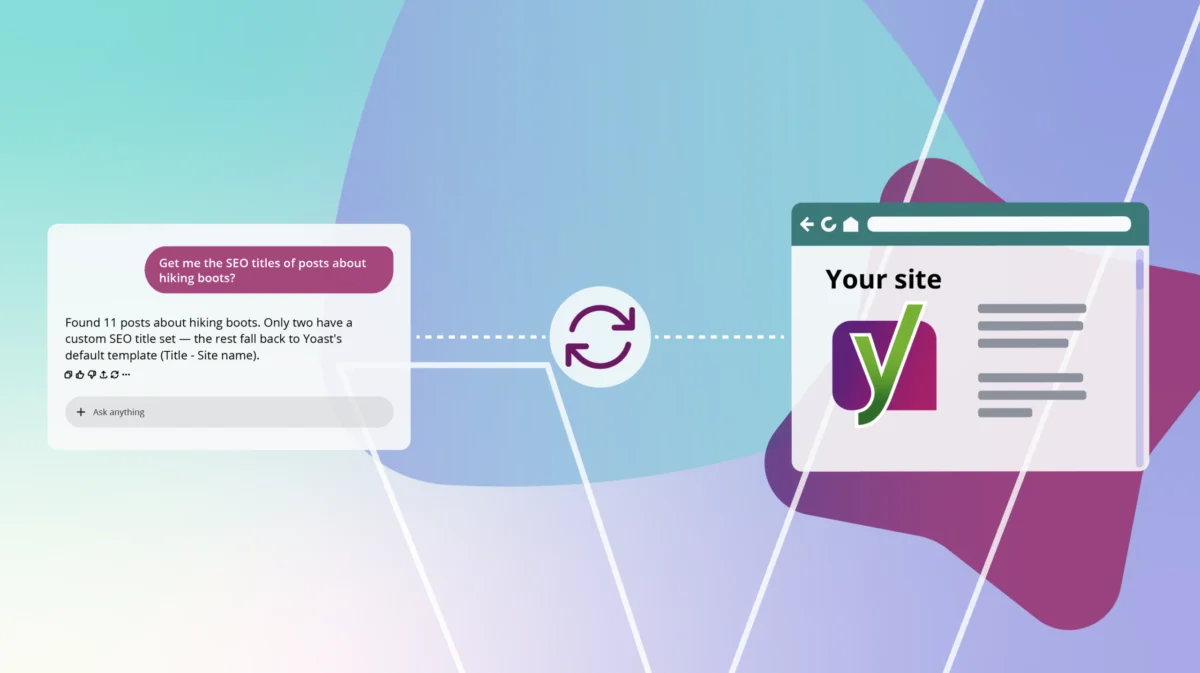
In the rapidly evolving landscape of artificial intelligence, the gap between "knowing" and "doing" has long been a source of friction for digital marketers and web managers. For years, SEO professionals have relied on AI tools to audit their websites, providing long lists of actionable findings—such as incorrect schema markup or broken canonical links. While these insights were valuable, they remained passive. The user was forced to manually navigate back-end dashboards to implement the suggested fixes.
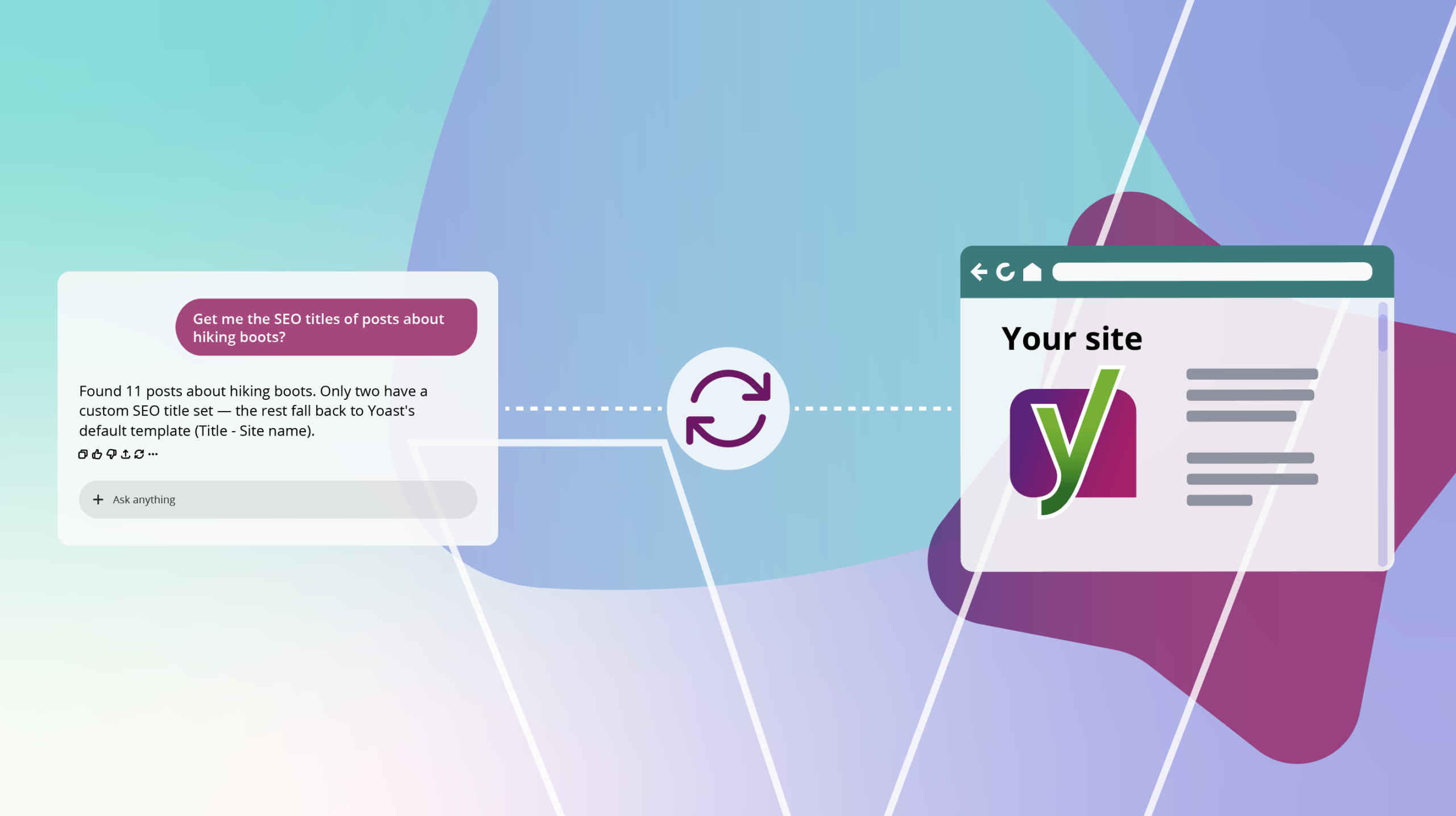
Today, that paradigm is shifting. With the latest release of Yoast SEO Abilities, the popular WordPress plugin is bridging the divide between diagnostic AI and direct site management. By leveraging the WordPress Abilities API, Yoast is enabling AI agents to not only identify SEO errors but to execute the technical corrections required to resolve them in real-time.
The Evolution of Agentic SEO Workflows
The history of AI in SEO has been defined by a transition from static analysis to dynamic, agentic workflows. Initially, AI was used primarily for content generation—writing meta descriptions or suggesting keywords. As Large Language Models (LLMs) matured, tools began to perform more sophisticated audits, analyzing site structures and identifying technical inconsistencies.
However, the "last mile" of SEO remained entirely manual. An AI might inform a user that a product page is misidentified as a recipe in Google’s structured data, but the user still had to log into their WordPress dashboard, navigate to the specific post, locate the Yoast SEO meta box, and manually edit the schema settings. This fragmented process was not only time-consuming but also prone to human error.
The introduction of Yoast SEO Abilities marks a pivotal moment in this timeline. By registering its core functionalities with the WordPress Abilities API, Yoast is allowing AI agents to interface directly with the site’s technical infrastructure. The diagnostic tool and the control panel have finally become one.
Bridging the Gap: What "Abilities" Changes
Before this update, AI integrations with WordPress were largely read-only or limited to basic content interactions. While users could query the system for SEO scores or readability metrics, the underlying database fields—such as canonical URLs, robots tags, and schema types—remained locked away from the reach of AI agents.
The new update fundamentally changes the relationship between LLMs and the WordPress back-end.
Full SEO Field Transparency
The new yoast-seo/get-post-seo-data capability allows AI agents to pull a comprehensive snapshot of a post’s SEO state. This includes:
- Meta Information: Titles and descriptions.
- Technical Flags: Robots directives and canonical settings.
- Structured Data: Schema type classification.
- Performance Metrics: Current SEO and readability scores.
Crucially, this data is queryable via plain-language requests. An agent can identify a post by its permalink, title, or ID, eliminating the tedious process of manual searching.
Automated Technical Remediation
The most transformative feature is the ability for agents to write changes back to the site. Agents can now programmatically adjust technical settings such as schema types, cornerstone content markers, and robots flags. By automating these "low-level" technical tasks, Yoast is freeing up SEO professionals to focus on high-level strategy rather than administrative upkeep.
Safety Nets and Rollbacks
Recognizing the risks inherent in automated changes, Yoast has implemented a context-aware safety mechanism. Changes made through the Abilities API are reversible, provided the AI agent maintains the session context. This encourages a "read-then-write" workflow: the agent pulls the current configuration, calculates the necessary adjustment, executes the update, and remains available to verify the results before the state is finalized.
Supporting Data and Technical Architecture
The architecture behind this release is rooted in open standards, specifically the WordPress Abilities API and the Model Context Protocol (MCP). By adopting these standards, Yoast ensures that its integration is not locked into a single ecosystem.
Whether a user is working within the Claude Desktop environment, utilizing the Cursor code editor, or deploying custom agentic workflows via VS Code, the Yoast integration functions as a standardized tool.
Bulk Processing Capabilities
For enterprise-level sites with thousands of pages, the update includes robust support for batch operations. An agent can now process an entire category of posts in a single call, applying a unified schema fix or updating robots tags across an entire archive. The system returns per-post status reports, allowing for granular audit trails of every automated adjustment.
Controlled Access and Security
Yoast has taken a conservative approach to what AI can modify. For instance, the Focus Keyphrase remains strictly read-only. The team emphasizes that keyphrases are the foundation of content strategy and human-led marketing; allowing an AI to arbitrarily change them could disrupt content briefs and invalidate previous analytical data.
Furthermore, access to these capabilities is tethered to native WordPress user permissions. If an AI agent is connected to an account with limited access, it inherits those limitations. This removes the need for a secondary, complex permission system and allows site administrators to audit AI activity using standard WordPress logs.
Implications for Agencies and Site Owners
The shift toward agentic SEO management has profound implications for how digital agencies and solo site owners operate.
Efficiency for Agencies
For agencies managing hundreds of WordPress sites, the "standardized setup" provided by the WordPress MCP Adapter is a game-changer. Rather than configuring custom API endpoints for every client, agencies can deploy a consistent, repeatable framework across their entire portfolio. This reduces overhead and ensures that automated SEO maintenance becomes a standard service tier rather than a bespoke, high-cost offering.
The Rise of the "SEO Architect"
As AI takes over the execution of technical settings, the role of the SEO professional will evolve. We are moving toward a future where the SEO practitioner acts as an "SEO Architect," defining the parameters, oversight, and strategic intent, while AI agents function as the construction crew. This shift necessitates a higher level of technical literacy; professionals must learn how to prompt, supervise, and debug agentic workflows rather than manually clicking through meta boxes.
Future-Proofing the Web
By aligning with the Model Context Protocol, Yoast is future-proofing its platform against the rapid pace of AI development. As LLMs become more capable of complex reasoning, the "Abilities" already built into the system will become more powerful. A simple request like "fix all canonical errors on my site" will, for many, soon be a one-click reality that yields immediate, verifiable results.
How to Get Started
For those looking to integrate these capabilities, the barrier to entry is relatively low. The process involves three primary steps:
- Configure your LLM: Users must first connect their chosen LLM subscription through the Yoast SEO dashboard.
- Enable the WordPress MCP Adapter: Following the official documentation, users install the adapter to link their WordPress instance to their preferred MCP-aware client (e.g., Claude, VS Code).
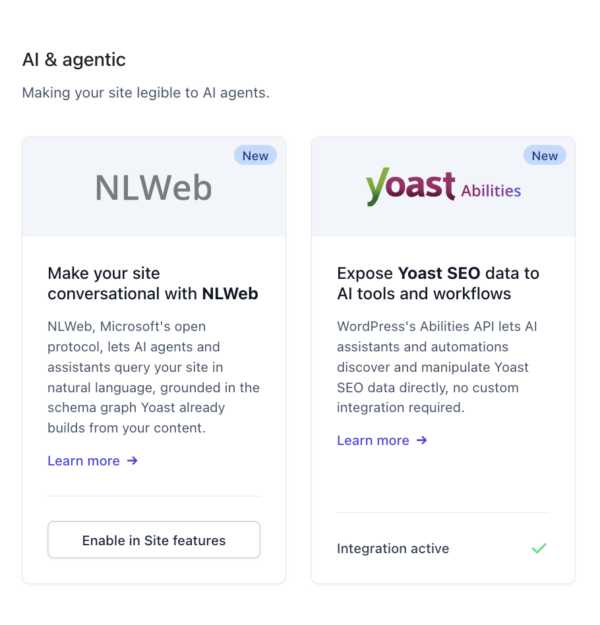
- Integrate via the Dashboard: Within the Yoast SEO "Integrations" tab, users can now find the "AI & agentic" grouping, which provides a clean, scanned view of all available abilities.
Yoast has also overhauled its integration dashboard to move away from long, cluttered lists toward a more intuitive, topic-based organization. This makes it easier for users to identify which specific abilities are active and manage them with greater precision.
Conclusion: A New Era of Site Management
The release of Yoast SEO Abilities represents a significant milestone in the maturation of AI-driven digital marketing. By enabling AI to move beyond mere recommendation and into the realm of direct site manipulation, Yoast has provided a practical, scalable solution to one of the most tedious aspects of SEO.
While the automation of technical fields is a major step forward, the emphasis on human-in-the-loop controls—such as the protected focus keyphrase and the reliance on native WordPress permissions—demonstrates a commitment to responsible, user-controlled AI. As we look toward the future, it is clear that the most successful web managers will be those who embrace these new tools, transforming their relationship with their websites from one of manual labor to one of strategic orchestration.