By Editorial Desk | New Delhi | May 27, 2026
In an era defined by hyper-connectivity, the modern professional is often burdened by a "tangle of tech"—a chaotic assortment of cables, bulky power bricks, and fragmented charging accessories. Recognizing this friction point in the daily lives of power users, lifestyle tech brand DailyObjects has officially entered the market with "NODE," a revolutionary modular wireless charging ecosystem that promises to unify the way we power our devices.
Launched on May 26, 2026, and hitting retail shelves on May 27, NODE is being marketed as the world’s first modular wireless charging ecosystem built around a "dock-and-go" design. By blending high-end industrial aesthetics with sophisticated engineering, DailyObjects aims to transform the charging experience from a utility-driven chore into a seamless, integrated lifestyle feature.
Main Facts: What is the NODE Ecosystem?
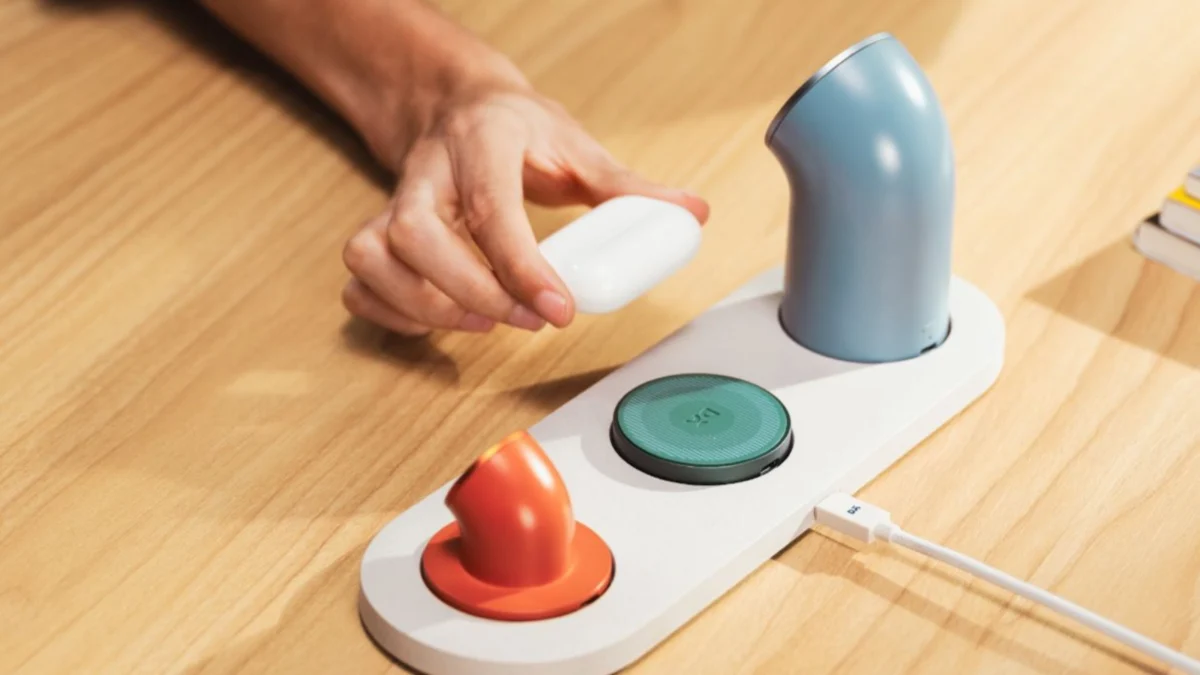
The NODE ecosystem is a highly customizable, hardware-agnostic charging platform designed to accommodate the multi-device habits of contemporary users. At its core, the system allows consumers to build a bespoke charging station tailored to their specific hardware—be it a smartphone, smartwatch, or wireless earbuds.
Key Components of the NODE System:
- The Docking Base: The foundation of the system, which employs a "one-wire" configuration, ensuring that the entire setup is powered by a single cable, effectively eliminating the aesthetic and physical clutter of traditional charging setups.
- Wireless Charging Phone Stand: A versatile module that functions as both a desk companion and a portable power bank, boasting a built-in 7800mAh battery.
- Wireless Charging Disk: A compact, flat charging surface optimized for smartphones and earbuds compatible with Qi-standard wireless charging.
- Apple Watch Charging Stand: A dedicated module providing 5W wireless charging, ensuring seamless compatibility with Apple’s wearable ecosystem.
- Portable Lamp Module: A design-forward, functional light source featuring a 2600mAh battery, providing up to eight hours of illumination.
The system utilizes pogo-pin connectivity and USB Type-C support, allowing users to snap modules into the primary dock or detach them for independent use. This hybrid functionality is the hallmark of the NODE ecosystem, distinguishing it from static, singular charging pads currently dominating the market.
Chronology of Development
The journey to NODE represents a significant shift in DailyObjects’ product strategy, moving from purely aesthetic lifestyle accessories to high-performance, integrated tech hardware.
- Q3 2024: Initial conceptualization of a "frictionless" power solution, identifying the growing pain point of desk clutter and the need for portable, multi-device power.
- Q1 2025: Prototyping phase begins. Engineering teams focus on the "dock-and-go" mechanism, testing various magnetic and physical connection points to ensure durability and consistent power throughput.
- Q4 2025: Finalization of the Qi2.2 certification protocols. The company opts for high-efficiency components to support the 25W wireless charging capabilities.
- May 26, 2026: Official unveiling of the NODE ecosystem at a virtual press event in New Delhi.
- May 27, 2026: Commercial availability commences across the DailyObjects digital storefront and selected premium retail outlets.
Supporting Data: Engineering and Performance Metrics
The success of a charging ecosystem hinges on its efficiency and safety protocols. DailyObjects has prioritized high-performance specifications to ensure that the modular nature of the system does not compromise power delivery.
Technical Specifications Breakdown:
- Charging Standard: Qi2.2-certified, ensuring broad compatibility and optimal power distribution.
- Peak Power Output: Supports up to 25W wireless charging, catering to modern smartphones that require faster replenishment cycles.
- Battery Capacities:
- Phone Stand: 7800mAh (Internal capacity for on-the-go charging).
- Portable Lamp: 2600mAh (Up to 8 hours of continuous operation).
- Connectivity: Pogo-pin magnetic locking mechanism for secure physical integration, complemented by universal USB Type-C input/output for standalone charging.
The adoption of the Qi2.2 standard is particularly noteworthy. It indicates that DailyObjects is prioritizing the latest in inductive power transfer technology, which allows for better thermal management and more precise alignment between the charger and the device, reducing energy loss through heat.
Official Responses: The Vision Behind the Tech
Pankaj Garg, Co-Founder & CEO of DailyObjects, provided insights into the philosophy driving the brand’s latest innovation. During the launch, he emphasized that NODE is not merely a piece of hardware but a response to a fundamental shift in how people interact with their devices.
"We set out to create India’s first truly modular charging ecosystem," Garg stated. "We wanted to reimagine power not as a utility hidden in the background, but as an integrated part of modern living. As consumers increasingly gravitate towards design-led, multi-device lifestyles, there is a growing expectation for technology to move seamlessly across work, travel, and personal spaces."
Garg further highlighted the "intuitive" nature of the design: "NODE has been designed to answer that shift through a flexible, portable, and thoughtfully engineered ecosystem that brings together performance, functionality, and elevated design in a way that feels intuitive to contemporary lifestyles."
The company’s narrative is clear: they are positioning NODE as a premium lifestyle product that appeals to professionals who refuse to sacrifice form for function. By allowing users to "swap" modules based on the day’s requirements—perhaps taking the portable stand for a meeting or using the lamp on a bedside table—DailyObjects is effectively commoditizing flexibility.
Implications: A New Standard for Desk Setup Aesthetics
The launch of NODE carries several implications for the consumer electronics and workspace productivity sectors.
1. The Rise of "Minimalist Productivity"
The "one-wire system" is a direct strike against the modern workspace’s biggest enemy: cable sprawl. By consolidating multiple power needs into a single hub, DailyObjects is catering to the "Desk Setup" subculture, where clean, aesthetically pleasing, and highly organized workstations are paramount. This move suggests that the future of tech accessories will be defined by integration rather than addition.
2. Portability as a Default Requirement
Historically, wireless chargers have been stationary devices. By incorporating high-capacity batteries into the charging stands themselves, NODE bridges the gap between a home base and a travel accessory. This is a significant evolution for the "Digital Nomad" demographic, who require their home charging setup to be as mobile as their laptop or smartphone.
3. Modular Hardware as a Sustainability Play
Modular design is often more sustainable than static hardware. Should a user upgrade their phone or need a different charging requirement, they do not need to replace the entire dock—only the specific module. This long-term modularity could reduce e-waste and encourage users to invest in a "system" rather than a disposable accessory.
4. Pricing and Market Positioning
With a starting price of Rs 10,000, NODE is firmly positioned in the premium segment. This indicates that DailyObjects is targeting a high-intent audience—tech enthusiasts, professionals, and design-conscious consumers who view their charging hardware as an extension of their personal brand and productivity workflow.
Conclusion: The Path Ahead
As the NODE ecosystem rolls out to the market, the tech industry will be watching closely to see if modular charging can gain widespread traction. The success of the project will depend on user adoption of the specific modules and the potential for future expansion of the ecosystem—such as the introduction of new modules like magnetic cooling fans, data transfer hubs, or specialized audio-visual accessories.
For DailyObjects, the launch of NODE is a pivotal moment that cements their transition from a lifestyle accessory company to a serious contender in the consumer hardware space. By focusing on the intersection of aesthetic design and modular engineering, they have created a product that not only powers devices but also elevates the environment in which those devices live.
As of today, the NODE ecosystem is available through the DailyObjects website and selected retail partners. Whether it becomes the standard for the modern desk remains to be seen, but one thing is certain: the era of the messy, single-use charging brick is rapidly coming to an end.