







Introduction
In the ever-evolving landscape of digital marketing and affiliate monetization, staying ahead of the curve is the ultimate competitive advantage. While seasoned affiliate marketers constantly scour affiliate networks like ShareASale, CJ Affiliate, or ClickBank, a vast treasure trove of lucrative partnerships remains hidden in plain sight across the open web. Many top-tier brands, boutique software-as-a-service (SaaS) providers, and emerging e-commerce merchants launch private, in-house, or niche-specific affiliate programs without ever listing them on major aggregator networks.
Enter Google Alerts—a traditionally underutilized, completely free web-monitoring tool. While most digital marketing professionals and public relations agencies rely on Google Alerts primarily for reputation management, brand tracking, and competitive intelligence, savvy affiliate marketers have repurposed the tool into an automated discovery engine. By configuring targeted search queries, marketers can passively source high-paying affiliate programs within their specific niche before their competitors even know they exist.
This article explores how to transform Google Alerts from a basic tracking tool into a sophisticated affiliate prospecting system, detailing step-by-step setup procedures, advanced filtering strategies, merchant-tracking tactics, and the broader economic implications for the affiliate marketing industry.
Main Facts
At its core, Google Alerts is a content change detection and notification service operated by Google. It indexes new web pages, blog posts, news articles, and research papers in real-time, dispatching email notifications whenever freshly published content matches a user-defined keyword string.
When applied to affiliate marketing, the tool operates on a few fundamental principles:
- Passive Discovery: Instead of manually searching Google or browsing networks daily, alerts deliver new program announcements directly to your inbox.
- Niche-Specific Targeting: By pairing broad industry keywords with terms like “affiliate program,” marketers can isolate monetization opportunities tailored strictly to their audience.
- Competitor and Merchant Tracking: Marketers can monitor specific companies that currently lack an affiliate presence, positioning themselves to be among the first partners to apply the moment an in-house program goes live.
- Customizable Delivery: Users dictate the frequency (as-it-happens, daily, or weekly) and filter out irrelevant noise by restricting results to specific source types, such as blogs or general web pages.
Chronology: The Evolution of Web Monitoring in Affiliate Marketing
To understand why using Google Alerts for affiliate discovery is so effective, it helps to examine how affiliate program tracking has evolved over the past two decades.
Phase 1: The Wild West of Direct Outreach (Early 2000s)
In the early days of affiliate marketing, finding programs required scouring web directories or manually visiting merchant websites and scrolling to the bottom of the homepage to look for an "Affiliate" or "Partners" link. Communication was largely manual, often involving cold emails and direct inquiries to webmasters.
Phase 2: The Rise of Aggregator Networks (2010s)
As the industry matured, centralized networks (Commission Junction, LinkShare, etc.) became the dominant clearinghouses for affiliate programs. Merchants centralized their tracking and payouts through these platforms. Consequently, affiliate marketers spent most of their time searching these massive databases, leading to hyper-competition for the exact same products.
Phase 3: The Decentralized SaaS Boom & Modern Discovery (Present Day)
Today, thousands of independent software companies and direct-to-consumer (DTC) brands launch private affiliate programs using specialized software (like FirstPromoter, Rewardful, or Tapfiliate). Because these programs are often managed independently rather than through a mega-network, they suffer from a visibility gap.
Marketers needed a way to sweep the broader web for mentions of these hidden programs. The adaptation of Google Alerts for affiliate research bridged this gap, allowing agile marketers to catch indexation data the moment a merchant publishes a landing page, blog post, or press release detailing a new referral initiative.
Setting Up Your Affiliate Discovery Engine: A Step-by-Step Guide
Deploying Google Alerts for affiliate prospecting requires a strategic approach to keyword formulation and source filtering. Below is the blueprint for establishing a high-yield alert system.
Step 1: Identifying Niche-Specific Queries
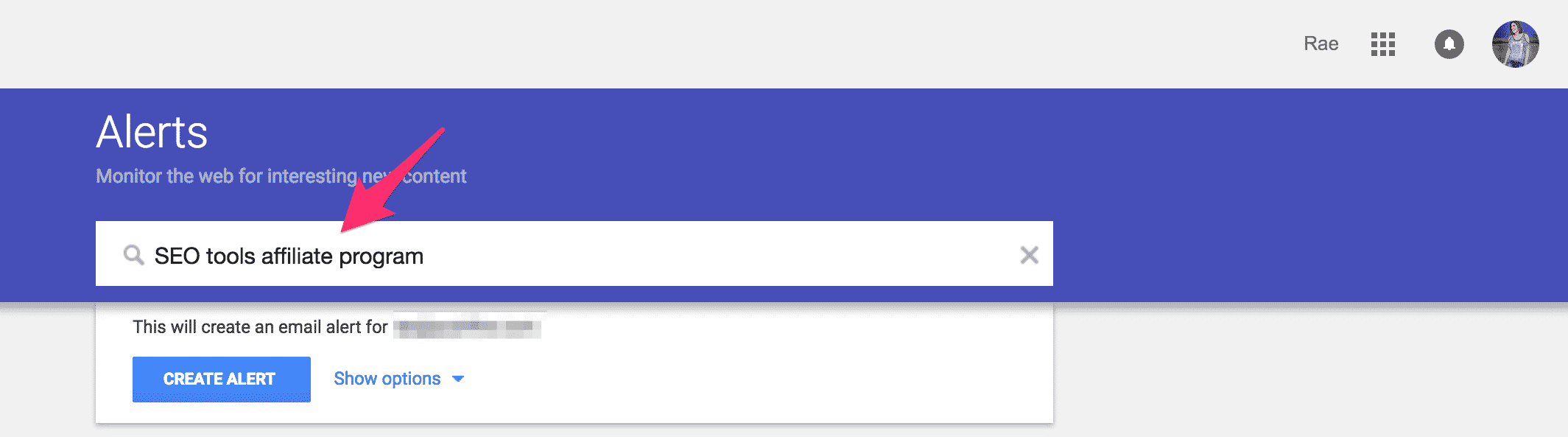
To find programs relevant to your content, navigate to the Google Alerts homepage. In the search box, input a product or service category common to your niche, immediately followed by the precise phrase "affiliate program."

- Example: If you run a search engine optimization blog, type:
SEO tools affiliate program
This targets pages where publishers, software creators, or review sites are explicitly discussing partnership opportunities within that exact sector.
Step 2: Analyzing the Preview Screen
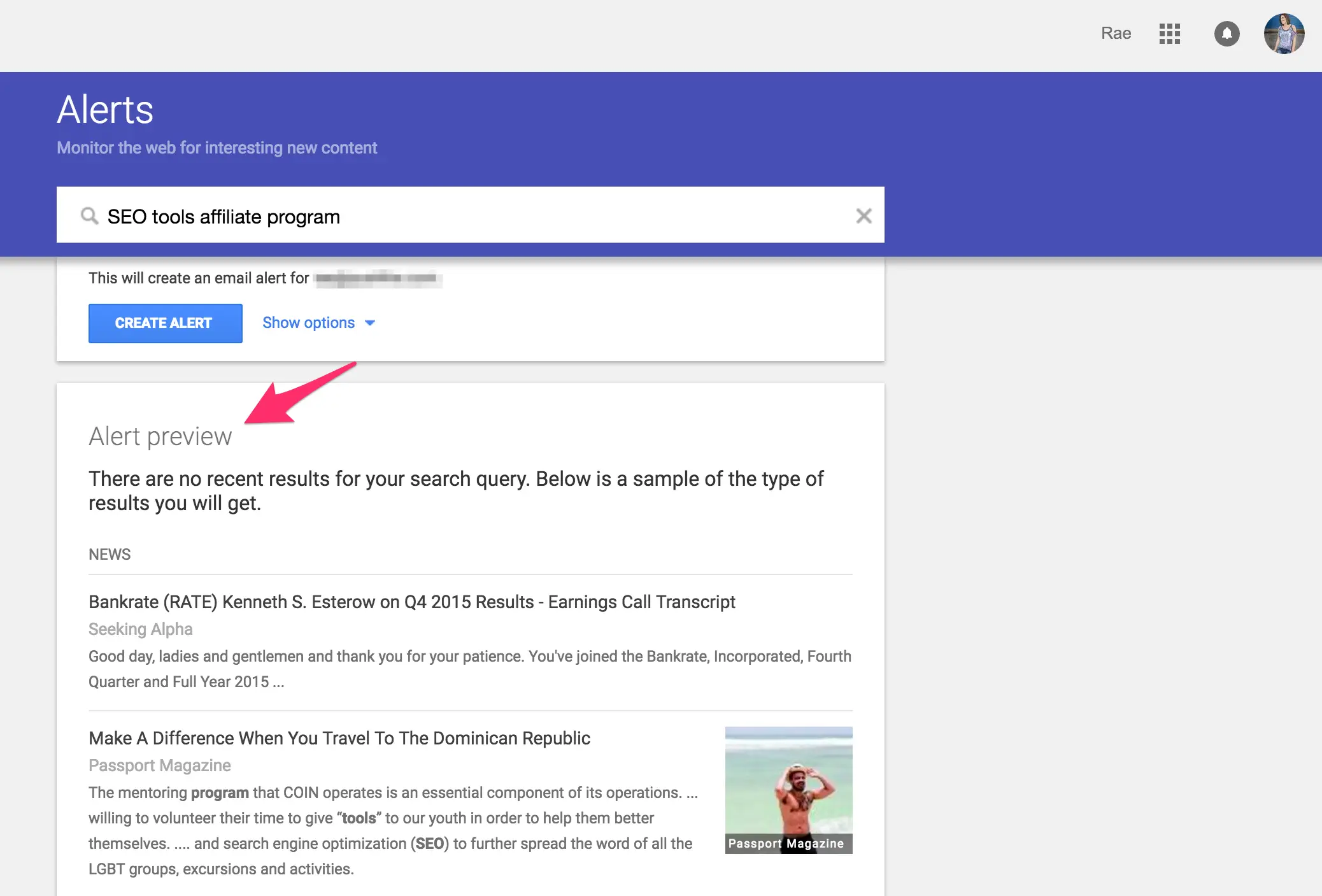
Once you enter your query, Google generates a live preview of the results the alert would currently produce. Examine this preview carefully to ensure the phrasing yields commercially viable results rather than academic papers or outdated forum threads from a decade ago.
Step 3: Filtering Sources for Maximum Relevance
By default, Google Alerts scans across news, blogs, web pages, videos, and books. For affiliate discovery, certain sources create unnecessary digital clutter.
- Exclude News: News results rarely announce niche affiliate programs unless it is a massive public corporation like Amazon or Walmart. For boutique programs, news alerts often return irrelevant financial reporting or press wire fluff.
- Prioritize Blogs and Web Pages: Restrict your alert sources to "Blogs" and "Web pages." Blogs frequently publish roundups like "10 Best X Affiliate Programs," while web pages often capture newly published merchant landing pages (
brand.com/affiliates).
Step 4: Tracking Specific Non-Affiliate Merchants
One of the most advanced applications of this strategy is monitoring preferred merchants who do not yet offer an affiliate program. If there is a product or service you deeply believe in and want to promote to your audience, create a targeted alert using quotation marks for exact matching:
- Example:
[Specific Merchant Name] "affiliate program"
Set the source filter to Web pages only. If the merchant decides to launch an in-house program or partner with an agency, you will likely be among the first external entities to index that content, allowing you to secure early-bird partnership terms.
Supporting Data & Industry Insights
While exact metrics on affiliate discovery channels vary across digital marketing case studies, industry adoption trends highlight the efficacy of automated web monitoring:

- The Long-Tail Advantage: Data from digital publisher networks indicates that up to 40% of niche affiliate revenue comes from lesser-known, independent programs rather than saturated master-network programs. These independent programs often feature higher commission rates (frequently 30% to 50% recurring for SaaS products) because they do not share profit margins with a third-party network.
- First-Mover Conversion Rates: Marketers who establish contact with a merchant within 48 hours of an affiliate program launch report a 3x higher likelihood of securing custom commission bumps, exclusive coupon codes, or dedicated account management compared to those who discover the program months later via network directories.
- Noise Reduction Efficiency: Marketers who apply source restrictions (limiting alerts to blogs and web pages) report a 70% reduction in irrelevant notifications, drastically cutting down the time spent sorting through daily email digests.
Official Responses and Expert Perspectives
Industry leaders and veteran affiliate strategists have long advocated for passive monitoring systems to maintain a competitive edge.
"Relying solely on major affiliate networks is a rookie mistake," notes Rae Hoffman, a veteran affiliate marketer and digital strategist. "The most profitable margins often lie in private or newly launched programs that haven’t been picked clean by thousands of other publishers. By automating your search with tools like Google Alerts, you let the web do the prospecting work for you."
Search engine optimization and marketing experts echo this sentiment, emphasizing that web-scraping and indexation tools provide an invaluable window into competitor behavior. When a competitor builds a resource page reviewing a new tool, Google Alerts catches the indexation event, simultaneously alerting you to both a potential content trend and a new monetization channel.
Implications for the Future of Affiliate Marketing
The practice of utilizing web-monitoring utilities for affiliate prospecting carries significant implications for various stakeholders within the digital ecosystem:
1. For Affiliate Publishers: Diversification and Resilience
Publishers who rely exclusively on large networks are vulnerable to sudden commission cuts, program closures, or stringent network policy changes. By using automated alert systems to discover independent programs, publishers diversify their revenue streams, insulate themselves against single-platform dependencies, and secure higher-paying recurring commissions typical of direct SaaS partnerships.
2. For Merchants and Brands
As more brands recognize that forward-thinking publishers use automated web alerts to track affiliate launches, the way companies roll out partnership programs is shifting. Brands are increasingly investing in stealth launches or vetting early applicants carefully to manage capacity. Conversely, emerging merchants benefit immensely when automated alerts pick up their program pages, instantly broadcasting their availability to targeted, high-intent niche publishers without requiring massive ad spend.

3. For the Software Industry
The proliferation of direct affiliate software (Rewardful, FirstPromoter, PartnerStack) has democratized partnership management. Google Alerts acts as the connective tissue between these decentralized merchant programs and the publishers actively seeking them, accelerating market matching without the friction of traditional network gatekeeping.
Conclusion
Affiliate marketing success is rarely about working harder; it is about working smarter and building systems that operate in the background. By moving beyond traditional network browsing and integrating Google Alerts into your daily workflow, you create a passive discovery engine that unearths fresh revenue opportunities while you sleep.
Whether you are scaling a content empire, looking to monetize a specialized niche blog, or tracking your favorite software provider for a future partnership launch, configuring targeted alerts with strict source filters provides a distinct competitive advantage. Set up your parameters today, filter out the noise, and let the web deliver your next high-converting affiliate partnership directly to your inbox.