





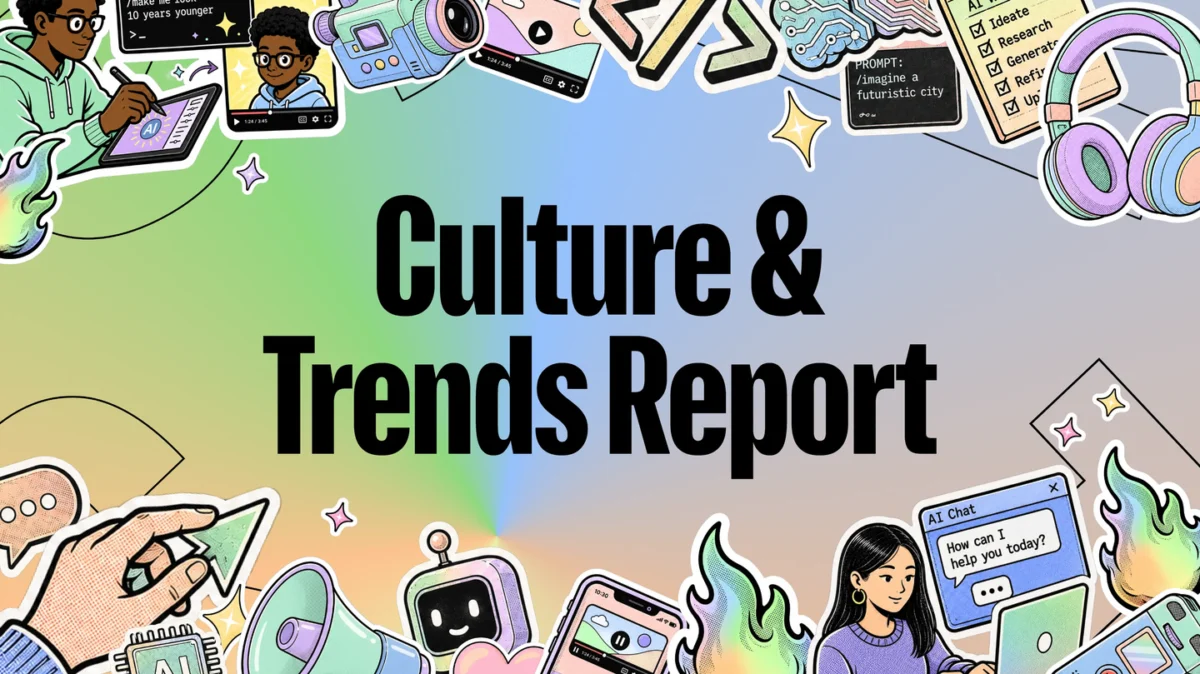
In the rapidly evolving landscape of digital media, skepticism often dominates the conversation surrounding generative artificial intelligence. Critics frequently highlight concerns regarding copyright, deepfakes, and the potential erosion of authentic human craftsmanship. However, a groundbreaking report released by YouTube’s Culture & Trends team, titled "Human Creativity and AI," suggests that the reality of the technology’s adoption is far more nuanced—and deeply personal—than the prevailing narrative implies.
As the platform that arguably defined the era of the "creator economy," YouTube is uniquely positioned to observe the shifting tides of digital behavior. Their latest findings reveal that rather than replacing the human element, generative AI is increasingly being used as a sophisticated tool for self-discovery, identity exploration, and community building among users aged 14 to 44.
The Core Findings: AI as a Catalyst for Identity
The YouTube Culture & Trends team, in collaboration with research firm NRG, conducted an extensive study to decode the world’s major generative video trends over the past year. By surveying thousands of active online users, the report paints a picture of a digital generation that is bypassing the technical gatekeeping of professional film production to bring their internal worlds to life.
The headline statistic is perhaps the most telling: 72% of surveyed video uploaders (aged 14–44) report using AI tools to enhance their images or videos. Far from being a niche interest reserved for tech-savvy developers, the integration of generative AI has become a mainstream practice for creators looking to "direct the movies of their own lives."
Perhaps most significantly, more than two-thirds of those who post AI-enhanced content explicitly feature themselves in their work. This data point underscores a critical shift: generative AI is not being used to create faceless, automated content, but rather as an extension of the creator’s own identity.
A Chronology of Adoption: From Novelty to Necessity
To understand how we reached this point, it is helpful to look at the timeline of generative AI’s integration into the creator ecosystem:
- Phase 1: The Novelty Era (Early 2023): Initial interest in generative video was largely experimental. Early adopters utilized text-to-image and rudimentary video generation tools to create surrealist art or "what-if" scenarios, often for comedic effect or viral engagement.
- Phase 2: The Tooling Integration (Late 2023 – Early 2024): As AI tools became embedded within popular editing software, creators began using AI for practical utility—background removal, color correction, and AI-assisted captioning. This removed the friction of technical barriers for amateur creators.
- Phase 3: The Identity & Narrative Era (Mid 2024 – Present): We are currently in a period where creators are using AI to bridge the gap between their physical reality and their internal identity. This includes the "hug your younger self" trend and the use of AI to visualize abstract emotional states. The focus has shifted from "look what this machine can do" to "look what this machine allows me to express about myself."
Supporting Data: The Statistics of Transformation
The YouTube report provides a granular look at the motivations driving this adoption. The data suggests that for the modern creator, AI acts as a "creative force multiplier."

The Emotional Connection
One of the most striking findings is the psychological role AI plays in content creation. The report highlights that 61% of surveyed video posters express a strong interest in using AI to insert themselves into scenarios that are physically impossible or emotionally resonant.
The "Hug Your Younger Self" Phenomenon
This trend serves as a perfect case study for the emotional utility of AI. By utilizing AI to animate childhood photographs, creators are able to interact with their younger selves in a digital space. This is not merely a technical exercise; it is a profound act of catharsis. When these videos are shared, they elicit high levels of empathy from viewers, fostering a sense of shared nostalgia and emotional rapport that strengthens community bonds.
Expanding the Horizon of Passion Projects
Beyond emotional exploration, hobbyists are utilizing AI to transcend the constraints of reality. Fashion enthusiasts, for instance, are turning rough, hand-drawn sketches into photorealistic runway presentations without the need for a professional studio. Similarly, in the world of gaming, creators are using AI to place themselves inside the universes they love—such as a creator hosting a culinary-themed ASMR video inside a fictional, AI-generated restaurant within the Minecraft block-world.
Official Perspectives and Industry Implications
The implications of these findings are significant for both the platform and the broader creative industry. By empowering creators to realize visions that were previously limited by budget, technical skill, or access to equipment, YouTube is fundamentally democratizing the production of high-fidelity content.
In response to these trends, YouTube has continued to emphasize its commitment to "Responsible AI." The platform maintains that while generative tools offer immense creative potential, they must be balanced with transparency. This includes the implementation of content labels that inform viewers when content has been altered or created by AI.
Industry analysts suggest that this pivot toward "AI-assisted humanity" will likely force a change in how we evaluate digital influence. If the barrier to high-quality visuals is lowered, the value of the "creator" will shift even further toward personality, storytelling, and the ability to foster genuine community. The machine may generate the image, but the human remains the arbiter of the narrative.
Implications for the Future of Human Creativity
As we look toward the future, the YouTube report suggests that the "timeless human need for self-expression" remains the primary engine of internet culture. Generative AI is not the replacement for the creator; it is the new brush, the new camera, and the new drafting table.

The Democratization of Vision
The primary implication of this shift is that the creative "ceiling" has been raised for the average user. A teenager in their bedroom now has the visual tools to produce content that previously required a production team. This will likely lead to an explosion of niche, high-concept content that explores specific, deeply personal interests.
Strengthening Community Through Empathy
As creators use AI to externalize their inner thoughts and emotions, the nature of "comment sections" and "fan engagement" is changing. When a creator shares a vulnerable, AI-assisted piece of media, the response is often more personal and empathetic. The technology, ironically, is facilitating a more human form of connection.
The New Literacy of AI
We are entering an age of "AI Literacy," where the ability to prompt, iterate, and refine AI outputs will become a foundational skill for creators. The report makes it clear that the most successful creators are not those who let the AI do the work, but those who maintain a tight grip on the creative vision, using AI to fill in the gaps of their execution.
Conclusion: A Collaborative Future
The findings from YouTube’s report represent a turning point in the conversation around generative AI. While the fears surrounding the technology remain valid, they represent only one side of the coin. On the other side, we see millions of people using these tools to articulate who they are, to process their histories, and to share their passions with a global audience.
As YouTube continues to refine its ecosystem, the focus remains on the "Human" in the "Human Creativity and AI" equation. Whether through AI-generated backdrops or complex, animated identity explorations, the platform is betting on the idea that humans will always find new ways to connect. In the end, the technology serves as a digital mirror—reflecting our own creative desires back at us, and perhaps, showing us new ways to express the stories that define our lives.
For those interested in exploring these trends further, the full report remains an essential read, offering deep-dive case studies on how creators are pushing the boundaries of what is possible in the digital age. As the lines between the real and the generated continue to blur, one thing remains clear: the human drive to create, share, and connect is more vibrant—and more technologically empowered—than ever before.
1. Data sourced from YouTube Culture & Trends research in partnership with NRG, surveying online creators aged 14–44. For full methodology, refer to the YouTube Trends Report 2026.