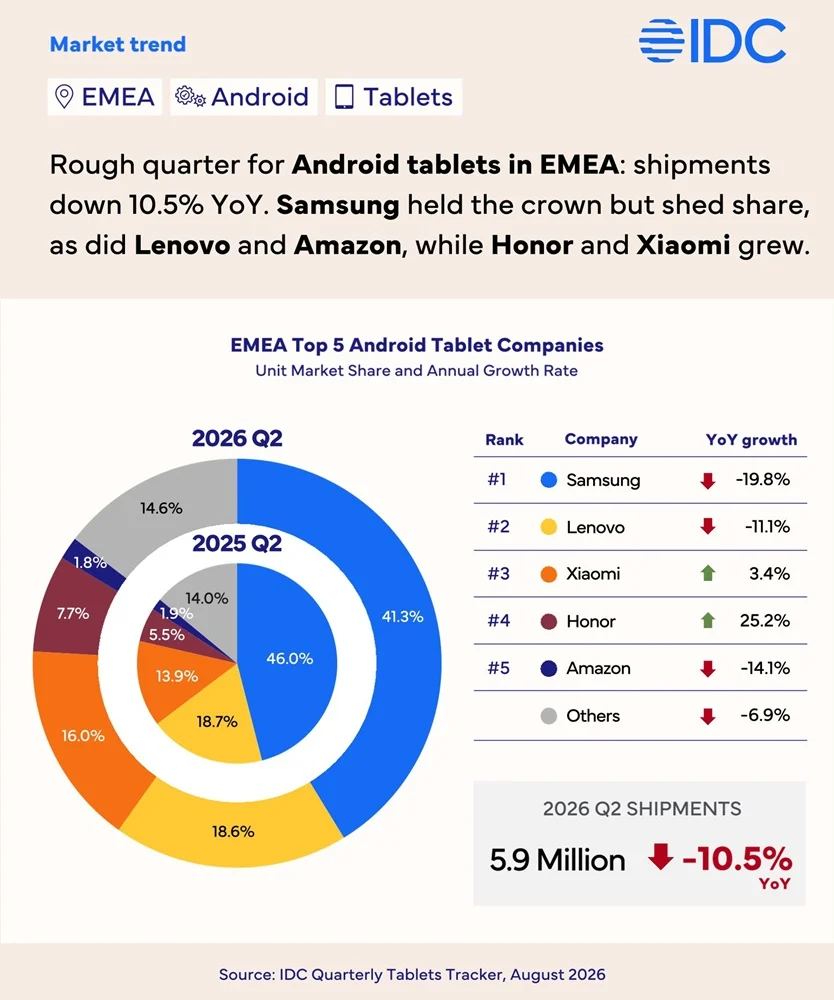
In an era defined by economic volatility, supply chain constraints, and shifting consumer habits, the global tablet market has hit a significant speed bump. According to the latest data from the International Data Corporation (IDC), worldwide tablet shipments plummeted to 33.6 million units in the second quarter (Q2) of 2026, representing a 12.3% year-on-year decline. Yet, amidst this sea of red ink, one manufacturer has managed to swim upstream: HONOR.
The technology giant reported a remarkable 25.2% year-on-year growth in tablet shipments across the Europe, Middle East, and Africa (EMEA) region during the same period. While the broader Android tablet market in EMEA contracted by 10.5%, HONOR’s performance stands as a testament to the power of ecosystem synergy and targeted product differentiation.
The Core Facts: A Divergence in Performance
The Q2 2026 IDC report paints a stark picture of the current consumer electronics landscape. The global decline in shipments—a 5.2% drop from the previous quarter—was not merely a result of waning interest, but a symptom of complex macroeconomic pressures. Rising memory costs, fluctuating component pricing, and supply chain bottlenecks have created a "perfect storm," forcing many manufacturers to raise prices, which in turn has dampened consumer demand.
However, HONOR has successfully decoupled its growth from these broader industry trends. By capturing market share while others retreated, the company has solidified its position as the most formidable challenger to long-standing market leaders like Samsung. This growth is not accidental; it is the result of a deliberate, multi-year strategy to integrate tablets into a broader, seamless mobile ecosystem.
Chronology: The Evolution of HONOR’s Tablet Ambitions
To understand HONOR’s current success, one must look at the trajectory of the brand over the past 24 months.
- Early 2025: The Foundation. Following its independence, HONOR began aggressively investing in Research and Development (R&D) to ensure its hardware ecosystem was not just functional, but cohesive. This involved developing proprietary software layers that allowed for near-instant connectivity between its smartphones and tablets.
- Late 2025: The Productivity Shift. Recognizing that the tablet market was shifting from a "consumption-first" device to a "productivity-first" tool, HONOR launched its "Pro" and "Paperlike" editions. These devices weren’t just faster; they were designed to replace laptops for students and mobile professionals, featuring integrated keyboard support and stylus optimizations.
- Q1 2026: Market Penetration. As competitors grappled with rising memory costs and inventory bloat, HONOR maintained a lean supply chain, allowing them to remain competitive in the mid-range and entry-level segments—the very segments where the most significant market renewal cycles were occurring.
- Q2 2026: The Breakout. IDC data confirms that this period marked a turning point. While the regional Android market in EMEA slumped, HONOR’s expansion strategy—leveraging its high brand awareness from its smartphone business—allowed it to convert smartphone users into tablet owners, effectively cross-selling its way to a 25.2% growth rate.
Supporting Data: Why the Market is Contracting
The IDC Worldwide Quarterly Personal Computing Device Tracker provides granular insights into why the industry is currently struggling. The 12.3% worldwide decline is primarily driven by three factors:
- Component Cost Inflation: The cost of DRAM and NAND flash memory has seen consistent upward pressure throughout 2026. This has directly impacted the "Bill of Materials" (BOM) for tablets, leading to higher retail price points that discourage casual upgrades.
- Productivity Fatigue: During the post-pandemic years, tablet shipments were inflated by remote work and hybrid schooling requirements. As these trends stabilize, the urgency for hardware replacement has cooled, leading to longer device refresh cycles.
- The Connectivity Dilemma: As noted by industry analysts, there is a declining emphasis on cellular-enabled tablets. Consumers are increasingly comfortable with Wi-Fi-only models, provided they can "tether" their tablets to their smartphones. Brands that failed to optimize this "handoff" experience have seen their tablet sales suffer as a result.
Against this, HONOR’s growth highlights that consumers are still willing to buy, provided the value proposition—specifically the integration of the tablet into their daily workflow—is clear and frictionless.
Official Responses and Expert Analysis
Daniel Goncalves, Senior Research Manager at IDC, has been vocal about the underlying structural changes in the Android tablet market. In his analysis of the Q2 2026 findings, he pointed to a shift in competitive dynamics.
"Over the last couple of years, competition in the entry-level and mid-range Android tablet segments has become increasingly fragmented," Goncalves observed. "We are seeing a proliferation of players seeking to capture market share during a period of installed-base renewals. Many of these recent challengers to Samsung’s dominance, such as HONOR and Xiaomi, have leveraged their established presence in the smartphone market to expand into tablets."
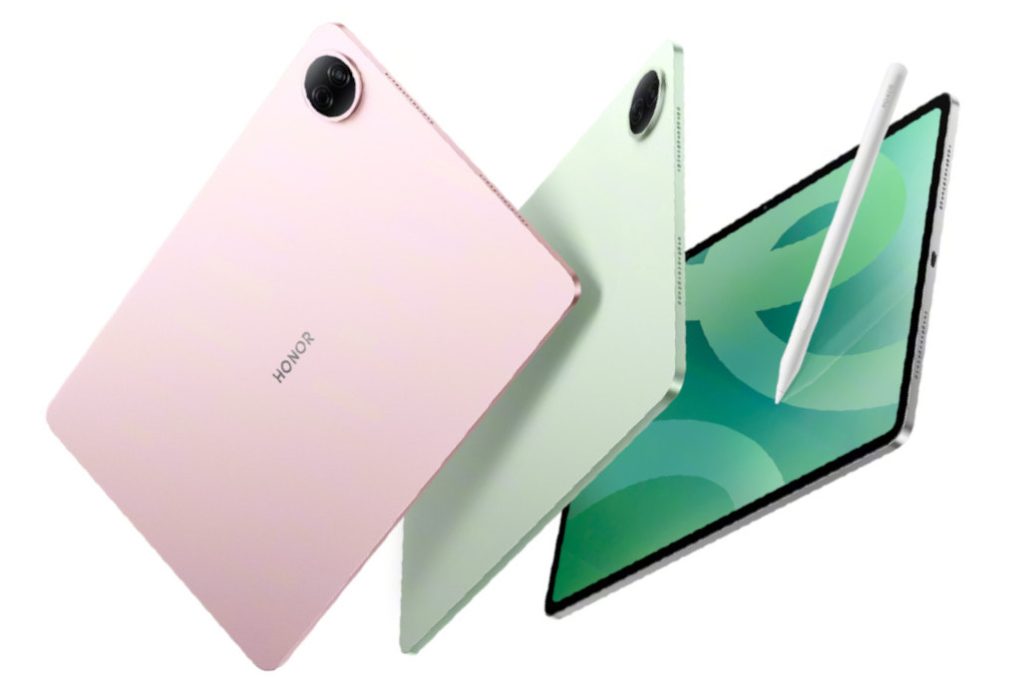
Goncalves further highlighted the shift in design philosophy: "We are seeing a declining emphasis on connectivity, alongside a growing focus on building productivity ecosystems. The proliferation of Android-based devices offering first-party keyboards is a key indicator of this shift."
HONOR’s leadership has echoed these sentiments, frequently citing the "1+8+N" strategy—a framework where the smartphone acts as the central hub (1), connected to various devices (8), including tablets, wearables, and PCs, to create an intelligent (N) ecosystem. By ensuring that their tablets feel like an extension of their smartphones, HONOR has turned the tablet into a "must-have" accessory rather than an optional secondary device.
Implications: What This Means for the Future of Tablets
The success of HONOR in the EMEA region has profound implications for the future of the tablet market.
1. The Death of the "Standalone" Tablet
The era of the "standalone" tablet is effectively coming to an end. Manufacturers that treat tablets as isolated hardware projects are likely to struggle. The future belongs to brands that offer a unified software experience where files, notifications, and applications flow seamlessly between devices. HONOR has proven that the tablet is now the primary "satellite" to the smartphone.
2. The Rise of the Productivity Ecosystem
As the market moves away from simple media consumption, the demand for accessories—keyboards, trackpads, and low-latency styluses—is becoming a differentiator. HONOR’s focus on the "Paperlike" experience and professional-grade input devices suggests that they are positioning their tablets as the ultimate hybrid work tools.
3. Consolidation of Android Players
With the broader market contracting, the tablet segment is likely to undergo a period of consolidation. Larger players with deep smartphone roots have the marketing budgets and the retail presence to push their tablet lines, while smaller, niche players may struggle to survive the rising memory costs and supply chain volatility. We are likely to see a landscape where only 3-4 major players dominate the Android tablet space, with HONOR firmly entrenched in the top tier.
4. Consumer Sensitivity to Price-to-Performance
While HONOR is growing, they are not immune to the market’s economic pressures. Their success suggests that consumers are more value-conscious than ever. They aren’t necessarily looking for the cheapest device, but for the one that offers the highest "utility-per-dollar." By providing high-end features at mid-range price points, HONOR has successfully hit the "sweet spot" of the current consumer psyche.
Conclusion: A Blueprint for Resilience
The story of HONOR in Q2 2026 is more than just a positive earnings report; it is a case study in strategic resilience. While the global tablet market faces a period of correction, HONOR has demonstrated that a brand can maintain growth by focusing on the "interconnectivity" of its products.
As the industry moves into the second half of 2026, the challenge for HONOR will be to sustain this momentum. They must continue to innovate in the productivity space while navigating the ongoing volatility in component costs. However, having proven that they can capture market share in a declining environment, HONOR has set a new benchmark for what it means to be an effective player in the mobile computing ecosystem. For the consumer, this suggests a future where the line between phone and tablet continues to blur, creating a more integrated, efficient, and versatile mobile experience.