In the vast, ever-expanding digital ecosystem, the ability to be discovered by search engines is not merely a technical advantage—it is a business necessity. At the heart of this discovery process lies the "focus keyword." Serving as the bridge between user intent and your digital content, the focus keyword is the anchor that directs both search engine crawlers and human readers to the core subject matter of your page. As competition for top-tier search engine results page (SERP) rankings intensifies, understanding how to strategically select and implement these keywords has become the bedrock of modern Search Engine Optimization (SEO).
The Fundamentals of Focus Keywords
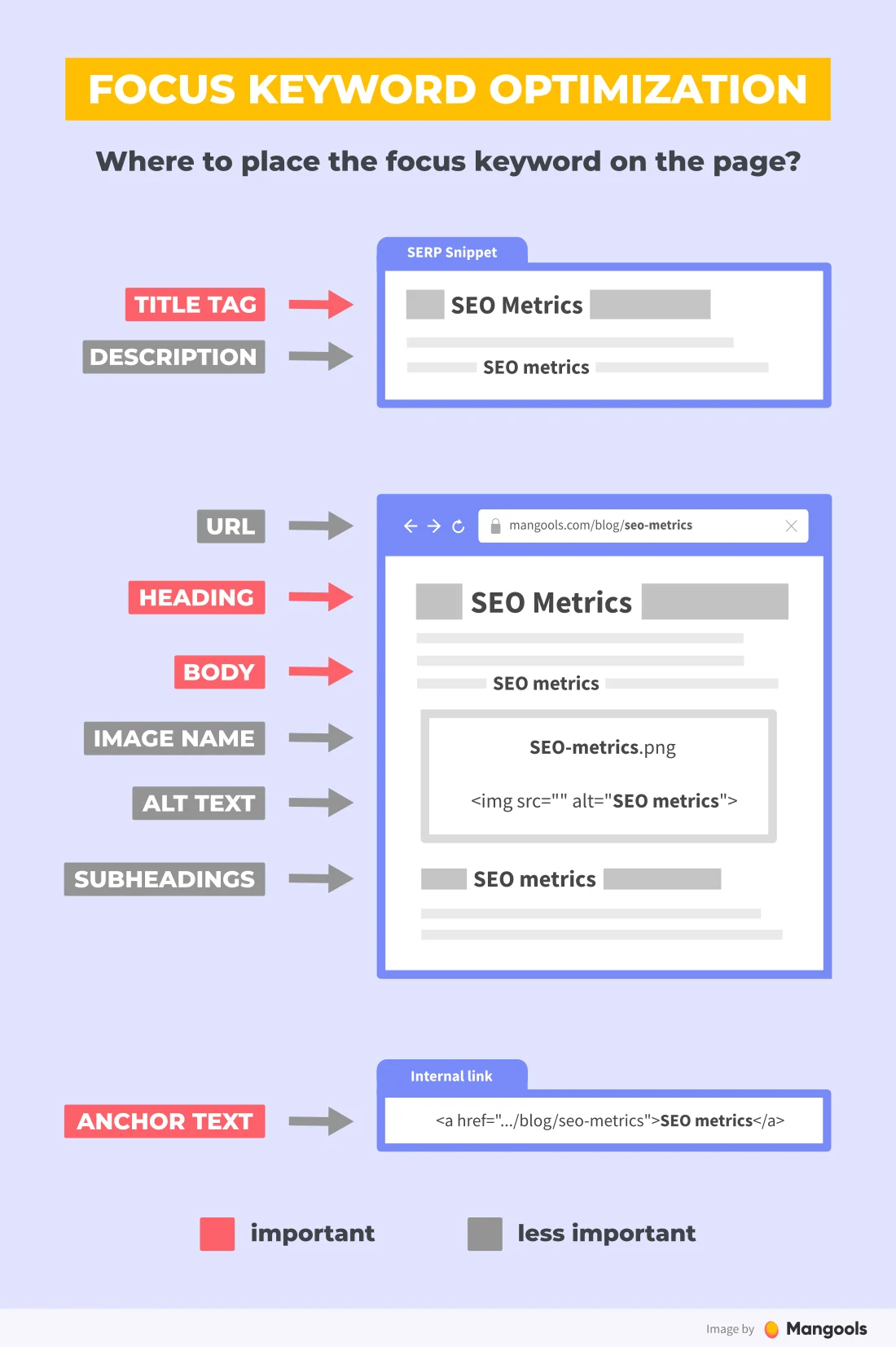
A focus keyword is the definitive representation of your page’s primary topic. It is not merely a phrase you choose at random; it is a calculated decision designed to signal to Google exactly what your content is about. By placing this keyword in high-value areas—such as title tags, meta descriptions, headings, and the introductory body text—you create a clear roadmap for search algorithms.
The golden rule of professional SEO is simple: Each page should be optimized for exactly one focus keyword.
It is vital to distinguish between a focus keyword and the antiquated concept of "meta keywords." In the early 2000s, meta keyword tags were a common way for webmasters to tell search engines what their pages were about. Today, however, Google no longer considers the meta keyword tag as a ranking factor. Attempting to use it is a vestige of the past that offers no benefit to your modern search performance.
Defining Topics vs. Keywords
While the terms "topic" and "keyword" are often used interchangeably, there is a nuance to their relationship. Consider an article titled: "10 Pilates Exercises That Will Give You Rock Hard Abs."
If a colleague asks for the topic, you might describe it as "pilates abs exercises." Here, you are using a keyword to define the topic. However, a "focus keyword" is the specific, high-intent phrase you select to capture the essence of that topic. While your article may contain various secondary keywords like "at-home workouts" or "fitness routines," the focus keyword remains the singular, intentional anchor for that specific URL.
The Keyword Tripod: A Strategic Framework
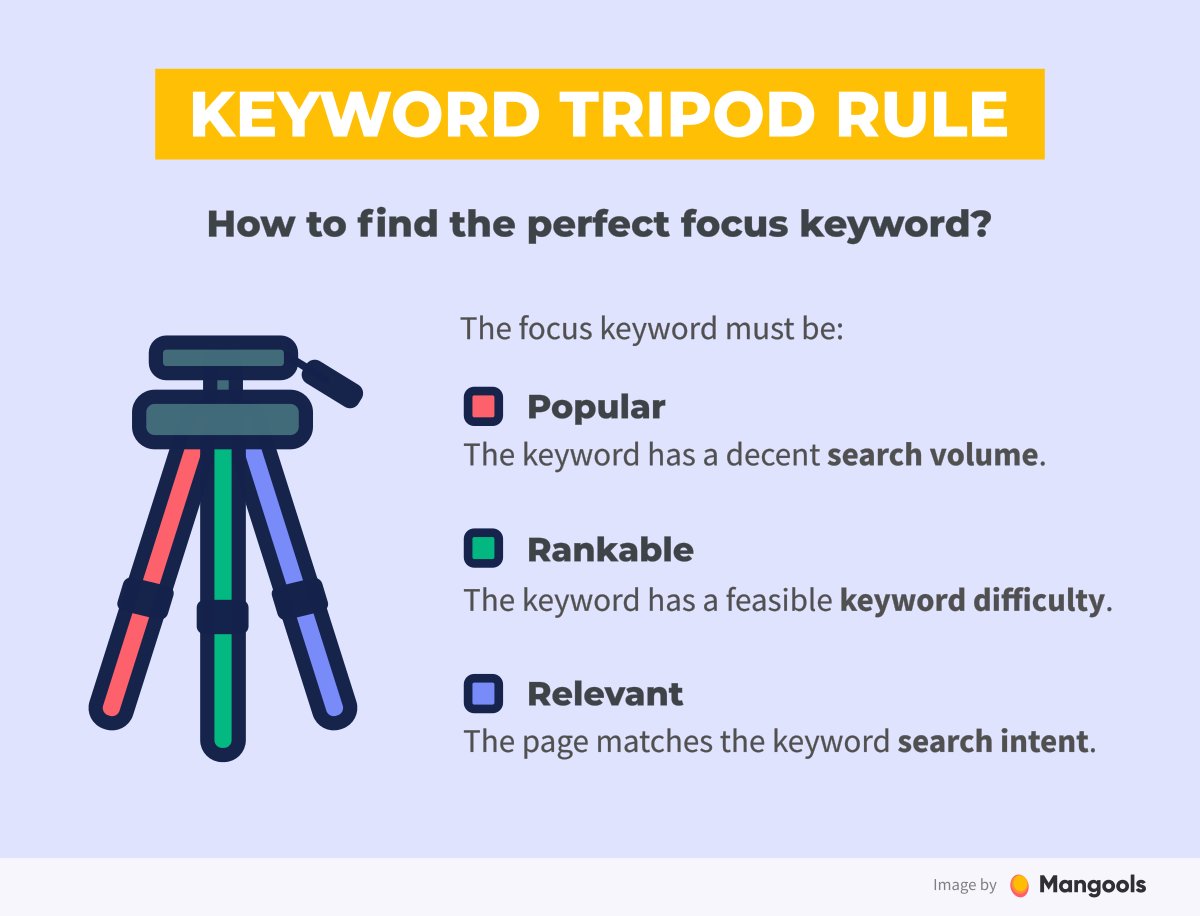
Selecting the right keyword is rarely a matter of guesswork. To build a robust SEO strategy, professionals often rely on the "Keyword Tripod Rule." This framework suggests that every potential keyword must be evaluated against three critical pillars:

- Search Volume: Is there enough public interest in this topic to justify the effort of creating content?
- Keyword Difficulty: How fierce is the competition for this term? Can your domain realistically compete against the current top-ranking pages?
- Search Intent: Does the search query align with the type of content you are providing? For example, if a user searches for "best running shoes," they are looking for a review or a store, not a scientific history of the sneaker.
By utilizing sophisticated keyword research tools, you can quantify these metrics, allowing you to select queries that offer the highest probability of ranking within your specific niche.
Chronology of Content Optimization: A Strategic Workflow
Achieving high rankings requires a methodical, step-by-step approach to content creation. Professional SEOs follow a specific workflow to ensure their assets are optimized from the moment they are conceived.
Phase 1: Strategic Selection (Pre-writing)
The most common mistake amateur marketers make is writing a piece of content and then "sprinkling" keywords into it afterward. This is a flawed strategy. You should identify your focus keyword before drafting a single word. This ensures that the content remains comprehensive and directly addresses the user’s intent from the very first sentence.
Phase 2: Avoiding Keyword Cannibalization
One of the most significant pitfalls in site architecture is "keyword cannibalization." This occurs when you optimize multiple pages on your site for the exact same keyword. If you have a service page for "dog grooming" and a blog post titled "Why Dog Grooming is Essential," you are essentially forcing your own pages to compete against each other for a single spot in the SERPs.
Instead, differentiate your focus. Optimize your service page for "professional dog grooming services" and your blog post for "benefits of dog grooming." This strategy captures a broader range of search queries while preventing internal competition.
Phase 3: Strategic Placement (The "Where")
Once your content is written, you must place your focus keyword where search engine bots are programmed to look. The primary high-value areas include:
- The Page Title (H1 Tag): The most critical piece of real estate on the page.
- The URL Slug: Keeps the link clean and descriptive.
- The Meta Description: While not a direct ranking factor, it influences the Click-Through Rate (CTR), which is a signal of user engagement.
- The First Paragraph: Establishes relevance immediately.
- Subheadings (H2/H3): Helps structure the content for both scanners and bots.
Official Guidance and Industry Best Practices
The search engine landscape is constantly shifting, but the advice provided by industry leaders like Google’s John Mueller remains consistent: Clarity is king.
In discussions regarding keyword placement, Mueller has emphasized that it must be "perfectly obvious" to both the visitor and the crawler what the page is about. If a reader has to navigate through 19,000 words before encountering the primary topic, both the user and the search engine algorithm will consider the page poorly structured.
The Perils of Keyword Stuffing
A decade ago, "keyword stuffing"—the practice of repeating a keyword as many times as possible—was a common tactic. Today, it is a catastrophic error. Google’s algorithms are sophisticated enough to detect unnatural repetition. Keyword stuffing results in a poor user experience, high bounce rates, and potential penalties from search engines.
The goal is to maintain a natural flow. If you find yourself struggling to insert a keyword into a sentence, don’t force it. The focus keyword should feel organic to the narrative. If you cannot fit your keyword into an image alt-tag or a subheading without it sounding awkward, it is better to leave it out.
Implications for Modern SEO
The implications of these strategies are clear: SEO is no longer about "hacking" the system; it is about providing the most relevant, high-quality answer to a user’s question.
As we look toward the future of search, the role of the focus keyword is evolving. With the rise of voice search and AI-driven results, long-tail keywords—more specific, conversational phrases—are becoming increasingly important. However, the fundamental principle remains unchanged: the focus keyword is the core identity of your content.
By adhering to the Keyword Tripod, avoiding cannibalization, and prioritizing content quality over algorithmic manipulation, you create a sustainable foundation for organic growth. Remember that search engines are designed to mimic human preferences; if you write for the user, and use your focus keyword as a signpost to guide them, the search engines will inevitably follow.
In conclusion, mastering the focus keyword is an exercise in discipline. It requires the patience to research, the precision to define, and the integrity to write for the reader first. By following this structured approach, you ensure that your digital footprint is not just visible, but authoritative and highly relevant in an increasingly crowded online marketplace.