






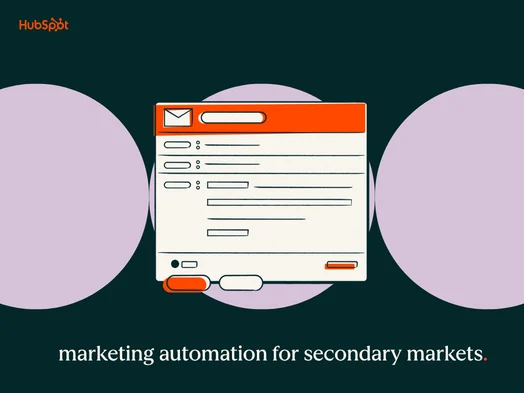
TOKYO / CAMBRIDGE, MASS. — For multinational corporations headquartered in the West, geographic expansion often comes with a persistent, unacknowledged blind spot. While flagship markets—such as English, French, German, and Spanish-speaking regions—receive endless cycles of investment, optimization, and dedicated resources, secondary markets frequently languish. They survive on outdated infrastructure, half-built automated workflows, and translations that miss the cultural nuance required to convert.
When HubSpot’s global marketing leadership conducted a comprehensive audit of its Japanese market automation programs last year, the reality was stark. Automated emails were sputtering, generating a mere 12 qualified leads per month against an internal target of 160.
For many organizations, the knee-jerk solution to this performance gap is costly and slow: hire a dedicated, local marketing automation specialist in Tokyo to overhaul the system from scratch. Instead, HubSpot bypassed traditional hiring models. Over a rigorous two-month sprint, the company completely rebuilt its Japanese email automation architecture with zero additional headcount. By rethinking the division of labor between technical execution and cultural context, HubSpot achieved a staggering ninefold increase in qualified leads—propelling output from 12 to over 115 per month and translating to an estimated 44 incremental deals monthly.
The Chronology of a Turnaround: Diagnosing and Fixing the Gap
Phase 1: Identifying the Structural Blind Spot
The root of HubSpot’s underperformance in Japan was not a lack of market demand, but a structural flaw in resource allocation. Because HubSpot is headquartered in the United States, its centralized marketing automation expertise had historically concentrated on core English and major European markets.
In secondary regions like Japan, automation programs were years old, partially constructed, or never meaningfully localized. While the global content existed and the technical infrastructure was technically live, the messaging failed to resonate with Japanese small-to-medium-sized businesses (SMBs) evaluating software.
Faced with a massive performance chasm, leadership rejected the traditional playbook of launching an extensive, months-long recruitment drive for a local automation expert. They realized that waiting to hire a unicorn specialist who possessed both advanced technical automation skills and native Japanese fluency would only prolong the stagnation.
Phase 2: Decoupling Technical Execution from Cultural Context
The fundamental insight that unlocked the turnaround was a shift in perspective. Rather than asking, "Who can own this end-to-end?" management asked, "Should one person own this?"
Marketing automation inherently demands two vastly different skill sets:
- The Technical Domain: Building journey logic, setting up workflows, defining enrollment criteria, configuring segmentation, and managing tracking parameters. This requires platform expertise, not linguistic fluency.
- The Cultural Domain: Ensuring the messaging strikes the right tone, addresses genuine regional pain points, and establishes an authentic call-to-action (CTA). This requires deep market familiarity.
By separating these responsibilities, HubSpot eliminated the need for a rare, expensive hybrid hire. Instead, they deployed a two-person operating model: an automation marketer focused entirely on the technical architecture, paired with a local regional marketing partner who provided cultural validation and strategic oversight.
Phase 3: The Two-Month Build and High-Intent Focus
Rather than attempting to rebuild every automated workflow simultaneously—a trap that stalls many revitalization efforts—HubSpot exercised strict prioritization. They focused exclusively on high-intent automation programs.
While low-intent programs rely on broad nurture flows, massive email volumes, and long, winding conversion paths, high-intent programs target prospects already signaling active evaluation—such as visitors to pricing pages or feature-specific landing pages. High-intent flows feature tighter messaging, fewer emails, and clearer, faster conversions.

By leveraging AI tools to generate first drafts of copy, which the local regional partner then rapidly refined and validated, the team compressed a project that typically takes quarters into a hyper-focused two-month execution window.
Supporting Data and Performance Metrics
The quantitative impact of HubSpot’s restructuring model validates the effectiveness of targeted, decoupled localization.
- Baseline Qualified Leads: 12 leads per month (prior to the rebuild).
- Target Qualified Leads: 160 leads per month.
- Post-Launch Qualified Leads: 115+ leads per month (achieved within the first reporting period).
- Growth Multiplier: ~9x increase in automation-sourced qualified leads.
- Estimated Business Impact: ~44 incremental deals generated per month.
- Time Investment for Local Partner: Approximately 5 days total across the entire project lifecycle, largely aided by AI-assisted drafting and structured review processes.
Official Perspectives and the Operating Model in Practice
The success of the Japan pilot hinged on strict adherence to role clarity. The division of labor allowed both team members to operate simultaneously rather than sequentially, radically accelerating time-to-market.
The Automation Marketer’s Mandate
Operating without any need for Japanese language fluency, the central automation marketer maintained total ownership of the platform mechanics:
- Configuring journey logic and trigger-based enrollment criteria.
- Building and testing segmentation parameters.
- Setting up tracking tokens, suppression lists, and deliverability safeguards.
- Managing technical QA and execution.
The Regional Marketing Partner’s Mandate
The regional partner was not tasked with writing emails from scratch or handling mechanical translation. Instead, their value lay in strategic market validation:
- Reviewing AI-generated first drafts for local tone and context.
- Validating that the articulated pain points matched how Japanese buyers evaluate software.
- Ensuring the cultural credibility of the proof points and CTAs.
"Translation alone is never enough," internal project notes emphasize. "A native speaker who does not understand how Japanese SMBs evaluate software is fundamentally unequipped for this role. The regional partner must understand the customer journey, not just the vocabulary."
Broader Implications for Global Enterprises
The implications of HubSpot’s Japan turnaround extend far beyond a single regional office. For multinational enterprises operating across fragmented global landscapes, the traditional model of scaling marketing automation through localized, all-in-one hires is increasingly obsolete.
A New Blueprint for Resource-Constrained Teams
As companies face tighter operational budgets and demands for greater efficiency, deploying expensive, specialized headcount in every secondary market is rarely viable. HubSpot’s model proves that centralized technical talent can be successfully paired with decentralized, light-touch regional expertise.
Prerequisites for Success
Before adopting this two-person operating model, organizations must evaluate whether their target market meets specific viability criteria:
- Audience Scale: There must be a sufficient volume of high-intent traffic to justify the engineering effort (estimating at least 20 incremental qualified leads per month).
- Access to a Cultural Partner: The business must have a contractor, sales partner, or marketer available who possesses true buyer-journey expertise within the target region—not merely a translator.
- Foundation Assessment: If a region’s existing automation is already performing strongly, the incremental gains will not justify a full-scale rebuild.
The 8-Step Playbook for Replicating the Model
For marketing teams seeking to revitalize neglected international markets without expanding headcount, HubSpot recommends a structured, sequential process:
- Step 1: Assess the Gap. Audit active regional workflows, email delivery volumes, and pipeline shortfalls.
- Step 2: Size the Opportunity. Calculate high-intent audience size against conversion rates to ensure projected ROI.
- Step 3: Find the Right Local Partner. Secure a partner capable of committing roughly one day per program for QA and messaging review.
- Step 4: Build a Shared Messaging Guide. Align on primary audiences, urgent pain points, local tone, and credibility markers before writing a single email.
- Step 5: Audit and Triage. Categorize existing elements into reuse, adapt, or rebuild buckets.
- Step 6: Prioritize High-Intent Programs. Launch trigger-based journeys for active evaluators first; layer in broad nurture flows later.
- Step 7: Execute Two-Track QA. Ensure the technical marketer and the local partner independently sign off on their respective domains before launch.
- Step 8: Measure Rigorously. Evaluate performance at 30 days (initial signals), 60 days (adjustments), and 90 days (full-picture impact).
Conclusion
By dismantling the assumption that effective regional marketing requires end-to-end local specialists, HubSpot has charted a leaner, faster path to international growth. Moving from 12 to 115 qualified leads in two months without adding headcount demonstrates that when technical prowess and cultural insight are cleanly separated and purposefully aligned, global marketing automation can scale efficiently—no matter the language or the market.