







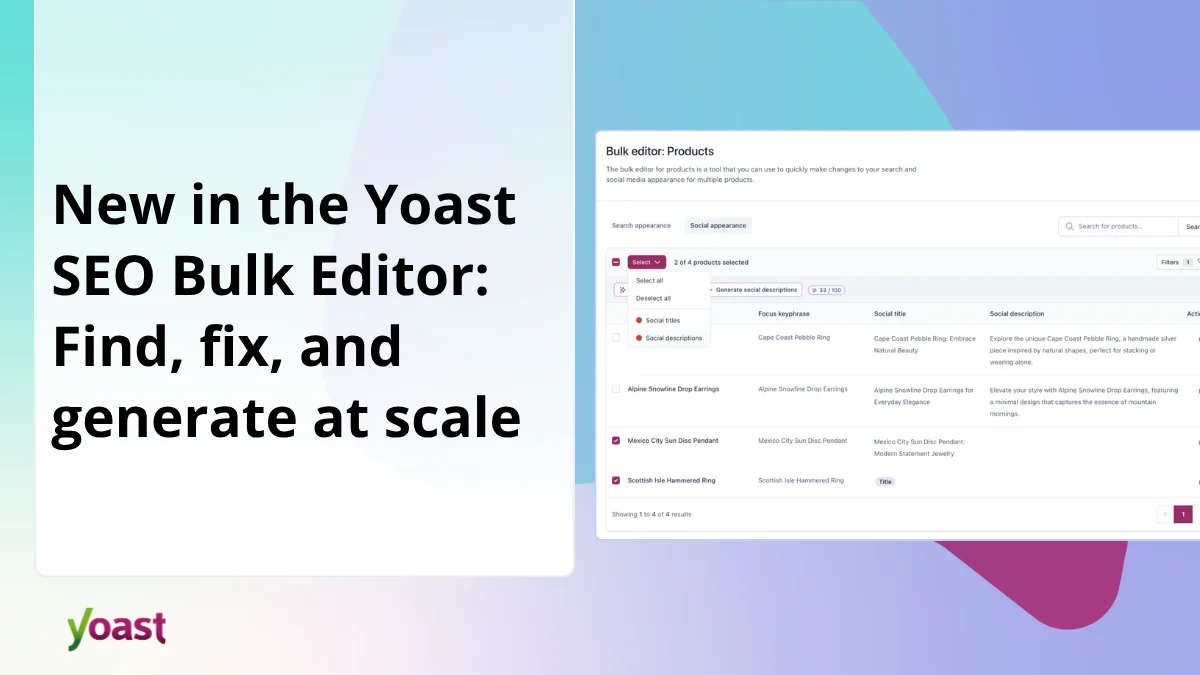
In the fast-paced world of digital content management, efficiency is not merely a convenience—it is a competitive necessity. For site administrators managing thousands of pages, the arduous task of optimizing meta descriptions, SEO titles, and social metadata has historically been a significant bottleneck. Addressing this, Yoast has announced a substantial update to its renowned Yoast SEO Bulk Editor, introducing a suite of features designed to automate quality control, enhance AI-driven suggestions, and bridge the gap between workflow management and technical execution.
This update represents a strategic pivot for Yoast, moving away from purely manual bulk management toward an intelligent, filtered workflow that identifies site-wide weaknesses in seconds.
The Core Transformation: Efficiency Through Intelligence
The Yoast SEO Bulk Editor has long served as a centralized hub for managing metadata across WordPress sites. However, previous iterations required users to manually sift through lists to identify which posts lacked optimized titles or meta descriptions. The new update fundamentally changes this paradigm by integrating diagnostic filtering directly into the interface.
Find Weak Fields in Seconds
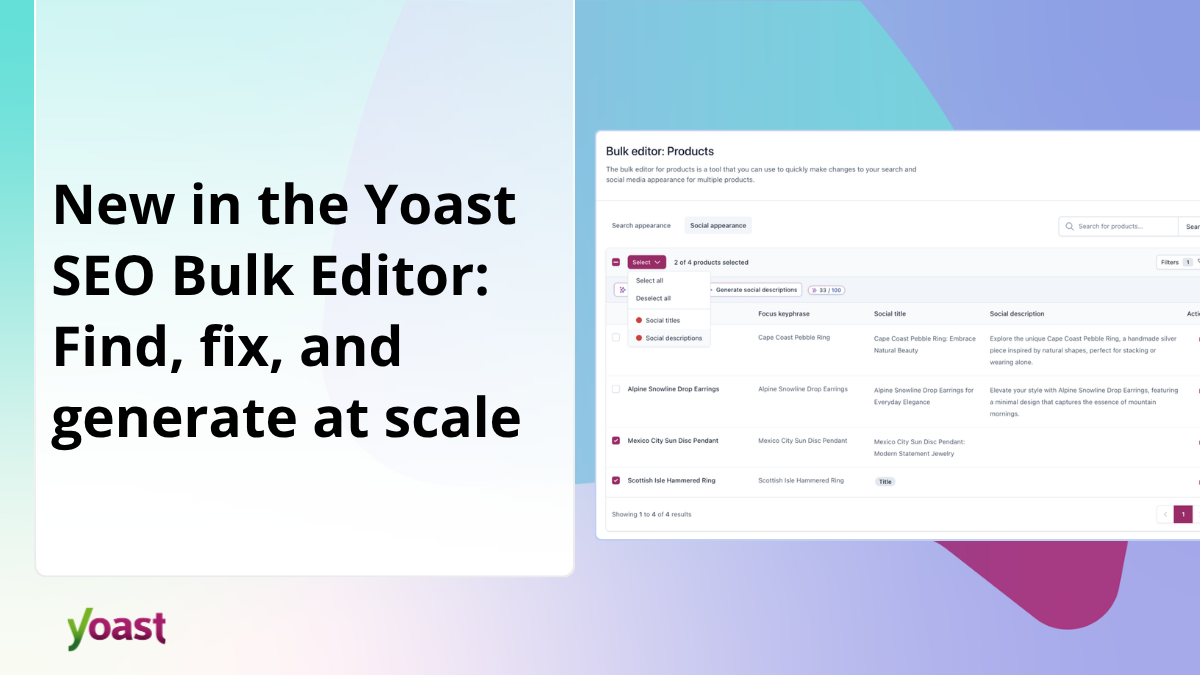
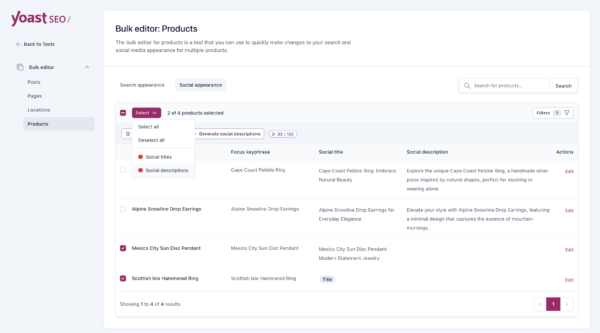
The cornerstone of the update is the enhancement of the "Filters" dropdown menu. Users can now select specific "needs improvement" categories for SEO titles, meta descriptions, and social media copy. By activating these filters, the editor automatically isolates posts that are either missing critical metadata or possess content that scores poorly based on Yoast’s proprietary SEO algorithm.
This transition from a manual "search-and-find" process to an automated "identify-and-act" model saves site managers countless hours of administrative labor. Furthermore, the introduction of quality-based selection options—which allow users to highlight all underperforming content on a page with a single click—ensures that bulk edits are targeted and precise.
Refined Workflow: Shift+Click Selection
Recognizing the habits of power users, Yoast has also implemented standard table-navigation shortcuts. Users can now utilize "Shift+Click" to select a range of posts simultaneously, mirroring the intuitive behavior of spreadsheet software. This minor UX improvement significantly lowers the barrier to entry for users managing high-volume content libraries.
Chronology of the Update and Rollout
The deployment of these features marks the latest milestone in Yoast’s ongoing integration of generative AI into the WordPress ecosystem.
- Initial Concept Phase: Following the successful launch of the Yoast AI metadata generator, feedback indicated that while users appreciated the speed of AI, they struggled to identify which specific posts were "low-hanging fruit" that would benefit most from optimization.
- Beta Testing: During the second and third quarters of 2026, Yoast conducted closed-group testing with enterprise-level site managers to refine the filtering logic.
- Official Launch: The features began rolling out globally in late August 2026.
- The "Rolling Out" Phase: The connectivity feature—designed to bypass server-side firewall restrictions—is currently undergoing a phased rollout. This ensures that the integration of the MyYoast platform remains stable across diverse hosting environments, from shared hosting to high-security enterprise servers.
Supporting Data: Why "Quality-Based" Optimization Matters
Data consistently demonstrates that high-quality, relevant meta-information is a primary driver of click-through rates (CTR) from Search Engine Results Pages (SERPs). According to industry benchmarks, pages with optimized, unique meta descriptions see a CTR increase of up to 15–20% compared to pages with auto-generated or missing descriptions.
The new Yoast update provides a "guardrail" system for these metrics. A critical issue identified in earlier AI-assisted versions was the generation of metadata for pages with thin or sparse content. When an AI model is fed insufficient data, the resulting meta description is often generic or irrelevant.
Yoast’s new "limited content" flag addresses this directly. After an AI generation cycle, the system now marks posts where the input data was insufficient, alerting the user that the output may require manual review. This quality-control layer prevents the accidental publication of substandard SEO assets, protecting the site’s search authority.
Official Responses and Strategic Vision
Beth Parker, Product Marketing Manager at Yoast, emphasized that the update is focused on removing the friction between "knowing what is wrong" and "fixing it."
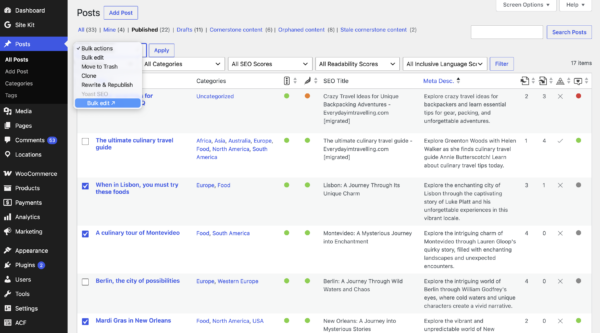
"Our goal was to eliminate the dead ends that site managers hit when working with large volumes of content," Parker stated. "Whether it’s a site behind a strict firewall or a content manager struggling to find which pages are missing social descriptions, this update acts as a bridge. By allowing users to initiate the Bulk Editor directly from the standard WordPress post list, we are keeping the workflow fluid and intuitive."
The decision to allow users to connect to "MyYoast" when their local server environment prevents AI connectivity is particularly notable. It signals a move toward a "hybrid" model where the heavy lifting of AI processing can be offloaded to Yoast’s cloud infrastructure, bypassing local technical limitations that often hinder site performance.
Implications for Digital Marketers and SEO Specialists
The implications of these changes are far-reaching for various stakeholders in the digital ecosystem:
1. For Content Managers and Publishers
The ability to select posts from the standard WordPress overview screen and jump immediately into the Bulk Editor eliminates the "context switching" that often plagues productivity. Managers can now treat SEO optimization as a routine administrative task rather than a quarterly project.
2. For Technical SEO Specialists
The "needs improvement" filtering provides a live audit of a site’s health. By identifying pages with weak social titles or missing descriptions, SEO specialists can generate a prioritized to-do list for their teams, focusing efforts on the pages most likely to yield an increase in organic traffic.
3. For Enterprise-Level Sites
Perhaps the most significant development is the firewall-bypass functionality. Many enterprise organizations operate behind complex security layers that block external API calls from plugins. By providing a secure, authenticated bridge to MyYoast, the tool ensures that large-scale websites can leverage AI-driven optimization without compromising their security protocols.
Future Outlook: The Intersection of AI and Workflow
As we look toward the future of WordPress management, this update serves as a blueprint for how plugins will evolve. We are witnessing a transition from "tools that perform a task" to "systems that manage a process."
By implementing guardrails—such as flagging thin content—Yoast is not just providing a utility; it is providing a consultant-like layer that educates the user on where their content strategy is lacking. The integration of "needs improvement" metrics suggests that, in the near future, we may see predictive modeling where Yoast suggests not only what to write, but which pages are losing the most traffic due to outdated or poor metadata.
For the average site owner, the update is a welcome relief. It removes the guesswork and the tedious manual labor, allowing them to focus on the core value of their content. For the broader SEO industry, it sets a higher standard for what should be expected from automated toolsets: precision, transparency, and seamless integration into existing workflows.
In conclusion, the latest Yoast SEO Bulk Editor update is a masterclass in user-centric design. By listening to the pain points of its user base—the need for better filtering, better AI oversight, and better accessibility—Yoast has ensured that its tool remains indispensable in an increasingly complex digital landscape. As these features become standard, the definition of "bulk editing" will likely shift from a tedious necessity to a strategic advantage for those who master the new, intelligent interface.