
The modern cyberthreat landscape has undergone a seismic shift. While the digital ecosystem has been evolving for decades, we have entered a period of rapid, volatile escalation. The primary catalyst for this transformation is Artificial Intelligence (AI). This technology is a double-edged sword: it provides threat actors with the means to launch sophisticated attacks at unprecedented speed and scale, while simultaneously expanding the corporate attack surface as businesses rush to integrate AI tools into their workflows.
For Small and Medium-sized Businesses (SMBs), this creates a precarious reality. While these organizations are eager to harness AI for productivity and competitive advantage, their adoption often outpaces the governance and security frameworks necessary to manage the associated risks. The mandate for today’s business leaders is clear: how can an organization remain resilient and operational without succumbing to the crushing complexity of modern cybersecurity?
The Evolution of the Threat Landscape: A Chronology of Escalation
The trajectory of cyber threats has moved from opportunistic, manual attacks to highly automated, AI-augmented campaigns.
- Pre-2023 (The Manual Era): Cybercrime was largely defined by phishing campaigns and brute-force attacks requiring significant human effort from threat actors.
- 2024 (The Generative AI Inflection): The widespread availability of Large Language Models (LLMs) enabled attackers to generate highly convincing, personalized phishing content at scale, effectively removing the language barrier and technical friction for global crime syndicates.
- 2025 (The Agentic Shift): As noted by British security experts in March 2025, the rise of autonomous AI agents marked a turning point. These agents began performing complex tasks, such as reconnaissance and lateral movement, at machine speed.
- 2026 (The Ecosystem Crisis): The current landscape is dominated by the poisoning of "AI skills repositories"—the app stores of the AI world—where thousands of malicious plugins serve as Trojan horses for data exfiltration and malware delivery.
Supporting Data: The Cost of Complexity
The ESET SMB Cyber Readiness Index 2026 provides a sobering look at how businesses are faring. Currently, 73% of SMBs are integrating AI into their daily operations. However, this aggressive adoption is not matched by mature security policies; 40% of all businesses surveyed lack a formal, documented AI governance policy.
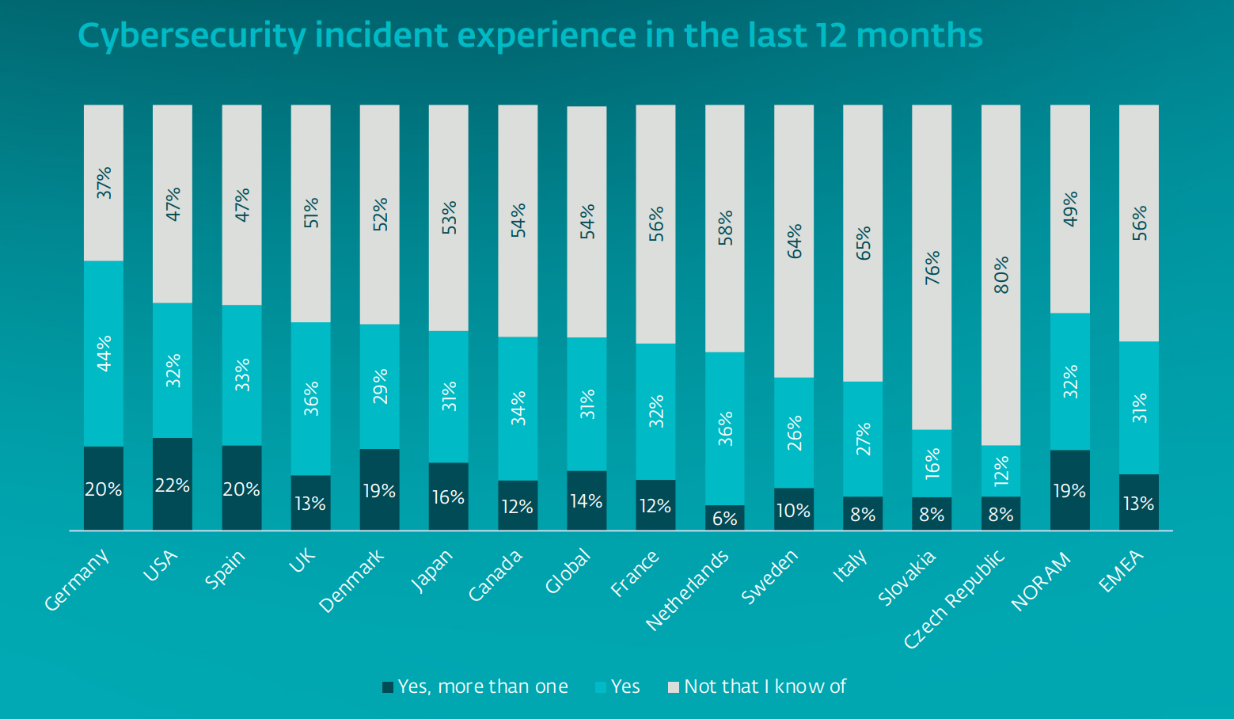
The consequences of this gap are immediate and damaging. The report reveals that 45% of global SMBs suffered a cybersecurity incident in the last year. For these organizations, the primary concern is not just the loss of data, but operational disruption. Forty percent of SMBs cite downtime as their most significant fear, as even a short-lived incident can cripple a small business’s bottom line, erode customer trust, and exhaust limited cash reserves.
AI as a Weapon: The Mechanics of Modern Attacks
AI is not merely a target; it is a force multiplier for malicious intent. Attackers are currently exploiting the AI ecosystem through three primary vectors:
1. The "Skills" Repository Threat
Just as browser extensions once opened the door to malware, AI agents—often referred to as "skills"—are now being weaponized. Between March and May 2026, ESET researchers analyzed 900,000 such tools. The findings were alarming: over 25,000 were identified as suspicious, and more than 3,000 were explicitly malicious. These rogue agents are designed to override system instructions, exfiltrate sensitive data, and install persistent malware directly into corporate environments.

2. Prompt Injection and Manipulation
OWASP has recently identified prompt injection as the single most dangerous threat to LLM applications. By manipulating the inputs an AI receives—or by embedding malicious instructions in content the AI later processes—attackers can effectively "jailbreak" an organization’s internal tools. This turns a company’s own AI assistants against them, forcing the systems to perform unauthorized actions or reveal confidential data.
3. Automated Phishing and Fraud
Beyond technical exploits, AI enables attackers to orchestrate complex social engineering. By utilizing autonomous agents, threat groups can interact with employees in real-time, simulating legitimate business communications to facilitate fraud. Because these agents operate at machine speed, they can conduct thousands of simultaneous interactions, far exceeding the defensive capabilities of an under-resourced internal IT team.
Official Perspectives: The Governance Gap
Government agencies and cybersecurity researchers agree that the current pace of AI deployment is unsustainable without a corresponding increase in security rigor. The UK’s National Cyber Security Centre (NCSC) has warned that the integration of AI will "almost certainly continue to make elements of cyber-intrusion operations more effective and efficient."
The core issue, according to industry experts, is that SMBs are attempting to solve a 21st-century problem with legacy operational models. They are buying more point solutions, which only creates a "dashboard fatigue" scenario. This leads to a dangerous paradox: the more tools a company buys, the more complex their environment becomes, and the less visible the actual threats remain.
The Operational Model: Redefining Resilience
To survive the AI era, SMBs must shift from a "buy more tools" mentality to an "outcomes-focused" model. This involves three critical pillars:
I. Simplification through Automation
SMBs cannot afford to have their IT teams manually investigate every alert generated by a complex security stack. Effective security today relies on AI-driven platforms that automate the ingestion and analysis of telemetry. This allows the technology to handle the "noise," while human experts are reserved for high-judgment, high-context decision-making.
II. The Power of Partnerships
Most SMBs lack the luxury of a 24/7 internal Security Operations Center (SOC). Engaging a trusted security partner who provides "Security as a Service" allows businesses to bridge this capability gap. A partner can provide the necessary oversight to monitor for threats across endpoints, cloud servers, and AI components, acting as an extension of the internal team.
III. Resilience Over Perfection
The reality of the 2026 threat landscape is that breaches are increasingly inevitable. Resilience is no longer about preventing every single attempt at intrusion; it is about maintaining "minimum viable operations" during an attack. Companies that thrive are those that have documented incident response plans, perform regular tabletop exercises, and have clear, enforceable policies for how AI is used, who has access to it, and what data it can touch.
Implications for the Future of Business
The path forward for the small-to-medium enterprise is not to retreat from AI, but to secure it. If an organization can successfully implement a framework where security is simple, automated, and expertly managed, they gain a distinct competitive advantage.
The goal is to reach a state of "confident adoption." When an SMB can prove to its clients that it is handling AI responsibly—governing its agents, monitoring its plugins, and maintaining business continuity—it builds a foundation of trust that is increasingly rare in the marketplace.
As we move toward 2027 and beyond, the definition of a "secure" company will be tied directly to its ability to make better decisions under pressure. By offloading the operational burden of security to AI-powered platforms and specialized partners, business leaders can stop fighting the fires of today and start focusing on the innovations of tomorrow.
In conclusion, the AI-driven cyber threat is here to stay, but it is not insurmountable. By prioritizing simplicity, investing in human-machine collaboration, and partnering with experts who understand the nuances of the evolving attack surface, SMBs can turn the tide. The future belongs to the resilient—those who recognize that in an era of rapid technological change, the most powerful asset is a clear, actionable, and secure strategy.