







WASHINGTON — In an era defined by lightning-fast digital transformation, a new and unexpected operational crisis is gripping global technology infrastructure. Over the past week, a cascading series of major technology outages—affecting critical domains ranging from aviation ground stops to systemic failures in major communications networks and banking platforms—has rattled government and industry alike.
While initial public anxiety immediately turned toward the specter of sophisticated foreign cyberattacks or coordinated sabotage, Trump administration officials and national security leaders have pushed back against that narrative. Direct malicious cyber activity, they say, is almost certainly not to blame.
Instead, a growing coalition of lawmakers, intelligence officials, and cybersecurity experts point to an ironic culprit: the very measures taken to secure the digital landscape. Driven by the rapid integration of artificial intelligence into vulnerability discovery, organizations are engaging in a breakneck cycle of patching. This frantic race to remediate security flaws in real time is placing unprecedented operational strain on legacy IT infrastructure, culminating in systemic stability failures.
Main Facts
The recent spate of high-profile technological disruptions is not the result of foreign state-sponsored cyber offensives or large-scale malicious hacking campaigns, according to top national security officials testifying before Congress. Rather, the disruptions stem from what experts have dubbed the AI-fueled "vulnpocalypse"—a massive surge in the discovery of software vulnerabilities unearthed by artificial intelligence tools operating at superhuman speeds.
- The Scope of Disruption: Over a single week, critical services, including major aviation logistics, national telecommunications networks, and core financial banking systems, experienced profound, sudden service interruptions.
- The Root Cause: Rather than code executed by hostile threat actors, the outages are being triggered by the frantic, simultaneous implementation of software patches. Companies and federal agencies are rushing to deploy fixes for vulnerabilities newly exposed by AI scanning tools.
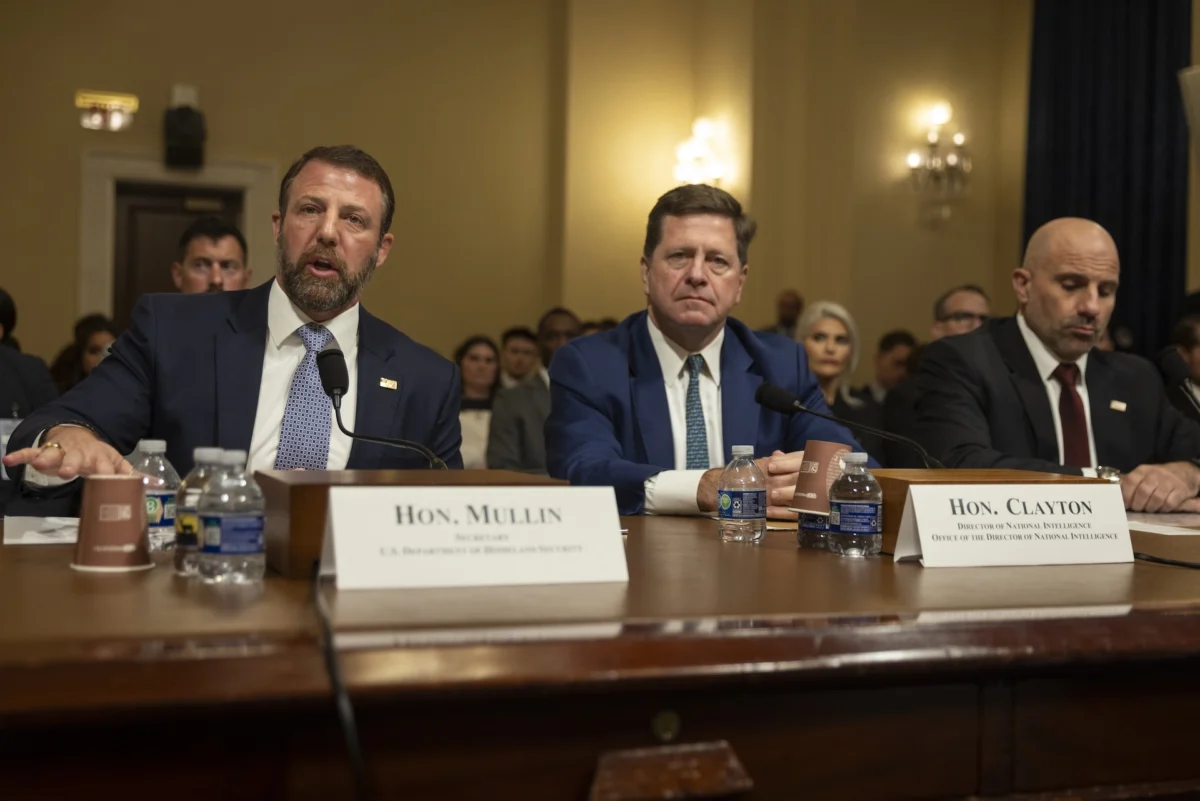
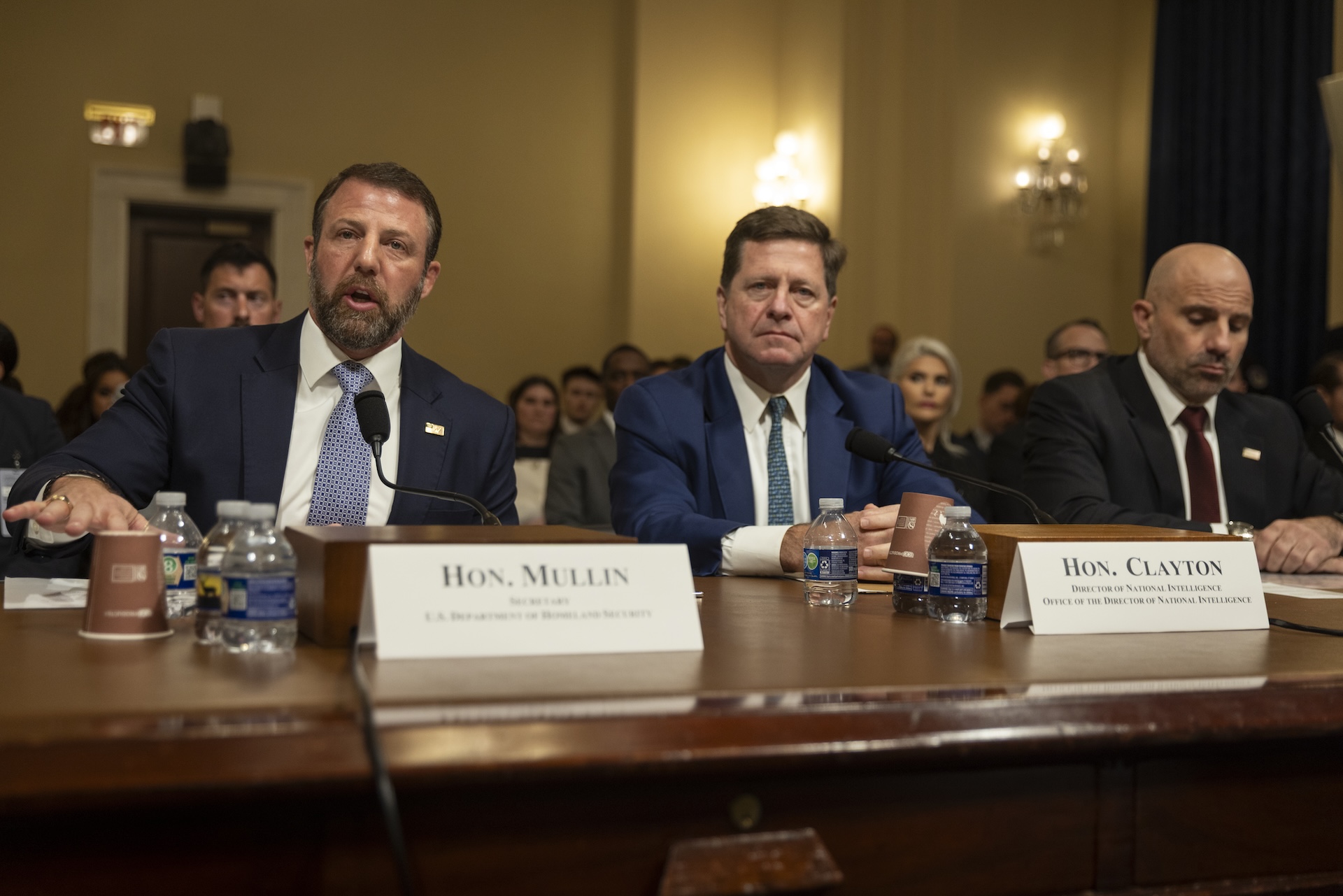
- The Legislative and Executive Consensus: During joint hearings before the House Homeland Security and Intelligence Committees, Trump administration witnesses—including Director of National Intelligence Jay Clayton, Department of Homeland Security (DHS) Secretary Markwayne Mullin, and FBI Deputy Director Christopher Raia—confirmed that no evidence links the outages to cyberattacks. However, lawmakers from both sides of the aisle highlighted the dangerous friction point between accelerated AI patching cycles and rigid IT resilience.
- Institutional Strain: The Cybersecurity and Infrastructure Security Agency (CISA) faces intense scrutiny. Lawmakers have raised concerns over how a diminished workforce and reduced budgetary allocations are impacting the agency’s ability to help civilian infrastructure navigate this new operational paradigm.
Chronology of Events
The emergence of the AI-driven patching crisis did not happen overnight; it is the culmination of years of escalating computational capability meeting the realities of fragile digital architecture.
Early 2025 – Late 2026: The Rise of AI Vulnerability Discovery
As enterprise organizations and cybersecurity researchers increasingly adopt generative AI and automated code analysis platforms, the timeline for discovering zero-day vulnerabilities and deep-seated software bugs plummets from months to mere minutes. Automated algorithms comb through vast codebases, unearthing legacy vulnerabilities
that had lay dormant for decades.
November 17, 2026: The "Vulnpocalypse" Takes Center Stage
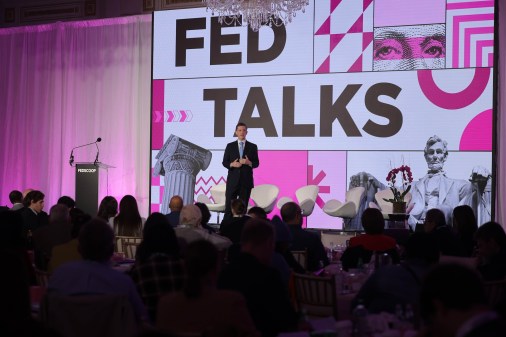
Speaking at the FedTalks conference, Nick Andersen, acting director of the Cybersecurity and Infrastructure Security Agency (CISA), warns that the relentless pace of AI-driven vulnerability discovery—colloquially termed the "vulnpocalypse"—risks completely overshadowing fundamental engineering principles. He emphasizes that organizations are becoming so consumed by putting out metaphorical fires that they are losing sight of overarching cyber resilience.
Mid-November 2026: The Cascade of Outages
Within a matter of days, a series of seemingly disconnected, high-impact technology outages sweep across the United States. Commercial aviation faces localized ground stops, major telecommunications providers experience unexplained routing loops, and digital banking platforms suffer intermittent processing freezes. Initial panic suggests a coordinated geopolitical cyber strike.
November 18, 2026: Congressional Scrutiny Begins
The House Homeland Security Committee convenes an emergency hearing to address threats to the homeland. DHS Secretary Markwayne Mullin, DNI Jay Clayton, and FBI Deputy Director Christopher Raia face sharp questioning from lawmakers regarding the nationwide tech failures. While the officials definitively rule out cyberattacks as the direct cause, they acknowledge an unprecedented acceleration in the rate of systems patching and software upgrades.
November 17–19, 2026: Lawmakers Diagnose the Systemic Strain
Sen. Mark Warner (D-Va.) and Rep. Jim Himes (D-Conn.) publicly articulate the underlying mechanism of the outages. They explain that AI’s ability to identify system-wide flaws en masse forces organizations into an unsustainable "all-at-once" patching cadence. Rep. James Walkinshaw (D-Va.) pushes back against executive branch characterizations of the incidents as mere "coincidences," asserting that the outages are directly connected to the frantic industry-wide race to close security gaps before adversaries can weaponize them.
Supporting Data and Technical Context
To understand why patching can cause systemic network collapse, one must examine the intersection of modern compute power and traditional enterprise architecture.
For decades, enterprise IT systems have been built incrementally. A typical corporate network or government infrastructure consists of a complex, fragile web of legacy operating systems, third-party software libraries, custom middleware, and cloud integrations. Historically, patching cycles were deliberate and measured. IT administrators would test patches in staging environments over weeks or months to ensure compatibility before pushing updates to production systems.
However, artificial intelligence has fundamentally shattered this cadence. Modern AI models can:
- Scan millions of lines of proprietary code in seconds.
- Automatically generate proof-of-concept exploits for discovered flaws.
- Alert security teams to dozens of critical vulnerabilities simultaneously across disparate system environments.
Faced with the terrifying prospect that automated threat actors are utilizing the exact same AI capabilities to exploit these flaws within hours of disclosure, corporate executives and chief information security officers (CISOs) feel legally and operationally compelled to push updates immediately.
This creates a severe bottleneck. When dozens of mission-critical patches—ranging from kernel-level updates to database modifications—are applied simultaneously to systems not architected for rapid, automated iteration, the result is often cascading software conflicts, memory leaks, service crashes, and widespread network instability. In essence, the cure frequently mimics the disease: the system goes offline not because it was hacked, but because it could not survive the intense, sudden influx of corrective code.
Official Responses and Congressional Testimony
The hearings on Capitol Hill exposed a palpable tension between the executive branch’s defensive posture and lawmakers’ demands for systemic accountability.
During the joint committee sessions, Director of National Intelligence Jay Clayton pointed directly to technological advancement as the primary catalyst for the operational turbulence. "We are in an environment where the rate of patching, the rate of upgrading of systems, is increasing," Clayton testified. "That is a result of the advancements in compute, and in applications."
Crucially, Clayton, DHS Secretary Markwayne Mullin, and FBI Deputy Director Christopher Raia maintained a united front on one critical point: there is zero empirical evidence that foreign actors or cybercriminals orchestrated the outages, nor is there any indication that adversaries are successfully exploiting the patching windows to breach networks.
Despite these reassurances, lawmakers expressed deep skepticism over the federal government’s preparedness. Rep. James Walkinshaw confronted the intelligence chiefs, arguing that dismissing the incidents as coincidental ignores the harsh reality on the ground. "The recent tech outages are not coincidences, and they are connected to cybersecurity," Walkinshaw stated. "As cyberattacks are exploding, everyone is frantically patching systems."
Walkinshaw and other committee members drew a direct line between the escalating technical pressure and the current state of CISA. Despite facing congressional warnings over recent personnel reductions and budgetary constraints, DHS Secretary Mullin defended the agency’s operational readiness. Mullin asserted that CISA remains "able to meet our mission right now because of new technology that has come in," though he declined to specify which technological innovations he was referencing or provide a concrete timeline for aggressive agency hiring initiatives.
Implications for the Future of Cybersecurity and IT Resilience
The convergence of artificial intelligence, rapid code remediation, and critical infrastructure fragility carries profound implications for the future of digital governance and national security.
1. The Redefinition of "Resilience"
For years, cybersecurity policy has focused heavily on preventative controls: building higher walls, deploying better firewalls, and discovering vulnerabilities before the enemy does. The recent outages prove that prevention-at-all-costs has a breaking point. Cybersecurity strategies must pivot toward true operational resilience—ensuring that systems can absorb the shock of rapid administrative changes, failed patches, and internal software conflicts without collapsing entirely.
2. The Automation Paradox
The crisis highlights a deep paradox in the adoption of artificial intelligence. While AI is heralded as the ultimate defender—capable of writing secure code, sealing vulnerabilities, and neutralizing threats in real-time—it also introduces extreme volatility. If human infrastructure cannot process AI-generated solutions at the speed they are produced, automation risks becoming an internal vector for disruption.
3. Regulatory and Legislative Pressures
Lawmakers are increasingly recognizing that the federal government must play a more active role in establishing standards for software update management. Bills moving through the House and Senate intelligence committees are expected to incorporate provisions addressing AI-driven operational risks, state and local threat intelligence coordination, and the baseline stability requirements for critical infrastructure providers.
4. Workforce Constraints at CISA
As the digital landscape grows exponentially more complex, the demands on civilian defense agencies like CISA will only mount. The debate over CISA’s budget and staffing levels is far from settled. Congressional pressure on DHS leadership to expand the agency’s technical workforce indicates that lawmakers view human oversight—rather than opaque technological fixes alone—as essential for managing the AI transition.
Ultimately, the recent wave of tech outages serves as a stark warning flare for the digital age. As artificial intelligence continues to reshape the boundaries of software development and cyber defense, the greatest threat to critical infrastructure may no longer be the adversary at the gate, but the sheer velocity of our own frantic efforts to keep them out.