






"Naming is hard." It is a sentiment echoed in design studios and engineering hubs worldwide, yet it remains the cornerstone of effective communication in digital product development. The language we choose does more than label buttons or variables; it shapes our cognitive model of the system and dictates the efficiency of our cross-functional conversations. When teams struggle with ambiguity regarding colors, icons, UI components, or design tokens, the friction is rarely just about vocabulary—it is about the integrity of the design system itself.
In the fast-paced world of digital product design, poor naming conventions act as a silent technical debt. Generic names lead to misunderstandings, while overly specific names stifle flexibility and hinder component reuse. To bridge this gap, we must move beyond intuition and adopt structured, scalable, and collaborative naming frameworks.

The Core Challenge: Why Naming Matters
The confusion that plagues modern design teams often stems from "dialect silos." A designer might refer to an element as a "primary action block," while a developer views it as a "high-priority button component," and a product manager labels it as a "conversion trigger." These disjointed terminologies create friction that slows down development and frustrates users.
Effective naming is not merely an aesthetic choice; it is a fundamental aspect of information architecture. A well-named system acts as a common language, allowing designers, developers, and product managers to work in sync. When we align our internal naming conventions with the user’s mental model, we reduce the cognitive load for both the team and the end-user.

Chronology of Naming: Evolving from Chaos to Systems
Historically, the web grew in a "wild west" era of class naming—think red-button-large or sidebar-item-new. These labels were bound to visual properties, making them brittle and difficult to maintain as brands evolved.
As design systems matured, the industry shifted toward semantic naming. We moved away from describing what things look like to what things do. This evolution was marked by several key developments:

- The Emergence of Design Tokens: The shift from hard-coded values to an abstraction layer (tokens) allowed for cross-platform consistency.
- Component Libraries: The rise of standardized libraries (like Material Design or Carbon) provided a shared vocabulary for UI patterns.
- The "Job-to-be-Done" Framework: Borrowing from product management, designers began naming features based on the value they provide to the user, rather than their technical implementation.
Today, we are in the era of "Taxonomy Mapping," where complex, multi-brand organizations like Vodafone or Intuit are building hierarchical systems that allow for modularity, theming, and scalability at an enterprise level.
Supporting Data: Resources for Precision
To move from ambiguity to clarity, professionals are increasingly relying on curated resources that act as "thesauruses for code."

1. The Power of "Classnames"
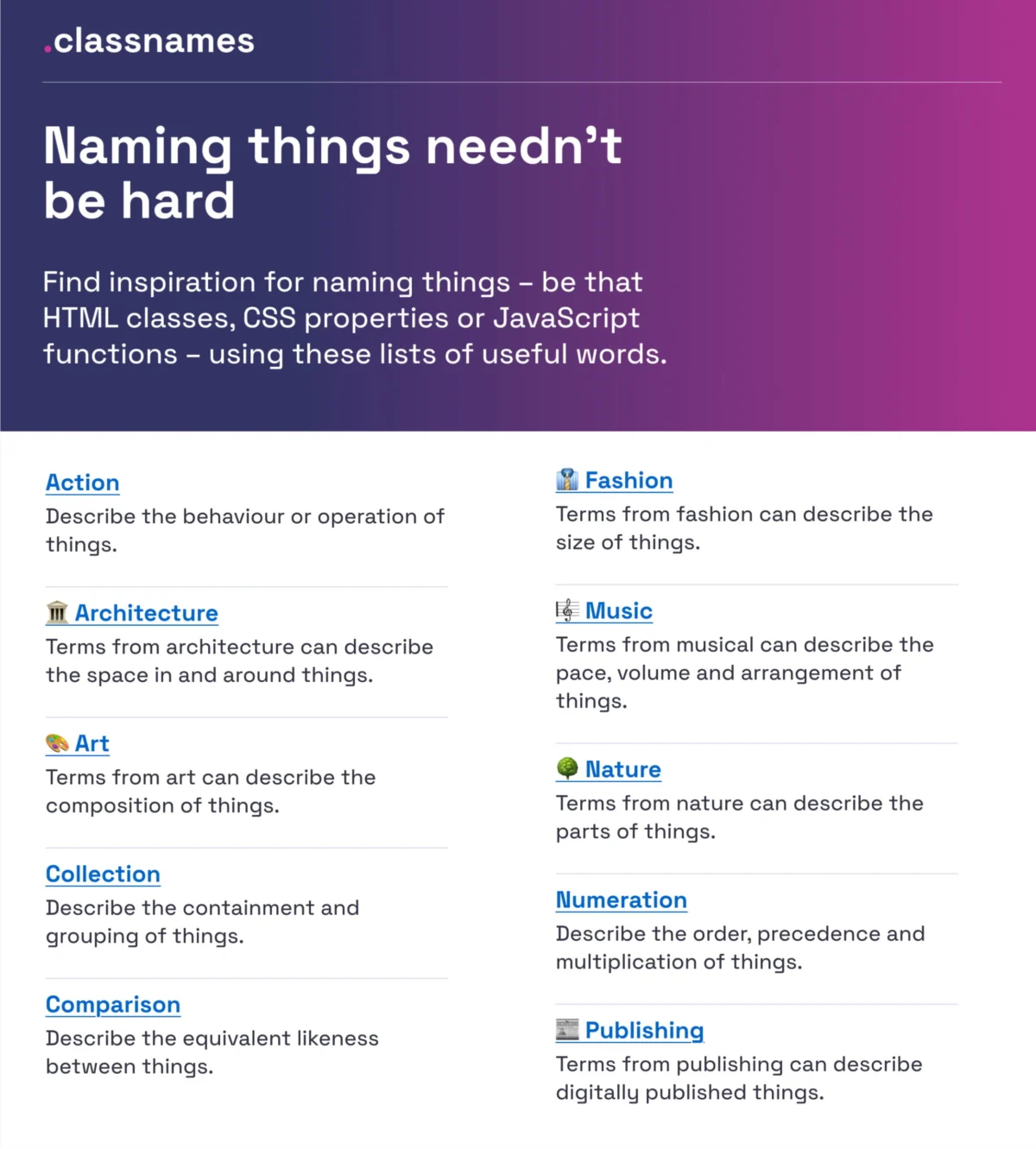
If your team is suffering from "naming fatigue," Classnames is an essential starting point. It offers thematically grouped lists of words that force developers and designers to think outside the standard "container/wrapper/box" lexicon. By incorporating terms from architecture, nature, and art, teams can create a more nuanced and descriptive naming structure.
2. Mastering Color Lexicons
Color is notoriously difficult to name. A "dark-blue" in one context might be a "primary-navy" in another. David Aerne’s Color Names repository is a monumental achievement in this space, housing over 30,000 unique color names. Tools like Color Parrot allow teams to standardize their palette, ensuring that "Cerulean" means the same thing in a Figma file as it does in a CSS variable.

3. Standardizing Components
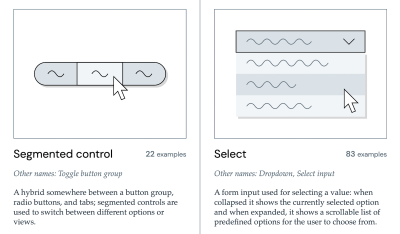
For those struggling to define interface elements, the Component Gallery by Iain Bean is the gold standard. It provides a comprehensive inventory of how top-tier design systems label everything from accordions to visually hidden elements. If you are debating whether to call it a "modal" or a "dialog," the Gallery offers the industry consensus, saving teams hours of circular deliberation.
Official Guidelines and Best Practices
Expert practitioners have codified their findings into actionable frameworks. Javier Cuello’s Naming Guidelines remain a seminal resource for anyone looking to structure their layer and group names. His philosophy is rooted in four pillars:
- Logic: Does the name follow a consistent hierarchy?
- Meaning: Does the name clearly describe the function?
- Universality: Is the term understood by everyone in the organization?
- Abstraction: Is the name free from visual references (e.g., avoid "blue-button")?
The Intuit Case Study
Intuit’s approach to design tokens serves as a blueprint for scalability. By building a flexible taxonomy that supports multiple products—from QuickBooks to Mailchimp—they demonstrated that a design system must be robust enough to handle global changes without breaking local implementations. Their success highlights the importance of distinguishing between primitives (raw values) and semantics (the application of those values).
Implications of Poor Naming on Feature Adoption
One of the most overlooked consequences of poor naming is low feature adoption. Erin Gannon, in her exploration of feature naming, notes that if a user cannot find or understand a feature, they will not use it.

The implication is clear: Naming is a user experience problem. If a feature is called "Advanced System Integration" but the user thinks of it as "Auto-Sync," the discrepancy prevents the user from discovering the tool. The solution is to conduct user research to identify the language the user employs, then mirror that language in the UI.
The "Dialect" Conflict
Teams often fail because they are speaking different dialects. A developer’s CSS class is not necessarily a user’s menu item. To resolve this, organizations should:

- Maintain a Glossary: Keep a living document of agreed-upon terminology.
- Audit for Conflicts: Regularly scan codebases and design files for redundant or confusing labels.
- Prioritize Discoverability: If users are confused, rename the feature based on their feedback, not your internal technical structure.
Advanced Strategies: Token Taxonomy and Mapping
For organizations managing complex, multi-brand environments, the Vodafone UK Variables Taxonomy Map provides a visual model for managing token relationships. It demonstrates how to connect tokens from the brand level (primitives) to the page level (semantics).
By utilizing tools like Romina Kavcic’s Design Token Naming Guide, teams can configure their own structures, ensuring that categories, states, and roles are defined before a single line of code is written. This "upfront investment" in naming taxonomy pays dividends in the form of reduced refactoring and increased development velocity.

Conclusion: The Path Forward
The quest for the "perfect" name is a continuous process. As our products grow and our teams expand, our naming conventions must remain flexible enough to evolve. By utilizing the resources mentioned—from Onym for product naming to Name That UI for visual dictionaries—teams can drastically reduce the confusion that stems from linguistic misalignment.
The right name is not the most clever one; it is the one that is well-understood by everyone involved. When designers, developers, and product managers can speak the same language, the resulting collaboration fosters a more coherent and accessible product.

For those looking to dive deeper, exploring Smashing Magazine’s archives and participating in online workshops can provide the ongoing education necessary to keep your design systems—and your language—at the cutting edge. Remember: every minute spent clarifying a name is a minute saved in future maintenance, confusion, and rework. Start auditing your labels today, and watch your team’s efficiency improve.