








By Editorial Staff
Published: Advanced Marketing & Industry Insights
Main Facts
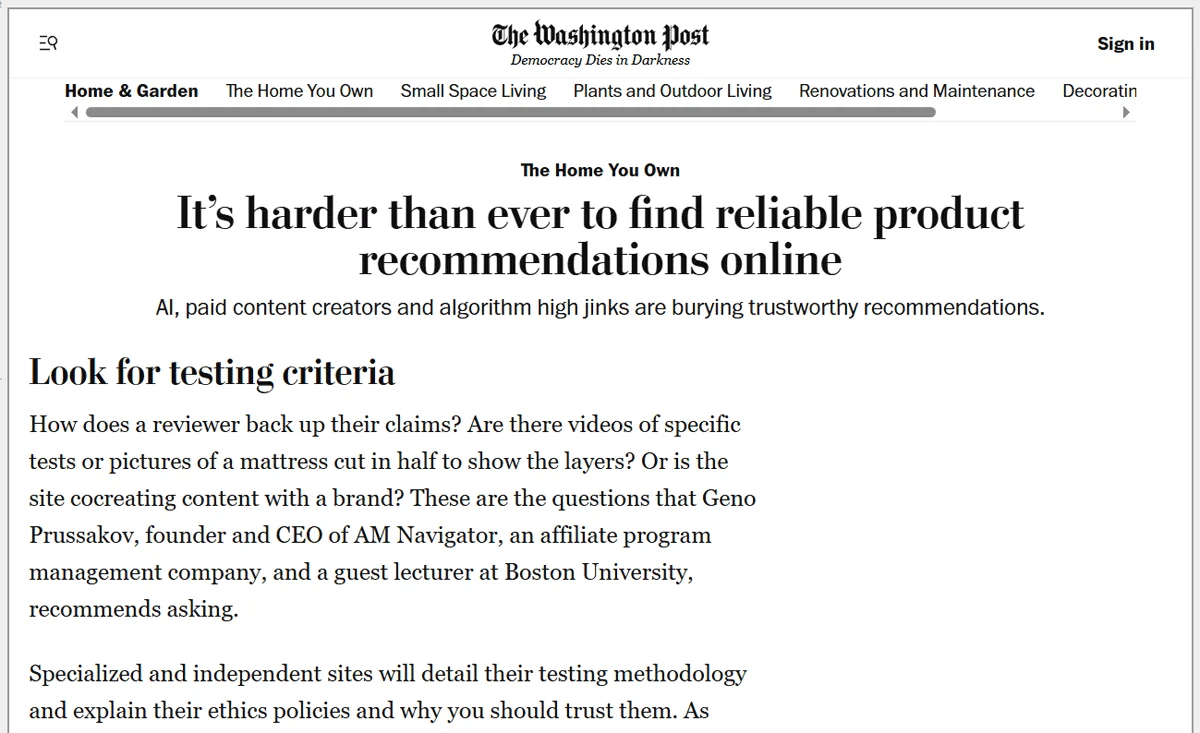
In an era where digital commerce dictates nearly every consumer purchase, online shopping guides, product roundups, and "best of" lists have become the definitive arbiters of consumer choice. Earlier this year, prominent affiliate marketing expert and agency founder Geno Prussakov was approached by The Washington Post to weigh in on a booming digital phenomenon: how major media outlets curate, publish, and monetize online product recommendation lists.
While Prussakov’s insights were featured in a subsequent Washington Post exposé, the constraints of mainstream journalism left much of his industry analysis unsaid. This report expands upon those foundational ideas, examining how major publishers—ranging from legacy newspapers to lifestyle magazines—leverage their formidable search engine optimization (SEO) authority to drive lucrative affiliate marketing revenues.
At the core of this discussion is a fundamental tension: Can consumers trust product recommendations published by media institutions that financially benefit when a reader clicks a link and makes a purchase? According to industry veterans, the answer is nuanced. While major media publishers often implement rigorous testing standards and editorial safeguards, the allure of monetization through placement fees, commission boosts, and high-value affiliate arrangements introduces a complex ethical landscape that every modern shopper must navigate.
Chronology: The Evolution of Media Monetization
To understand how traditional media transformed into e-commerce recommendation engines, it is necessary to trace the timeline of digital publishing over the past two decades.
- The Early 2000s (The Information Age): Traditional news outlets, magazines, and broadcasters established their digital footprints. Their primary revenue models relied heavily on display advertising, banner ads, and print subscriptions. SEO was viewed primarily as a tool for driving traffic to breaking news and journalistic investigations.
- The Late 2000s to Early 2010s (The Ad-Blocker Disruption): As digital advertising faced mounting challenges—including the rise of ad-blockers, programmatic ad fraud, and plummeting cost-per-mille (CPM) rates—publishers found their traditional revenue streams eroding. Media companies began exploring native advertising and sponsored content to survive.
- The Mid-2010s (The Rise of Commerce Content): Recognizing the high intent of search traffic looking for product reviews, pioneering digital publishers began launching dedicated commerce and product testing desks. Brands discovered that a recommendation from a trusted media outlet carried vastly more weight than a standard banner ad. Affiliate networks (such as Rakuten, Impact, and Commission Junction) streamlined the tracking process, making it seamless for publishers to earn commissions on referred sales.
- The Late 2010s to 2020s (The Institutionalization of Product Roundups): Commerce content transformed from an experimental revenue side-hustle into a core pillar of media business models. Today, major media brands maintain dedicated teams of product testers, SEO specialists, and affiliate managers. Special shopping events like Amazon Prime Day, Black Friday, and Cyber Monday have become critical financial quarters for newsrooms, sometimes generating a substantial percentage of a publisher’s annual digital revenue.
- Present Day (The Scrutiny of Search Authority): As search engine algorithms continue to evolve, big media domains frequently dominate search engine results pages (SERPs) for product queries—even for items entirely outside their traditional journalistic purview. This dominance has invited increased regulatory scrutiny, consumer skepticism, and demands for greater editorial transparency.
Supporting Data: Behind the Scenes of Media Affiliate Programs
Agencies that manage affiliate marketing programs on behalf of merchants—such as AM Navigator—sit at the intersection of retail brands and publishing powerhouses. Industry data and operational experience reveal how major media outlets evaluate, vet, and monetize products.
When reputable media publishers decide to monetize their brand equity through product roundups, they typically do not do so haphazardly. Based on industry best practices, established publishers enforce rigorous preliminary protocols before featuring a brand:
- Editorial Independence and Separation of Church and State: In top-tier publications, the commercial (affiliate) team operates separately from the hard-news or investigative reporting desks. While commerce writers select products based on merit, testing, and consumer demand, affiliate managers work behind the scenes to secure tracking links.
- Rigorous Product Testing: Major publishers often maintain dedicated testing laboratories. Products are subjected to hands-on evaluations, durability stress-tests, and comparative benchmarking against market competitors before earning a spot in a top-tier roundup.
- Data-Driven Consumer Research: Editorial teams analyze search trends, return rates, customer satisfaction scores, and consumer complaint logs to filter out low-quality items that could damage the publication’s hard-earned brand reputation.
- Compliance and Disclosure Protocols: To adhere to Federal Trade Commission (FTC) guidelines and international regulatory standards, professional media outlets implement clear, conspicuous affiliate disclosure statements, informing readers that the publisher may earn a commission from links within the article.
However, the supporting data also highlights the commercial pressures inherent in the ecosystem. Not all list placements are born equal. Financial arrangements can and do influence product visibility. These commercial levers include:
- Placement Fees: Upfront payments made by brands to guarantee a spot in high-visibility seasonal gift guides or category roundups.
- Inflated Affiliate Commission Rates: Brands offering higher-than-average commission percentages may secure preferential treatment or higher rankings within a list.
- Earnings Per Click (EPC) Guarantees: Agreements where a merchant guarantees a minimum financial return per click, incentivizing the publisher to drive high volumes of traffic to that specific offer.
Official Responses and Industry Perspectives
The intersection of journalism, commerce, and search authority has generated widespread debate among media executives, SEO professionals, and consumer advocates.

Industry analysts emphasize that big media companies possess an unfair advantage in search engine rankings due to their domain authority—a metric accumulated over decades of publishing authoritative news. When a legacy media outlet publishes a review for a vacuum cleaner or a mattress, search engines often rank that review higher than specialized, independent consumer review sites, regardless of whether the media outlet has historical expertise in home appliances.
In his discussions with The Washington Post, Geno Prussakov emphasized that while skepticism is warranted, writing off all media recommendations as "pay-to-play" is an oversimplification. "Most big media players treat this monetization business very seriously," Prussakov notes. "Before turning their brand into an endorsement mechanism, most big media really do their homework."
Conversely, consumer protection advocates argue that the blurring lines between editorial content and commercial advertising create hidden biases. When consumers read a "Best Coffee Makers of 2025" list on a trusted news site, psychological conditioning leads them to assume the ranking is purely objective, rarely pausing to consider the financial mechanics operating beneath the surface.
Publishers, meanwhile, defend the practice as a necessary economic survival strategy. In an era where traditional advertising revenues can no longer sustain deep investigative journalism, commerce content provides the financial runway required to keep newsrooms funded and reporters employed.
Implications: How Consumers Can Make Smarter Buying Decisions
Given that financial arrangements—ranging from standard affiliate commissions to paid placements—can subtly skew product rankings, consumers must adopt a more critical approach to online shopping guides. Relying blindly on a top-ten list published by a recognizable brand is no longer a foolproof strategy.
To cut through the noise and make genuinely informed purchasing decisions, consumers should arm themselves with a strategic toolkit:
- Cross-Reference Multiple Sources: Never rely on a single media outlet’s recommendation. Check whether multiple independent review sites, niche enthusiast forums, and user-generated review platforms (such as Reddit or specialized community boards) corroborate the product’s quality.
- Investigate the Testing Methodology: Look past the shiny headline and read how the product was evaluated. Did the authors actually test the product hands-on in a real-world environment, or does the article read like a high-level summary cobbled together from manufacturer specifications and scraped user reviews?
- Inspect the Affiliate Disclosures: Transparent publications will explicitly state how they monetize their content. Reviewing the disclosure statements can give you a hint about the commercial relationship between the publisher and the brands featured.
- Look Beyond the Top Spot: The #1 ranked product in a sponsored roundup is occasionally chosen for its high conversion rate, generous commission structure, or active advertising partnership rather than absolute superiority. Dig deeper into the body of the article to evaluate runner-up products that might better fit your specific needs.
Ultimately, the digital marketplace will continue to evolve as search engines refine their algorithms and publishers seek new ways to monetize their audiences. By understanding the underlying mechanics of search authority, affiliate marketing, and editorial curation, consumers can transform themselves from passive targets of high-converting content into empowered, discerning buyers.
What are your thoughts on online product recommendations from big media? Have you ever felt misled by a "best-of" list, or do you rely on them to streamline your shopping? Join the conversation in the comments section below.