Sophisticated "BlackX" UEFI Bootkit Targets Central Asian Diplomats in State-Sponsored Cyber Espionage Campaign
By Global Security Desk Published: November 2026
Main Facts: The Threat at a Glance
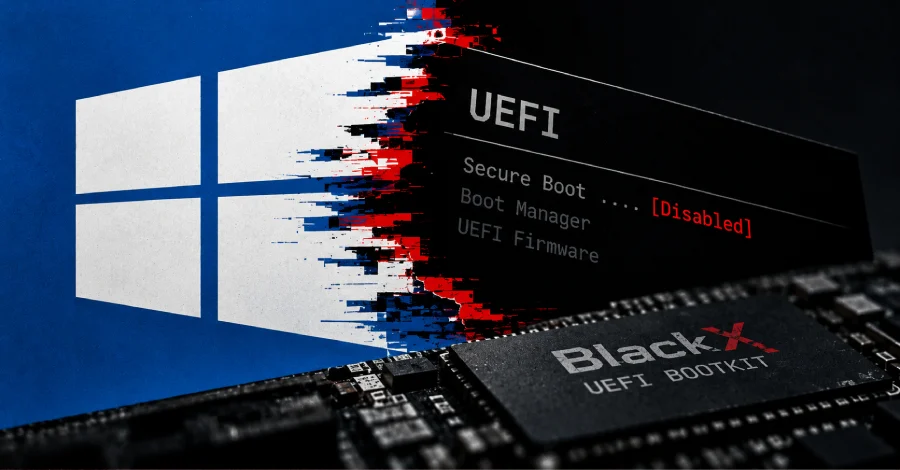
In a chilling evolution of modern cyber espionage, high-profile diplomatic organizations across Central Asia have become the primary targets of a newly uncovered, highly sophisticated Unified Extensible Firmware Interface (UEFI) bootkit known as BlackX. Operating in the shadows of early 2026, this malicious framework has systematically targeted government and diplomatic entities in Tajikistan, Uzbekistan, and Turkmenistan.
Cybersecurity researchers attribute this calculated campaign to APT41, a notorious, China-linked state-sponsored hacking collective (also tracked under overlapping umbrellas such as FishMonger, Aquatic Panda, and Earth Lusca). The primary objective of BlackX is not immediate financial extortion, but rather the systematic subversion of core Microsoft Windows startup defenses and third-party security solutions. By embedding itself deep within the hardware-software interface, BlackX grants its operators persistent, covert, and nearly undetectable access to compromised machines over extended operational windows.
What makes BlackX uniquely dangerous is its lineage. Security analysts have identified it as a direct, highly evolved derivative of BlackLotus—a powerful bootkit that first surfaced on cybercrime underground forums in late 2022 before being officially documented by ESET in March 2023. By weaponizing unpatched human oversights regarding legacy security updates, BlackX highlights an alarming trend: advanced persistent threat (APT) groups are increasingly willing to adopt, reverse-engineer, or purchase sophisticated crimeware toolkits to execute high-stakes geopolitical espionage.
Chronology of an Attack: From BlackLotus to BlackX
To understand the severity of the BlackX campaign, it is essential to trace the timeline of the underlying vulnerabilities and the tools that enable low-level firmware manipulation.
The Foundation: The Discovery of BlackLotus (2022–2023)
Late 2022: The BlackLotus bootkit appears as a commercial product advertised on underground cybercrime forums, marketed as a tool capable of bypassing Windows Secure Boot.
March 2023: ESET formally confirms the existence of BlackLotus in the wild. The malware exploits CVE-2022-21894 (also known as "Baton Drop"), a Secure Boot bypass vulnerability carrying a CVSS score of 4.4.
April 2023: Microsoft issues comprehensive technical guidance, emphasizing that BlackLotus is not an initial access vector. Instead, it relies on an attacker already possessing administrator or physical access to the target host to serve as a persistence and defense evasion mechanism.
The Blind Spot and the Rise of BlackX (2023–2026)
March 2023 – October 2026: While Microsoft releases security patches for Baton Drop, completely mitigating the flaw requires administrators to perform manual mitigation steps. Crucially, this involves adding vulnerable certificates—such as the "Windows Production PCA 2011" certificate—to the Secure Boot UEFI Forbidden List (DBX). Because these manual steps require administrative foresight and labor, the vast majority of global organizations fail to execute them.
October 19, 2026: The vulnerable certificate officially expires; however, researchers note that expiration alone does not prevent vulnerable binaries from loading unless they are explicitly blocklisted via the DBX.
Early 2026: Kaspersky researchers uncover the BlackX campaign targeting diplomatic installations in Central Asia. They realize that the threat actors behind BlackX capitalized on industry-wide apathy regarding manual Baton Drop mitigations, effectively leveraging a years-old vulnerability on systems falsely assumed to be patched.
June 2026: ESET publishes a report linking FishMonger’s use of the SprySOCKS backdoor (deployed against government entities in Honduras, Taiwan, Thailand, and Pakistan between 2023 and 2024) to the APT41 ecosystem. Analysts note potential overlaps, including the "xdd" string found in both BlackX and FishMonger kernel implants, binding the UEFI bootkit directly to Chinese state-sponsored operations.
Supporting Data & Technical Architecture
The operational mechanics of BlackX showcase a masterclass in hybrid engineering, blending crimeware heritage with state-sponsored stealth.
Deployment and Installation Vector
Attackers typically establish an initial foothold within a victim’s corporate network through unspecified vectors. Once they elevate their privileges to administrator level, they deploy the BlackX installer via a specialized command-line execution:
In this execution string, Q46F6MDLI3RX2KV1 functions as the RC4 key utilized for payload decryption. The binary subsequently drops malicious files into both standard system partitions and low-level UEFI partitions, executing a sequence remarkably similar to the original BlackLotus framework.
The ultimate goal of this phase is to install Machine Owner Keys (MOK) on the infected host. This allows the operators to load arbitrary, unsigned, or maliciously modified EFI files, effectively blinding Secure Boot verification mechanisms.
+-------------------------------------------------------------+
               Initial Access & Admin Privileges
+-------------------------------------------------------------+
                              |
                              v
+-------------------------------------------------------------+
         BlackX Installer Execution via Command Line
         (Decrypts payload using embedded RC4 key)
+-------------------------------------------------------------+
                              |
                              v
+-------------------------------------------------------------+
       UEFI & System Partition Drop (CVE-2022-21894)
+-------------------------------------------------------------+
                              |
                              v
+-------------------------------------------------------------+
       Machine Owner Key (MOK) Installation & MBR/UEFI Hook
+-------------------------------------------------------------+
                              |
                              v
+-------------------------------------------------------------+
    Kernel Driver Injection (Signed with Revoked Certificate)
+-------------------------------------------------------------+
                              |
                              v
+-------------------------------------------------------------+
    Endpoint Defense Neutralization & Cyber Espionage Payload
+-------------------------------------------------------------+
The Source Code Mystery
Because the complete source code of BlackLotus has never been leaked or published in the public domain, Kaspersky’s analysis points to two distinct possibilities: either APT41 successfully reverse-engineered the original BlackLotus bootkit from available binaries, or they acquired the source code directly from cybercrime brokers. Both scenarios represent a paradigm shift, as Advanced Persistent Threat (APT) groups historically develop proprietary tooling rather than leaning on commercial or criminal ecosystems.
Driver Signing and EDR Neutralization
Following successful exploitation, the UEFI payload injects a malicious driver directly into the Windows kernel. To bypass standard driver-signing verifications, this driver was originally signed using a digital certificate issued to Wenjiang District Mingyu Network Technology Service Studio (a certificate that has since been revoked by the issuing authority).
Operating under principles akin to Bring Your Own Vulnerable Driver (BYOVD) tactics, this kernel-level implant systematically attempts to disrupt or terminate endpoint detection and response (EDR) software installed on the machine. Interestingly, Kaspersky’s telemetry revealed that certain security-evasion routines within the driver are conditional—activating only if security solutions associated with Kaspersky or Avast are identified on the host system, though researchers observed that these routines ultimately proved largely ineffective in practice.
Beyond neutralizing security controls, the driver drops a user-mode cyber espionage payload designed for persistent intelligence gathering. Furthermore, analysts noted heavy reliance on DLL sideloading to deploy these payloads—a hallmark signature frequently observed across threat groups originating from China, such as Bronze Sandcastle.
Official Responses and Technical Assessments
The discovery of BlackX has triggered urgent warnings from leading cybersecurity researchers and infrastructure defenders worldwide.
Georgy Kucherin, Vladimir Nestor, and Vasily Berdnikov, the Kaspersky researchers who led the technical investigation, emphasized the strategic shift represented by the campaign:
"It is likely that the threat actor behind this campaign took into account that few organizations realized the importance of manually activating the Baton Drop patch. As such, we believe they decided to invest time in understanding how BlackLotus works and creating a copycat of this bootkit."
Kucherin further elaborated on the implications of state-sponsored entities adopting cybercrime mechanics:
"By adapting a commercial crimeware tool, the group could bypass procedures intended to protect the Windows boot processes. This hybrid approach proves that sophisticated adversaries do not need to reinvent the wheel to establish persistent, invisible control over high-value networks."
In prior advisories concerning the underlying mechanics, Microsoft reiterated the necessity of deep system hygiene:
"It is critical to note that a threat actor’s use of this bootkit is primarily a persistence and defense evasion mechanism. It is not a first-stage payload or an initial access vector and can only be deployed to a device to which a threat actor has already gained either privileged access or physical access."
Implications for Global Cybersecurity
The emergence of BlackX carries profound ramifications for national security agencies, corporate IT departments, and the broader cybersecurity landscape.
The Danger of Incomplete Patching: The campaign serves as a harsh reminder that applying software updates is rarely enough in modern enterprise environments. Firmware-level vulnerabilities demand rigorous, manual configuration changes—such as updating the UEFI Secure Boot Forbidden List (DBX)—to close security gaps effectively.
Convergence of Cybercrime and APTs: Historically, cybercrime groups focused on financial monetization (ransomware, banking Trojans) while state-sponsored actors built bespoke espionage tools. BlackX illustrates a dangerous convergence: APT groups are increasingly weaponizing, modifying, or purchasing commercial crimeware to accelerate their offensive capabilities.
The Rise of Stealthy Persistence: As Endpoint Detection and Response (EDR) tools become more adept at catching traditional user-mode malware, attackers are diving deeper down the stack—moving from the operating system kernel into UEFI and firmware layers where traditional monitoring tools struggle to maintain visibility.
Geopolitical Sensitivity: Targeting diplomatic organizations in Central Asian transit hubs (Tajikistan, Uzbekistan, and Turkmenistan) underlines the ongoing intelligence battleground surrounding regional trade routes, energy corridors, and diplomatic alignments.
Mitigation and Defensive Recommendations
To defend against threats like BlackX, security organizations are urged to implement comprehensive firmware defense strategies:
Manual Secure Boot Mitigations: Ensure that Windows Boot Manager revocations associated with CVE-2022-21894 and CVE-2023-24932 are fully applied, including updating the Secure Boot DBX blocklist.
Principle of Least Privilege: Because BlackX requires administrator access to install its installer binaries, strictly monitor and restrict local administrator privileges across enterprise endpoints.
Firmware Integrity Monitoring: Deploy hardware-assisted security features such as Virtualization-Based Security (VBS), Hypervisor-Protected Code Integrity (HVCI), and Trusted Platform Module (TPM) attestation to detect unauthorized modifications to boot components.
Threat Intelligence Integration: Monitor for abnormal command-line executions involving suspicious RC4 keys and unusual file drops within system and UEFI partitions.