










By Cybersecurity Desk Analysis
Expanded and enriched reporting based on industry insights by Daniel Imber, Specops Software.
For decades, the final line of defense against corporate social engineering has sat quietly at a desk, wearing a headset, waiting for the phone to ring. Service desk agents have historically served as the human firewall for internal IT networks. Trained to listen for vocal hesitation, subtle shifts in tone, violations of standard operating procedure, or the faint panic of a caller under artificial duress, these frontline workers act as gatekeepers to organizational crown jewels.
However, relying on human instinct to make high-stakes identity verification decisions is no longer just inadequate—it is becoming a critical security vulnerability.
The rapid proliferation of Generative AI (GenAI) and voice cloning technology has permanently altered the threat landscape. Attackers no longer need to rely purely on charisma, rehearsed scripts, or a lucky guess to bypass IT support. Today, malicious actors are weaponizing artificial intelligence to craft hyper-realistic audio impersonations, turning routine service desk phone calls—known as vishing (voice phishing)—into a masterclass in deception.
As threat groups demonstrate the capability to effortlessly penetrate major global enterprises through the service desk, cybersecurity experts are issuing a stark warning: The problem cannot be solved by simply retraining staff. Organizations must fundamentally redesign how they handle account recovery, shifting away from subjective human judgment and toward automated, ironclad identity verification.
Main Facts: The Rise of AI-Powered Vishing and the Service Desk Blind Spot
The core vulnerability facing modern organizations stems from a fundamental mismatch between sophisticated cyber-attacks and traditional IT recovery workflows.
- The Evolution of Vishing: Voice phishing is no longer a rudimentary scam relying on poor audio quality or clumsy grammar. With modern AI tools, threat actors can generate convincing audio clones of real employees using mere seconds of sampled voice data—often harvested from corporate videos, conference calls, or social media.
- The Human Deepfake Detector Problem: By forcing service desk agents to evaluate whether a voice sounds authentic, organizations are inadvertently turning IT support staff into human deepfake detectors. Agents are expected to assess vocal cadence, emotional context, and personal background knowledge on the fly, all while operating under severe pressure to resolve tickets quickly.
- The Account Recovery Paradox: Enterprises have invested heavily in multi-factor authentication (MFA), passwordless environments, and strict conditional access policies. Yet, every secure system requires a backdoor for account recovery when employees lose devices or forget passwords. If the recovery desk relies on weak verification—like asking security questions or trusting a voice—the entire multi-million-dollar security stack can be bypassed in a single phone call.
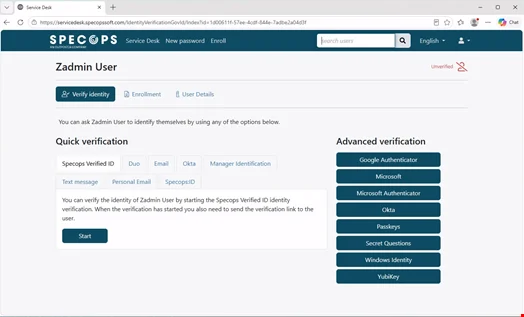
- The Solution: Experts argue that the service desk workflow must be restructured so that identity verification is a mandatory, automated prerequisite rather than an agent’s subjective judgment call. Tools like Specops Secure Service Desk integrate multi-factor verification directly into the recovery workflow, stripping out the guesswork and ensuring that attackers cannot talk their way past security controls.
Chronology: How Social Engineering Evolved from Scripted Scams to AI-Driven Breaches
To understand the severity of today’s service desk vulnerabilities, it is necessary to examine how threat actors systematically weaponized IT help desks over the years.

The Pre-AI Era: Scripted Manipulation and Urgency
Historically, social engineers relied on classic psychological manipulation. Attackers would call IT support late on a Friday afternoon, feign panic, and manufacture an emergency—such as claiming to be a traveling executive about to miss a critical client presentation. By dropping internal jargon, knowing the names of middle managers, and projecting intense urgency, attackers frequently coerced empathetic support agents into bypassing protocol to "be helpful."
The Rise of "Scattered Spider" and Supply Chain Compromise
Over the past several years, financially motivated and extortion-focused threat groups—most notably Scattered Spider—mastered the art of service desk social engineering. Moving away from purely digital malware vectors, these groups launched high-profile campaigns against massive global brands.
- MGM Resorts (2023): Scattered Spider infamously targeted MGM Resorts by researching an employee on LinkedIn, calling the IT service desk, and successfully convincing agents to reset the target’s multi-factor authentication device. This granted the attackers domain admin access, leading to catastrophic ransomware deployment and hundreds of millions of dollars in losses.
- Marks & Spencer: Similar methodologies have targeted retail and enterprise giants, proving that human-centric vectors remain the easiest path into heavily fortified corporate networks.
The Generative AI Boom (2023–Present)
The public release and commercial accessibility of advanced Generative AI tools eliminated the remaining barriers to entry for low-skill attackers while supercharging elite syndicates. Voice cloning algorithms evolved from robotic text-to-speech generators into hyper-realistic emotional voice models. Today, an attacker can launch a vishing campaign impersonating a specific CFO, CEO, or system administrator with near-flawless phonetic and tonal accuracy, completely undermining the traditional audio-based trust markers that service desk agents rely upon.
Supporting Data: The Scale of the Threat and Regulatory Shifts
As AI impersonation techniques grow more sophisticated, international cyber intelligence agencies and standards bodies are updating their guidelines to reflect the gravity of the threat.
FBI Warnings on Voice Cloning
The Federal Bureau of Investigation (FBI) has issued multiple urgent cyber alerts regarding malicious messaging and vishing campaigns targeting high-profile individuals and corporate networks. According to federal warnings, threat actors are actively utilizing AI-generated voice and video clones to impersonate senior corporate and government officials. The FBI notes that these synthetic audio profiles are sophisticated enough to fool both casual listeners and individuals who might otherwise be expected to detect anomalies.
NIST Guidelines on Account Recovery
Recognizing that account recovery is the Achilles’ heel of enterprise security, the National Institute of Standards and Technology (NIST)—specifically within its NIST SP 800-63 digital identity guidelines—treats account recovery as a distinct and high-risk security process, rather than a casual extension of a standard login attempt.
NIST emphasizes that resetting a password or reissuing an authenticator fundamentally changes the foundational identity anchors of an organization. Consequently, standards bodies and regulatory frameworks increasingly expect enterprises to apply the same rigorous verification standards to account recovery that they apply to initial high-security system logins.

Official Responses and Industry Perspectives: Rethinking IT Support
Cybersecurity professionals and software architects are shifting the narrative away from employee blame and toward structural architectural reforms.
The Problem with "More Training"
For years, the standard corporate response to vishing was to hold annual security awareness training sessions telling service desk staff to "be more careful" and listen closer for red flags. Industry analysts now view this as a failing strategy.
"Agents should know how to spot unusual requests, manufactured urgency, attempts to bypass normal processes, and suspicious reset requests," notes Daniel Imber, Cybersecurity Writer at Specops Software. "However, if an attacker can reproduce a colleague’s voice and respond naturally to questions, the agent is being asked to make a security decision based on signals that can increasingly be faked. In effect, that turns service desk staff into human deepfake detectors."
Removing the Human Guesswork
The emerging consensus across the identity and access management (IAM) sector is clear: Do not ask humans to make decisions that machines and automated protocols can handle better.
Organizations are moving toward zero-trust principles applied explicitly to internal support channels. Rather than trusting a caller based on tone or contextual knowledge, modern secure service desk solutions decouple identity verification from the agent’s conversational intuition.
- Pre-requisite Verification: Platforms like Specops Secure Service Desk require users to complete robust, out-of-band MFA checks before a password reset or account unlock request can even be viewed or acted upon by an agent.
- Flexibility Across Factors: These systems leverage a wide array of alternative authentication factors (often exceeding 15 different verification methods), ensuring that even employees who have lost their primary mobile device can be securely verified via alternative approved channels without relying on a subjective phone conversation.
- Comprehensive Audit Trails: Enterprise platforms automatically log every verification event, feeding clear audit trails directly into Security Information and Event Management (SIEM) systems. This ensures compliance visibility, proving definitively that identity validation occurred before any high-risk administrative action was authorized.
Implications for the Future of Enterprise Security
The evolution of AI-driven vishing carries profound implications for Chief Information Security Officers (CISOs), IT directors, and organizational resilience strategies moving forward.
- The Death of Perimeter-Soft Recovery Paths: Companies that spend millions hardening their active directory environments, deploying hardware security keys, and enforcing zero-trust architectures must realize that a single weak service desk agent conversation can completely undo those investments. Account recovery paths must be treated as critical threat vectors.
- Relieving Pressure on IT Support Staff: Service desk agents face immense performance metrics focused on speed, ticket resolution times, and customer satisfaction. Forcing these employees to shoulder the weight of national-security-grade threat detection while rushing to clear a queue is unfair and operationally flawed. Automating verification protects both the enterprise and the psychological well-being of the support staff.
- Mandatory Adoption of Automated Identity Verification: As deepfakes and voice cloning become democratized tools available to virtually any cybercriminal, manual verification over the telephone will eventually become an obsolete and disallowed practice in regulated industries. Organizations that fail to implement automated, policy-enforced verification workflows at the help desk will find themselves increasingly vulnerable to catastrophic supply chain and ransomware breaches.
Conclusion
Artificial intelligence has permanently rewritten the rules of social engineering. While the human voice has historically served as a comforting marker of identity, it can no longer be trusted blindly over the phone. By removing subjective judgment calls from the service desk and embedding rigorous, automated identity verification into every account recovery process, organizations can neutralize the threat of AI impersonation—ensuring that their final line of defense remains impenetrable.



